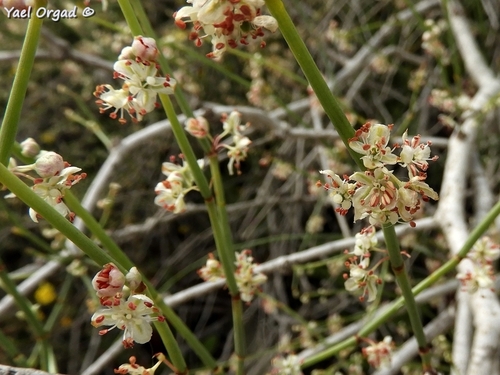
Polygonum affine
D. Don
iNaturalist · cc-by-nc
(c) shaaya, some rights reserved (CC BY-NC)
(c) shaaya, some rights reserved (CC BY-NC)
iNaturalist · cc-by-nc
(c) shaaya, some rights reserved (CC BY-NC)
(c) shaaya, some rights reserved (CC BY-NC)
iNaturalist · cc-by-nc
(c) shaaya, some rights reserved (CC BY-NC)
(c) shaaya, some rights reserved (CC BY-NC)
What to Eat
Edible parts: Seeds, Leaves
The seeds are eaten raw or cooked. The shoots are cooked with fish and eaten in curries.
Where to Find It
It is a temperate plant. In the Indian Himalayas it grows between 3,000-4,800 m above sea level.
Afghanistan, Asia, Himalayas*, India, Myanmar, Nepal, Northeastern India, Pakistan, SE Asia, Sikkim, Tibet,
Countries: United Arab Emirates, Afghanistan, Armenia, Azerbaijan, Bangladesh, Bahrain, Brunei, Bhutan, China, Georgia, Indonesia, Israel, India, Iraq, Iran, Jordan, Japan, Kyrgyzstan, Cambodia, North Korea, South Korea, Kuwait, Kazakhstan, Laos, Lebanon, Sri Lanka, Myanmar, Mongolia, Maldives, Malaysia, Nepal, Oman, Philippines, Pakistan, Qatar, Saudi Arabia, Singapore, Syria, Thailand, Tajikistan, Timor-Leste, Turkmenistan, Turkey, Taiwan, Uzbekistan, Vietnam, Yemen
How to Identify
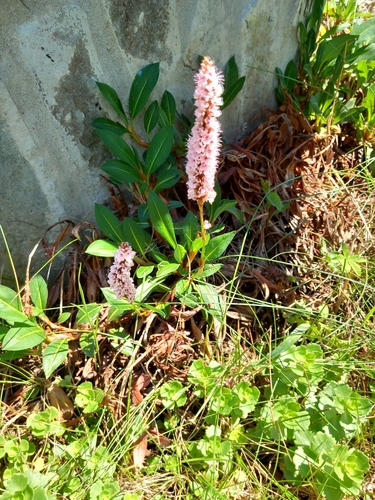
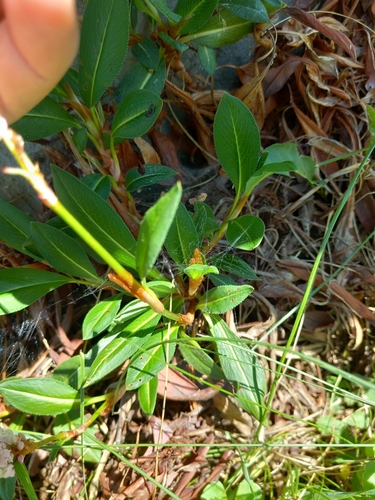
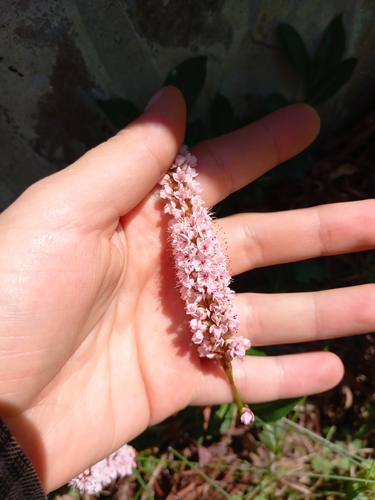
A herb. It forms mats. It grows 10 cm tall and spreads 60 cm wide. The leaves are narrow and have a waxy coating underneath giving them a white colour. The leaves are mostly at the base and 3-8 cm long. The flower spikes are 5-8 cm long on stalks 5-25 cm long.
Notes
An unresolved name in The Plant List.
Names & Synonyms
Han jareng, Khaldi, La kang, Mi sui quan shen, Pangram, Rambu, Rammu, Simauro
Bistorta affinis (D. Don) GreenePersicaria affinis (D. Don) Ronse Decr.Polygonum donianum Spreng.
References (5)
- Ethnobotany of Karbis. Chapter 4 in p 99
- Ghimire, S. K., et al, 2008, Non-Timber Forest Products of Nepal Himalaya. WWF Nepal p 112 (As Bistorta affinis)
- Negi, P. S. & Subramani, S. P., 2015, Wild Edible Plant Genetic Resources for Sustainable Food Security and Livelihood of Kinnaur District, Himachal Pradesh, India, International Journal of Conservation Science. 6 (4): 657-668 (As Bistorta affinis)
- Sharma, L. et al, 2018, Diversity, distribution pattern, endemism and indigenous uses of wild edible plants in Cold Desert Biosphere Reserve of Indian Trans Himalaya. Indian Journal of Traditional Knowledge. Vol 17(1) January 2018 pp 122-131 (As Bistorta affinis)
- Teron, R. & Borthakur, S. K., 2016, Edible Medicines: An Exploration of Medicinal Plants in Dietary Practices of Karbi Tribal Population of Assam, Northeast India. In Mondal, N. & Sen, J.(Ed.) Nutrition and Health among tribal populations of India. p 154