Astrocaryum ulei
Burret
(c) Marcus Athaydes, some rights reserved (CC BY-NC), uploaded by Marcus Athaydes

(c) Marcus Athaydes, some rights reserved (CC BY-NC), uploaded by Marcus Athaydes
(c) Marcus Athaydes, some rights reserved (CC BY-NC), uploaded by Marcus Athaydes
What to Eat
Edible parts: Fruit
The fruit and seeds of several species are used for human food, oil production and fish bait. Leaves are used as a source of fibre and stems as building material. Species are also used medicinally and as a source of palm heart.
Where to Find It
It is a tropical plant.
Amazon, Bolivia, Brazil, Peru, South America,
How to Identify
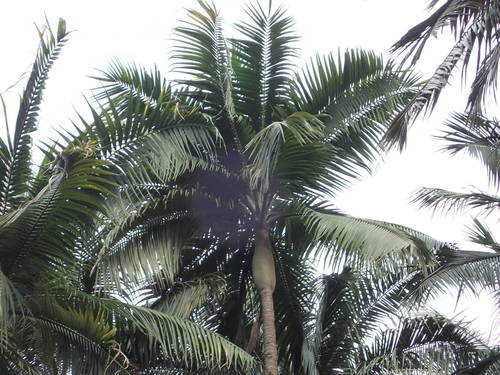
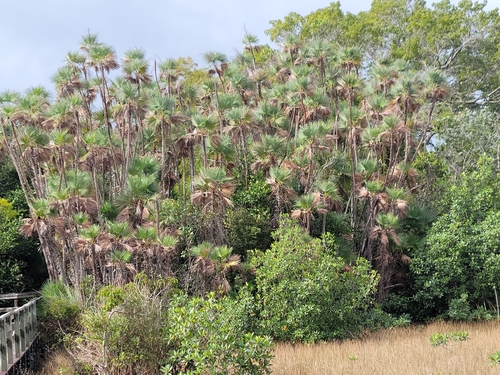
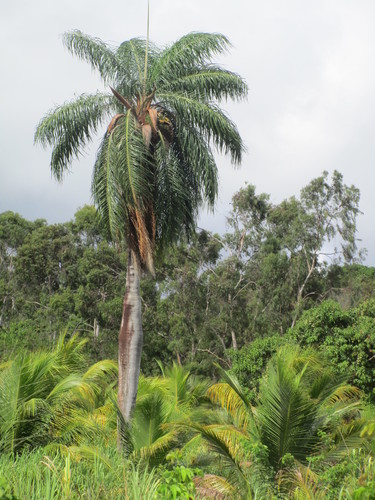
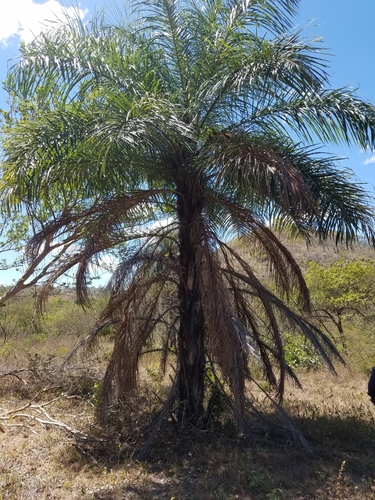
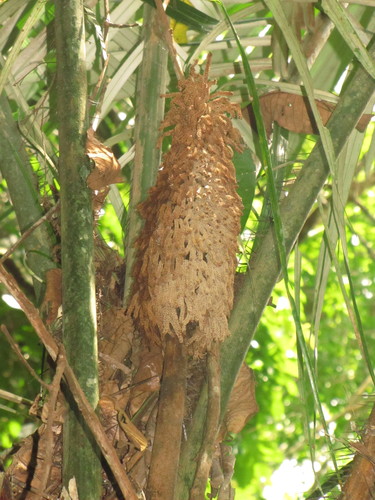
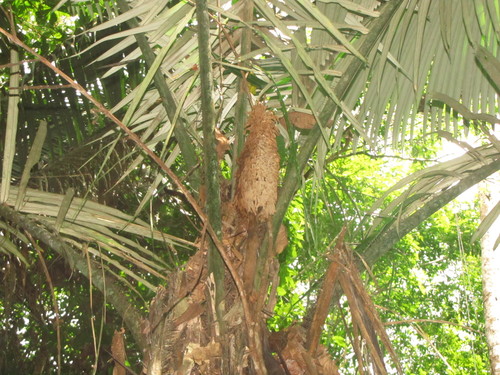
A solitary palm. The trunk is 8 m tall and 30 cm across. There are several suckers from the base. The trunk has leaf scars. There are 8-12 leaves. The leaf stems are 4-6 m long. They have spines. They have leaflets along the side. There are 85-106 leaflets on each side. These are 2-2.5 cm wide, and 1 m long. The flowers shoots point upwards and are 95 cm long. The fruit are oval and 2.5-3.5 cm long by about 2 cm wide.
Other Uses
The hard endocarp of various Amazonian species is commonly used to make beads and ornaments for necklaces
Names & Synonyms
Chonta loro, Chonta tara, Huicungo, Pani
References (1)
- Zambrana, P, et al, 2017, Traditional knowledge hiding in plain sight – twenty-first century ethnobotany of the Chácobo in Beni, Bolivia. Journal of Ethnobiology and Ethnomedicine (2017) 13:57