Geonoma macrostachys
Mart.
ArecaceaeFruit

iNaturalist · cc-by-nc
(c) yilbercruz, some rights reserved (CC BY-NC)
(c) yilbercruz, some rights reserved (CC BY-NC)

iNaturalist · cc-by-nc
(c) Sébastien SANT, some rights reserved (CC BY-NC)
(c) Sébastien SANT, some rights reserved (CC BY-NC)
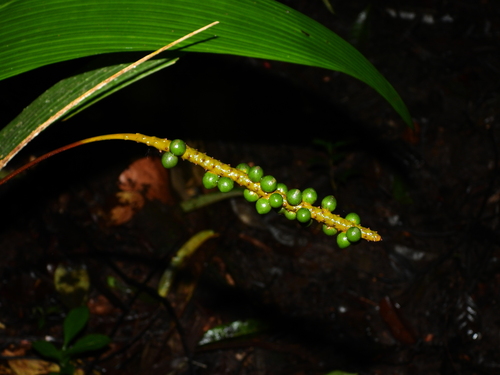
iNaturalist · cc-by-nc
(c) Sébastien SANT, some rights reserved (CC BY-NC)
(c) Sébastien SANT, some rights reserved (CC BY-NC)
What to Eat
Edible parts: Fruit
In South America, the leaves of species such as Geonoma deversa, Geonoma orbignyana, and Geonoma macrostachys are economically important for their use in thatching roofs.
Where to Find It
It is a tropical plant. It grows in forests between 75-1,800 m above sea level.
Amazon, Bolivia, Brazil, Colombia, Ecuador, Peru, South America, Venezuela,
How to Identify
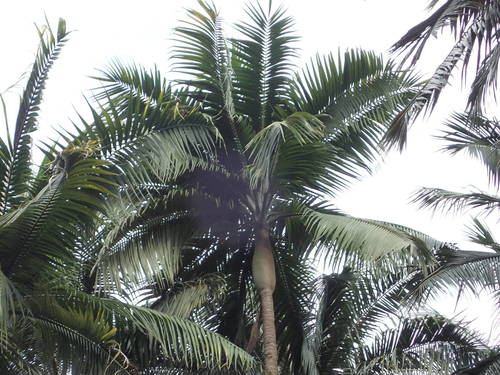
A small palm. It grows about 1.3 m tall. The stem is 2 cm across. There can be several in a cluster. There are about 9 leaves on each stem. The sheath is 13 cm long. The leaf stem can be 46 cm long. The fruit are about 9 cm long by 6 cm wide.
Other Uses
The leaves are used for thatch.
Names & Synonyms
Shinibi
References (6)
- Marcia, M. J., et al, 2011, Palm Uses in Northwestern South America: A Quantitative Review. Bot. Rev. (2011) 77:462-570
- Palmpedia
- Roa, J. A. G. & Boada, D. S. G., 2018, Fundación para el Fortalecimiento de la Fruticultura y Plantas Alimenticias no Convencionales en Colombia.
- Torre, de la L., et al, 2008, Enciclopedia de las Plantas Útiles del Ecuador. Herbario QCA. Pontificia Universidad Católica del Ecuador. p 201
- World Checklist of Useful Plant Species 2020. Royal Botanic Gardens, Kew
- Zambrana, P, et al, 2017, Traditional knowledge hiding in plain sight – twenty-first century ethnobotany of the Chácobo in Beni, Bolivia. Journal of Ethnobiology and Ethnomedicine (2017) 13:57