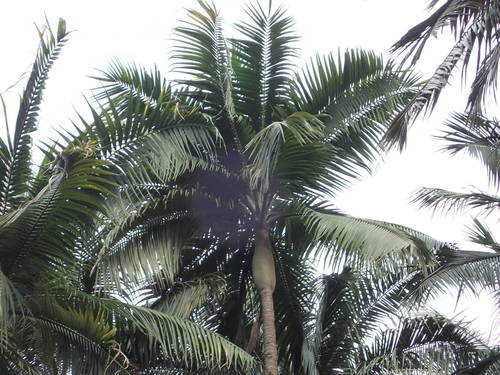
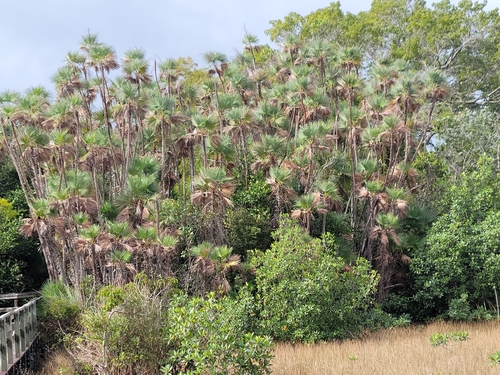
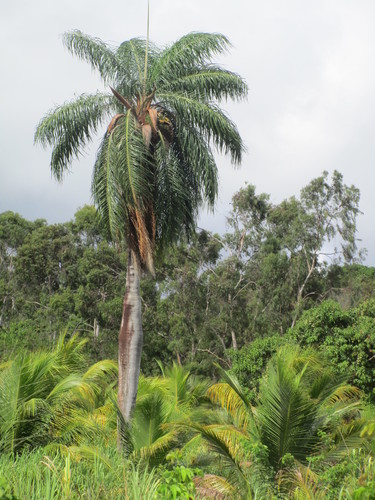
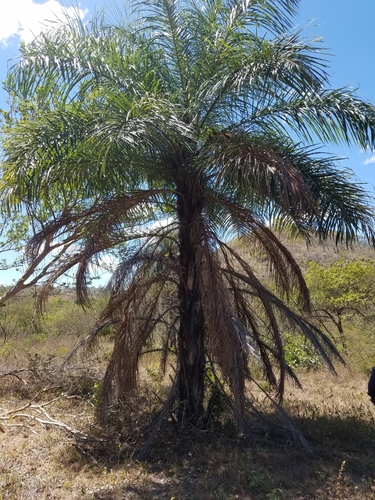
Aiphanes ulei
(Dammer) Burret
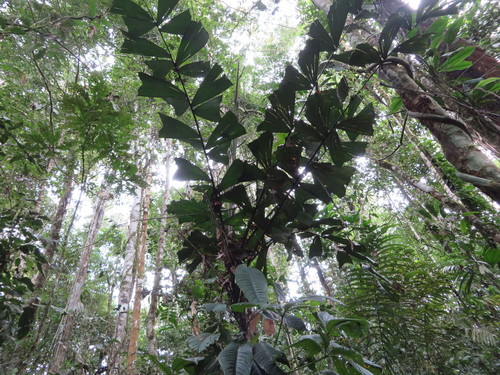
iNaturalist · cc-by
(c) Jens-Christian Svenning, some rights reserved (CC BY), uploaded by Jens-Christian Svenning
(c) Jens-Christian Svenning, some rights reserved (CC BY), uploaded by Jens-Christian Svenning
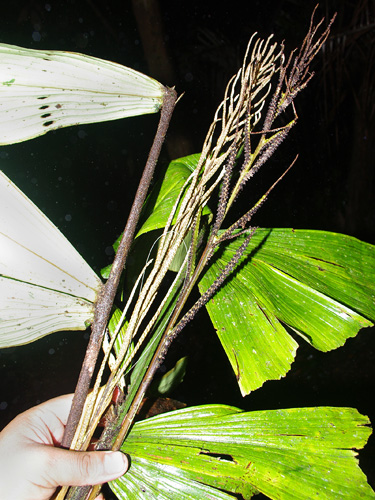
gbif · cc-by-nc
I. Huamantupa : Universidad Nacional San Antonio Abad de Cusco
I. Huamantupa : Universidad Nacional San Antonio Abad de Cusco
What to Eat
Edible parts: Fruit, Seeds, Palm heart, Cabbage
The fruit, seeds, and palm heart are edible, as is the cabbage (terminal bud).
Where to Find It
It is a tropical plant. It grows in wet rainfall areas.
Amazon, Brazil, Colombia, Ecuador, Peru, South America,
How to Identify
A palm. It grows 6 m tall. It is spiny. The spines and black and can be 7 cm long. There are 6-15 leaves. These are erect and arch over. The sheath is 20-35 cm long. The leaf stalk is 60-180 cm long. There are 9-14 leaflets on each side. The fruit are round and 7 mm across.
Wikipedia
Source ↗Aiphanes ulei is a species of flowering plant in the family Arecaceae. It is found in Brazil, Ecuador, and Peru.
Names & Synonyms
Kasha kaspi taraputu, Urpi chunta
Aiphanes schultzeana BurretMartinezia ulei Dammer
References (3)
- Marcia, M. J., et al, 2011, Palm Uses in Northwestern South America: A Quantitative Review. Bot. Rev. (2011) 77:462-570
- Roa, J. A. G. & Boada, D. S. G., 2018, Fundación para el Fortalecimiento de la Fruticultura y Plantas Alimenticias no Convencionales en Colombia.
- Torre, de la L., et al, 2008, Enciclopedia de las Plantas Útiles del Ecuador. Herbario QCA. Pontificia Universidad Católica del Ecuador. p 193