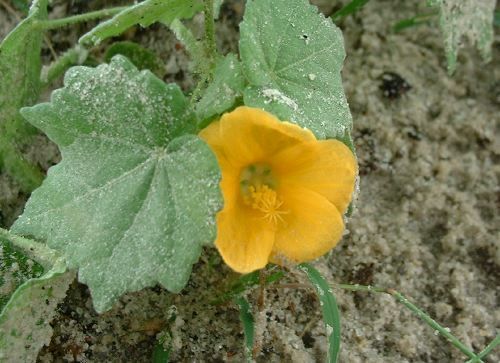
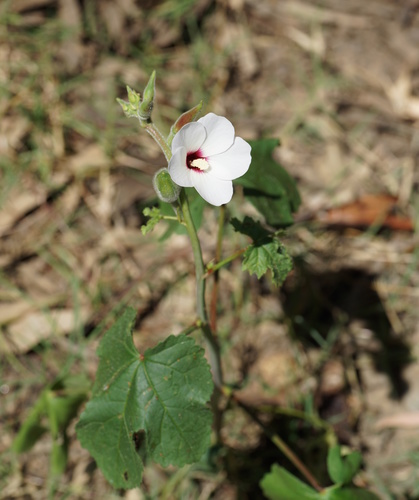
Corchorus aestuans
L.
West African mallow
no rights reserved, uploaded by 葉子

(c) geosesarma, some rights reserved (CC BY)
What to Eat
Edible parts: Leaves, Root, Vegetable
The leaves are eaten raw or cooked as a potherb, and the unripe fruit are cooked and eaten.
Where to Find It
A tropical plant. It grows naturally on volcanic ash soils. It grows on damp flats. It can be in savannah woodland. In Nepal it grows between 400-1000 m altitude. In Pakistan it grows from sea level to 2,000 m altitude. It can grow in arid places.
Africa, Andaman Is., Angola, Asia, Australia, Bahamas, Bangladesh, Benin, Bhutan, Brazil, Burkina Faso, Cambodia, Cameroon, Central Africa, Central African Republic, CAR, Central America*, Chad, China, Colombia, Comoros, Congo DR, Congo R, Costa Rica, Côte d'Ivoire, Cuba, Dominican Republic, East Africa, Ecuador, Ethiopia, Gabon, Gambia, Ghana, French Guiana, Guatemala, Guianas, Guinea, Guinée, Guinea-Bissau, Guyana, Haiti, Himalayas, Honduras, India, Indochina, Indonesia, Ivory Coast, Jamaica, Kenya, Laos, Lesser Antilles, Liberia, Madagascar, Malawi, Malaysia, Maldives, Mali, Mauritania, Mexico, Middle East, Mozambique, Myanmar, Nepal, Nicaragua, Niger, Nigeria, North America, Northeastern India, Oman, Pacific, Pakistan, Papua New Guinea, PNG, Philippines, Puerto Rico, Sahel, Sao Tome and Principe, SE Asia, Senegal, Seychelles, Sierra Leone, Socotra, Somalia, South Africa, South America, Sri Lanka, Sudan, Suriname, Taiwan, Tanzania, Thailand, Togo, Trinidad & Tobago, Uganda, USA, Venezuela, Vietnam, West Africa, West Indies*, Zambia, Zimbabwe,
How to Identify
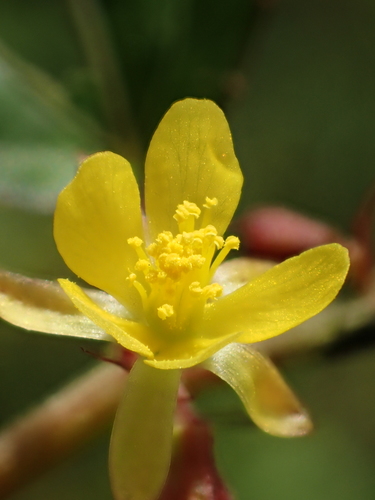
A herb which grows 40-80 cm tall. It spreads over the ground. The stems are reddish and densely hairy. The leaves are sword shaped or oval, and taper towards the tip. The leaf blade is 3-8 cm long by 2-5 cm wide. They are dark green and have teeth around the edge. Often the lowest tooth, near the base of the leaf, is elongated into a bristle. The leaf stalk is 1-4 cm long. The flowers are yellow, and in pairs opposite the leaves. The fruit is a thin capsule 18-30 mm long. It has 2-5 valves and wings along the edge.
How to Grow
Plants are often self sown from seed.
Other Uses
A good quality fibre is obtained from the bark - it is used for making string. One of the jute fibre plants.
Other Information
It is a cultivated food plant.
Notes
There are about 100 Corchorus species. Also in the family Sparmanniaceae and Tiliaceae
Names & Synonyms
Awachuwaey, Balu jihar, Kanakadali, Chamalawi, Chamalimba, Chechbhaji, Chonch, Cunhunho, Etigo-akalocoro, Gon-shaw, Kagnama, Kukakudhinge, Lalel-babos, Nalu, Papau ockroe, Patoi, Phute jhangi, Pilaw-hka, Pilaw-yin, Rumput bayam rusa, Telele yabasangu, Thelele, Titapat
References (45)
- Abbiw, D.K., 1990, Useful Plants of Ghana. West African uses of wild and cultivated plants. Intermediate Technology Publications and the Royal Botanic Gardens, Kew. p 40
- Ambasta, S.P. (Ed.), 2000, The Useful Plants of India. CSIR India. p 140
- Awas, T., 1997, A Study on the Ecology and Ethnobotany of Non-cultivated Food Plants and Wild Relatives of Cultivated crops in Gambella Region, Southwestern Ethiopia. Addis Ababa University. p 69
- Burkill, I.H., 1966, A Dictionary of the Economic Products of the Malay Peninsula. Ministry of Agriculture and Cooperatives, Kuala Lumpur, Malaysia. Vol 1 (A-H) p 666
- Busson, 1965,
- Catarino, L. et al, 2019, Edible Leafy Vegetables from West Africa (Guinea-Bissau): Consumption, Trade and Food Potential. Foods 2019, 8, 493
- Chandrakumar, P., et al, 2015, Ethnobotanical studies of wild edible plants of Gond, Halba and Kawar tribes of Salekasa Taluka, Gondia District, Maharashtra State, India. International Research Journal of Pharmacy 6(8)
- Dangol, D. R. et al, 2017, Wild Edible Plants in Nepal. Proceedings of 2nd National Workshop on CUAOGR, 2017.
- Dalziel, J. M., 1937, The Useful plants of west tropical Africa. Crown Agents for the Colonies London.(As Corchorus acutangulus)
- Dansi, A., et al, 2008, Traditional leafy vegetables and their use in the Benin Republic. Genet Resour Crop Evol (2008) 55:1239–1256
- Diouf, M., et al, Leafy Vegetables in Senegal. Bioversity webite
- Exell, A.W. et al, (Ed), 1963, Flora Zambesiaca Vol 2 Part 1 Crown Agents, London. p 87
- Facciola, S., 1998, Cornucopia 2: a Source Book of Edible Plants. Kampong Publications, p 241
- FAO, 1988, Traditional Food Plants, FAO Food and Nutrition Paper 42. FAO Rome p 218
- Flora of Pakistan. www.eFloras.org
- Fondio, L. & Grubben, G.J.H., 2004. Corchorus olitorius L. [Internet] Record from Protabase. Grubben, G.J.H. & Denton, O.A. (Editors). PROTA (Plant Resources of Tropical Africa), Wageningen, Netherlands. < http://database.prota.org/search.htm>. Accessed 15 October 2009.
- Grivetti, L. E., 1980, Agricultural development: present and potential role of edible wild plants. Part 2: Sub-Saharan Africa, Report to the Department of State Agency for International Development. p 29 (As Corchorus acutangulus)
- Grubben, G. J. H. and Denton, O. A. (eds), 2004, Plant Resources of Tropical Africa 2. Vegetables. PROTA, Wageningen, Netherlands. p 560
- Hedrick, U.P., 1919, (Ed.), Sturtevant's edible plants of the world. p 215 (As Corchorus acutangulus)
- Henty, E.E., & Pritchard, G.S., 1973, Weeds of New Guinea and their control. Botany Bulletin No 7, Division of Botany, Lae, PNG. p 153
- Jardin, C., 1970, List of Foods Used In Africa, FAO Nutrition Information Document Series No 2.p 69
- Joshi, N., et al, 2007, Traditional neglected vegetables of Nepal: Their sustainable utilization for meeting human needs. Tropentag 2007. Conference on International Agricultural Research for Development. (As Corchorus acutangulus)
- Kenneally, K.E., Edinger, D. C., and Willing T., 1996, Broome and Beyond, Plants and People of the Dampier Peninsula, Kimberley, Western Australia. Department of Conservation and Land Management. p 192
- Kew Plants of the World Online
- Lulekal, E., et al, 2011, Wild edible plants in Ethiopia: a review on their potential to combat food insecurity. Afrika Focus - Vol. 24, No 2. pp 71-121
- Manandhar, N.P., 2002, Plants and People of Nepal. Timber Press. Portland, Oregon. p 169
- Martin, F.W. & Ruberte, R.M., 1979, Edible Leaves of the Tropics. Antillian College Press, Mayaguez, Puerto Rico. p 221 (As Corchorus acutangulus)
- Maundu, P. et al, 1999, Traditional Food Plants of Kenya. National Museum of Kenya. 288p
- Misra S. & Misra M., 2016, Ethnobotanical and Nutritional Evaluation of Some Edible Fruit Plants of Southern Odisha, India. International Journal of Advances in Agricultural Science and Technology, Vol.3 Issue.1, March- 2016, pg. 1-30
- Mot So Rau Dai an Duoc O Vietnam. Wild edible Vegetables. Ha Noi 1994, p 130 (As Corchorus acutangulus)
- Ojelel, S. & Kakudidi, E. K., 2015, Wild edible plant species utilized by a subsistence farming community in the Obalanga sub-county, Amuria district, Uganda. Journal of Ethnobiology and Ethnomedicine. 11:7
- Okigbo, B.N., Vegetables in Tropical Africa, in Opena, R.T. & Kyomo, M.L., 1990, Vegetable Research and development in SADCC countries. Asian Vegetable Research and development Centre. Taiwan. p 45
- Paczkowska, G . & Chapman, A.R., 2000, The Western Australian Flora. A Descriptive Catalogue. Western Australian Herbarium. p 560
- Peekel, P.G., 1984, (Translation E.E.Henty), Flora of the Bismarck Archipelago for Naturalists, Division of Botany, Lae, PNG. p 353, 354 (As Corchorus acutangulus)
- Peters, C. R., O'Brien, E. M., and Drummond, R.B., 1992, Edible Wild plants of Sub-saharan Africa. Kew. p 190
- Pham-Hoang Ho, 1999, An Illustrated Flora of Vietnam. Nha Xuat Ban Tre. p 480
- Plants of Haiti Smithsonian Institute http://botany.si.edu/antilles/West Indies
- Purseglove, J.W., 1968, Tropical Crops Dicotyledons, Longmans. p 613
- Royal Botanic Gardens, Kew (1999). Survey of Economic Plants for Arid and Semi-Arid Lands (SEPASAL) database. Published on the Internet; http://www.rbgkew.org.uk/ceb/sepasal/internet [Accessed 11th June 2011]
- Syst. nat. ed. 10, 2:1079. 1759
- Tanaka,
- Wheeler, J.R.(ed.), 1992, Flora of the Kimberley Region. CALM, Western Australian Herbarium, p 162
- Williamson, J., 2005, Useful Plants of Malawi. 3rd. Edition. Mdadzi Book Trust. p 78
- World Checklist of Useful Plant Species 2020. Royal Botanic Gardens, Kew
- Zon, A.P.M. van der, Grubben, G.J.H., 1976, Les legumes-feuilles spontanes et cultives du Sud-Dahomey, Communication 65, Royal Tropical Institute, Amsterdam, p 51