Corchorus olitorius
L.
Jute, Bush Okra
(c) Mike Ross, some rights reserved (CC BY-NC), uploaded by Mike Ross

(c) pat, some rights reserved (CC BY-NC-SA)

(c) pat, some rights reserved (CC BY-NC-SA)
What to Eat
Edible parts: Leaves, Seeds, Vegetable, Fruit, Leaves - tea
Young leaves can be added raw to salads, while older leaves and stem tops are cooked as a pot-herb. The leaves are high in protein and quickly become mucilaginous when cooked; they are slimy unless fried. Dried leaves can be used as a thickener in soups, or sun-dried, pounded into flour and stored for a significant period. Leaves and young shoots are normally harvested when about 20–30cm long.
Where to Find It
A tropical plant. It is mostly coastal, below 250 m altitude. Temperatures of 22°-35°C are suitable. It can stand both drought (2-3 weeks) and water-logging, except when young. A well drained soil is best. They require humus-rich soils. A pH of 5.5-7.0 is best, but they can grow in soils with pH up to 8.5. They also need adequate moisture for good leaf production. A rainfall of 1,000 mm is suitable. A high relative humidity (80-90%) is best. It produces seeds when day lengths are short. In Yunnan.
Africa, Angola, Arabia, Asia, Australia, Bangladesh, Benin, Botswana, Burkina Faso, Burundi, Cambodia, Cameroon, Cape Verde, Caribbean, Central Africa, Central African Republic, CAR, Chad, China, Congo DR, Côte d'Ivoire, Cuba, Djibouti, East Africa, East Timor, Egypt, Equatorial-Guinea, Eritrea, Eswatini, Ethiopia, Europe, Fiji, France, Gabon, Gambia, Ghana, Guinea, Guinée, Guinea-Bissau, Haiti, Himalayas, India*, Indochina, Indonesia, Israel, Ivory Coast, Japan, Kenya, Laos, Liberia, Madagascar, Malawi, Malaysia, Mali, Mauritania, Mauritius, Mediterranean, Middle East, Mozambique, Myanmar, Namibia, Nepal, Niger, Nigeria, North Africa, Northeastern India, Pacific, Pakistan, Papua New Guinea, PNG, Philippines, Qatar, Reunion, Rwanda, Sahel, Sao Tome and Principe, Saudi Arabia, SE Asia, Senegal, Sierra Leone, Solomon Islands, Somalia, South Africa, Southern Africa, South America, South Sudan, Sri Lanka, Sudan, Swaziland, Syria, Taiwan, Tanzania, Thailand, Timor-Leste, Togo, Turkey, Türkiye, Uganda, United Arab Emirates, UAE, Uganda, USA, Vietnam, West Africa, West Indies, Zambia, Zimbabwe,
How to Identify
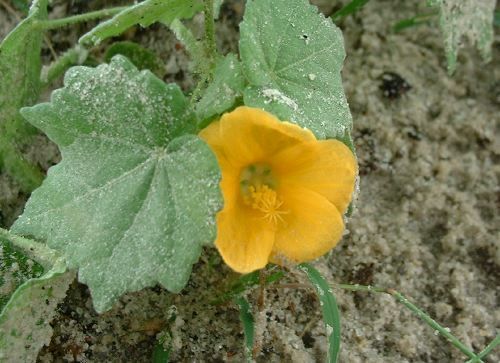
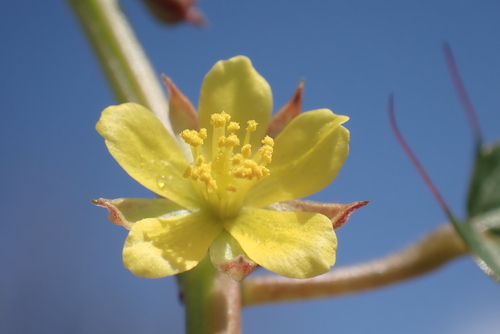
An annual herb. It is upright, branching, and slightly woody. Plants vary in height, shape, leafiness and hairiness. Plants grown for leaves are usually only 30 cm tall. They also have many branches. Leaves are shiny and have leaf stalks. The leaves have teeth along the edge. The tips of the lowest leaves in each side, have long bristle like structures. Small clusters of yellow flowers grow in the axils of the leaves. The fruit are ridged capsules. They can be 7 cm long. These have partitions across them between the seeds. A ripe capsules contains 180-230 seeds. The seeds are dull grey and with four faces and one long point. Each seed has one pale line along it.
Nutrition Score: 61/100
| Part | Moisture | kJ | kcal | Protein | Vit A | Vit C | Iron | Zinc |
|---|---|---|---|---|---|---|---|---|
| Leaves raw | 80.4 | 244 | 58 | 4.5 | 6410 | 80 | 7.2 | — |
| Leaves cooked | 87.2 | 155 | 37 | 3.4 | 156 | 33 | 3.1 | 0.8 |
How to Grow
Plants grow well in the lowland tropics, up to an elevation of around 700 metres. They are reported to tolerate an annual precipitation between 400 and 4290mm, an annual average temperature range of 16.8 to 27.5°c. Prefers a very fertile, humus-rich, well-drained alluvial soil, though it is extremely tolerant of soil conditions. It grows best in a hot humid climate. Tolerates very wet conditions according to one report whilst another says that it does not tolerate waterlogged soils. Some cultivars are sensitive to excess water in the soil, especially when they are young. Tolerates a pH in the range of 4.5 to 8.2. There are two important cultivar-groups:- Olitorius Group. These are the forms mainly grown for their edible leaves. They are characterized by a plant height lower than 2 metres, often not more than 1 metre, and a more or less heavily branched plant habit. There are many named forms within this group. Textilis Group. These are the forms mainly grown for their fibre. The plants are usually larger, up to 4 metres, perhaps even 5 metres tall, and only slightly branched at the top. The first harvest, by cutting shoots 20 - 30cm long, may take place 4 - 6 weeks after transplanting, at a height of 10 - 20cm above the ground. This cutting stimulates the development of side shoots. Subsequently, every 2 - 3 weeks, a cutting may take place, with a total of 2 - 8 cuttings possible. For a once-over harvest from a direct sown crop, the plants are uprooted or cut at ground level when they are 30 - 40cm tall, 3 - 5 weeks after emergence and before the development of fruits. In Nigeria, a yield of 20 - 25kg from a 10 square metre bed (25 tonnes per hectare) may be expected from 3 - 9 cuttings of 'Amugbadu' during a period of 3 - 4 months. A yield of 38 tonnes per hectare was obtained from a well-fertilized field of cultivar 'Ewondo' in the Cameroon. Farmers however, usually obtain average yields of 5 - 15 tonnes. The world average jute yield is about 1.9 tonnes of raw fibre per hectare, but yields of 5 tonnes have been obtained in Bangladesh with improved cultivars grown under optimal agronomic conditions. Intercropped with Vigna, jute has yielded 3,270 kilos compared to 2290 kilos when monocropped. A commercially cultivated vegetable and an important vegetable in arid areas. Part of the national dish of Egypt.
Propagation: Pre-soak seed for 24 hours in warm water, then sow in situ. Seeds are often broadcast into fine seedbeds at the beginning of the wet season; mixing them with sand helps achieve even distribution. Seeds can be slow to germinate, but soaking in hot water can help overcome this. A spacing of 20–30cm between plants is suitable.
Medicinal Uses
The leaves are demulcent, diuretic, febrifuge and tonic, and are used to treat chronic cystitis, gonorrhoea and dysuria. A cold infusion is said to restore appetite and strength. The seeds are purgative. Injections of olitoriside, an extract from the plant, markedly improve cardiac insufficiencies without cumulative effects, and may serve as a substitute for strophanthin.
Other Uses
The stems yield jute fibre, considered inferior to that from C. capsularis. The fibre is somewhat coarse and used mainly for sackcloth. This species tends to branch, complicating fibre extraction; planting closely together reduces branching. When used for papermaking, the fibres are cooked for 2 hours with lye and ball milled for 4½ hours, producing a grey or buff paper. The very light, soft wood is used to make sulphur matches.
Wikipedia
Source ↗Jute mallow or Jew's mallow or Mallow leaves or Nalita jute (Corchorus olitorius, also known as "Jute leaves", "Tossa jute", "Mloukheyeh" "muteezi", "lunkomba", "ewedu" and "West African sorrel") is a species of shrub in the family Malvaceae. Together with C. capsularis it is the primary source of jute fiber. The leaves and young fruits are used as a vegetable, the dried leaves are used for tea and as a soup thickener, and the seeds are edible.
Production
First leaves can be harvested after 5-6 weeks. Tips about 20-30 cm long are picked. Production of edible green tips, is not large. 7-8 kg of leaf tips can be harvested from 3-8 pickings over 3-4 months. Seeds can be collected after 13-15 weeks. If seeds of a particular variety are desired, it is necessary to grow these plants 16 m away from other plants, to avoid cross pollination. Seeds can be stored for 8-12 months in well sealed jars.
Other Information
It is a commercially cultivated vegetable. An important vegetable in arid areas. It may not be used a lot in Papua New Guinea. It is a part of the national dish of Egypt. Leaves are sold in local markets.
Notes
There are about 100 Corchorus species. They are also put in the family Tiliaceae.
Names & Synonyms
Ahu hara, Amolate, An-kin-kiri, An-kirin-kirin, Atigo, Atigo-agywa, Alilot, Awachuwaey, Awengdeg, Ayaak, Ayitop, Banpat, Bir narcha, Bogi, Bulukutu, Chench koha, Chichuria, Chilenzi, Chow, Daisee, Delele, Delelupfumo, Demain, Derere, Desipat, Dongo dongo, Enmomi, Ewedu, Eyo, Fetri, Filipino spinach, Fotokani, Fouam, Foukou, Gon-shaw, Grenguere, Guse, Gusha, Gwisha, Hololoqota, Idelele, Igogola, Jew's mallow, Jute mallow, Kaat thoothee, Kapilamoto, Kepotugunta, Kibwando, Kilankozolo, Krachaw, Krenkre, Krinkrin, Kudera, Kudowa, Kudra, Laliaq, Larita, Lemgambelle, Ligusha, Long fruited Jute, Lusaka-saka, Lusakalusaka, Malafiya, Malok, Mangaraw, Mara, Melokhia, Mentchelfale, Mithapat, Mlenda mgunda, Molukhia, Morapat, Moroheia, Msakasaka, Muhliye, Mulakhiyah, Mulembo, Mulugaya, Muomi pinpesi, Murere, N genge, N gengle, N'sore, Nainnouwi, Nalta jute, Nkuruma, Nyankajang, Nyenje, Othigu-kal, Otigo diri, Oyo, Parinta, Pasau, Pata, Pat shak, Pee-la-ka, Philippine okra, Pilaw-apo, Pilaw-chun, Pilaw-kha, Pilaw-thon-lon-byut, Po krachao, Rau day, Saluyut, Sanpat, Sigli, Singli, Sobe, Sobo, Sokeria, Sokorya, Sore, Soren, Sorre, Spanish okra, Tifaanti, Tifanhanti, Tipanoussante, Tita pat, Tossa jute, Tossa paat, Turgunnuwa, Udhing, Unsore, Vaizahrui, Valakotha keerai, West African sorrel, Yangui, Yoyo, Yute
References (136)
- Abbiw, D.K., 1990, Useful Plants of Ghana. West African uses of wild and cultivated plants. Intermediate Technology Publications and the Royal Botanic Gardens, Kew. p 42
- Achigan-Dako, E, et al (Eds), 2009, Catalogue of Traditional Vegetables in Benin. International Foundation for Science.
- Addis, G., Asfaw, Z & Woldu, Z., 2013, Ethnobotany of Wild and Semi-wild Edible Plants of Konso Ethnic Community, South Ethiopia. Ethnobotany Research and Applications. 11:121-141
- Addis, G., et al, 2013, The Role of Wild and Semi-wild Edible Plants in Household Food Sovereignty in Hamer and Konso Communities, South Ethiopia. Ethnobotany Research & Applications. 11:251-271
- Altschul, S.V.R., 1973, Drugs and Foods from Little-known Plants. Notes in Harvard University Herbaria. Harvard Univ. Press. Massachusetts. no. 2707
- Ambasta, S.P. (Ed.), 2000, The Useful Plants of India. CSIR India. p 140
- Andabati, B., & Muyonga, J., 2014, Phenolic content and antioxidant activity of selected Ugandian traditional medicinal foods. African Journal of Food Science. 8(8), pp 427-434
- Ara, R. I. T., 2015, Leafy Vegetables in Bangladesh. Photon eBooks. p 64
- Asfaw, Z., Conservation and use of traditional vegetables in Ethiopia. FAO
- Asfaw, Z. and Tadesse, M., 2001, Prospects for Sustainable Use and Development of Wild Food Plants in Ethiopia. Economic Botany, Vol. 55, No. 1, pp. 47-62
- Awas, T., 1997, A Study on the Ecology and Ethnobotany of Non-cultivated Food Plants and Wild Relatives of Cultivated crops in Gambella Region, Southwestern Ethiopia. Addis Ababa University. p 69
- Balemie, K., & Kebebew, F., 2006, Ethnobotanical study of wild edible plants in Derashe and Kucha Districts, South Ethiopia. Journal of Ethnobiology and Ethnomedicine. p 4
- Bandyopadhyay, S. et al, 2009, Wild edible plants of Koch Bihar district, West Bengal. Natural Products Radiance 8(1) 64-72
- Belem, M., et al, 2017, Strategy of Conservation and Protection of Wild Edible Plants Diversity in Burkina Faso. ANADOLU 27 (2) 2017, 82- 90
- Berihun, T. & Molla, E., 2017, Study on the Diversity and Use of Wild Edible Plants in Bullen District Northwest Ethiopia. Hindawi Journal of Botany. Article ID 8383468
- Bernholt, H. et al, 2009, Plant species richness and diversity in urban and peri-urban gardens of Niamey, Niger. Agroforestry Systems 77:159-179
- Bodner, C. C. and Gereau, R. E., 1988, A Contribution to Bontoc Ethnobotany. Economic Botany, 43(2): 307-369
- Bonou, A., et al, 2013, Valeur economique des Produits Forestiers Non Ligneux (PFNL) au Benin. Editions Universitaires Europeennes p 89
- Brown, W.H., 1920, Wild Food Plants of the Philippines. Bureau of Forestry Bulletin No. 21 Manila. p 110
- Burkill, H. M., 1985, The useful plants of west tropical Africa, Vol. 1. Kew.
- Burkill, I.H., 1966, A Dictionary of the Economic Products of the Malay Peninsula. Ministry of Agriculture and Cooperatives, Kuala Lumpur, Malaysia. Vol 1 (A-H) p 668
- Busson, 1965,
- Chowdhury, M. & Mukherjee, R., 2012, Wild Edible Plants Consumed by Local Communities of Maldah of West Bengal, India. Indian J.Sci.Res.3(2) : 163-170
- Cobley, L.S. (rev. Steele, W.M.) 2nd Ed., 1976, An Introduction to the Botany of Tropical Crops. Longmans. p 146, 269
- Codjia, J. T. C., et al, 2003, Diversity and local valorisation of vegetal edible products in Benin. Cahiers Agricultures 12:1-12
- Dansi, A., et al, 2008, Traditional leafy vegetables and their use in the Benin Republic. Genet Resour Crop Evol (2008) 55:1239–1256
- Dansi, A., et al, 2012, Diversity of the Neglected and Underutilized Crop Species of Importance in Benin. The Scientific World Journal. Volume 2012, Article ID 932947, 19 pages
- Dey, A. & Mukhererjee, A., 2015, Living and Survival Amidst Hunger: Wild Edible Botanicals as a Prime Forest Productivity in the Rural Purulia District, West Bengal, India from Colonial to Present. Research Journal of Forestry 9(3): 71-86
- Dobriyal, M. J. R. & Dobriyal, R., 2014, Non Wood Forest Produce an Option for Ethnic Food and Nutritional Security in India. Int. J. of Usuf. Mngt. 15(1):17-37
- Duguma, H. T., 2020, Wild Edible Plant Nutritional Contribution and Consumer Perception in Ethiopia. Hindawi International Journal of Food Science Volume 2020, Article ID 2958623, 16 pages
- Ekman Herbarium records Haiti
- Epenhuijsen C.W. van., 1974, Growing Native vegetables in Nigeria. FAO Rome, p 55
- Ertug, F, Yenen Bitkiler. Resimli Türkiye Florası -I- Flora of Turkey - Ethnobotany supplement
- Ethiopia: Famine Food Field Guide. http://www.africa.upenn.edu/faminefood/category1.htm
- Exell, A.W. et al, (Ed), 1963, Flora Zambesiaca Vol 2 Part 1 Crown Agents, London. p 82
- Facciola, S., 1998, Cornucopia 2: a Source Book of Edible Plants. Kampong Publications, p 241
- FAO, 1988, Traditional Food Plants, FAO Food and Nutrition Paper 42. FAO Rome p 218
- Flyman, M. V. & Afolayan, A. J., 2006, A Survey of plants used as wild vegetables in four districts of Botswana. Ecology of Food and Nutrition, 45:405-415
- Fondio, L. & Grubben, G.J.H., 2004. Corchorus olitorius L. [Internet] Record from Protabase. Grubben, G.J.H. & Denton, O.A. (Editors). PROTA (Plant Resources of Tropical Africa), Wageningen, Netherlands. < http://database.prota.org/search.htm>. Accessed 15 October 2009.
- Fongnzossie Fedoung, E., et al, 2020, Wild edible plants and mushrooms of the Bamenda Highlands in Cameroon: ethnobotanical assessment and potentials for enhancing food security. Journal of Ethnobiology and Ethnomedicine 16:12
- Food Composition Tables for use in East Asia FAO http://www.fao.org/infoods/directory No. 565
- Fowler, D. G., 2007, Zambian Plants: Their Vernacular Names and Uses. Kew. p 44
- Fox, F. W. & Young, M. E. N., 1982, Food from the Veld. Delta Books. p 350
- French, B.R., 1986, Food Plants of Papua New Guinea, A Compendium. Asia Pacific Science Foundation p 334
- French, B.R., 2010, Food Plants of Solomon Islands. A Compendium. Food Plants International Inc. p 313
- Gallagher, D. E., 2010, Farming beyond the escarpment: Society, Environment, and Mobility in Precolonial Southeastern Burkina Faso. PhD University of Michigan.
- Goode, P., 1989, Edible Plants of Uganda. FAO p 30
- Goode, P., 1989, Edible Plants of Uganda. FAO p 36
- Goode, P., 1989, Edible Plants of Uganda. FAO p 39
- Goode, P., 1989, Edible Plants of Uganda. FAO p 41
- Grivetti, L. E., 1980, Agricultural development: present and potential role of edible wild plants. Part 2: Sub-Saharan Africa, Report to the Department of State Agency for International Development. p 49
- Grubben, G. J. H. and Denton, O. A. (eds), 2004, Plant Resources of Tropical Africa 2. Vegetables. PROTA, Wageningen, Netherlands. p 217
- Hanawa, Y., 2013, Wild edible plants used by Guiziga people of far north region of Cameroon. Int. J. Med. Arom. Plants. Vol 3 (2) : 136-143
- Harkonen, M. & Vainio-Mattila, K., 1998, Some examples of Natural Products in the Eastern Arc Mountains. Journal of East African Natural History 87:265-278
- Harris, F. M. A. and Salisu Mohammed, 2003, Relying on nature: Wild Foods in Northern Nigeria. AMBIO Vol. 32 No. 1, p 27
- Hedrick, U.P., 1919, (Ed.), Sturtevant's edible plants of the world. p 215
- Hibbert, M., 2002, The Aussie Plant Finder 2002, Florilegium. p 72
- Hussey, B.M.J., Keighery, G.J., Cousens, R.D., Dodd, J., Lloyd, S.G., 1997, Western Weeds. A guide to the weeds of Western Australia. Plant Protection Society of Western Australia. p 226
- Ibrahim, H. A., et al, 2012, Ethnobotanical Survey of the Wild Edible Food Plants Consumption among Local Communities in Kano State, North-Western, Nigeria, International Journal of Science and Technology. Vol. 2. No. 10 p 716
- Jacquat, C., 1990, Plants from the Markets of Thailand. D.K. Book House p 69
- Jadhav, R., et al, 2015, Forest Foods of Northern Western Ghats: Mode of Consumption, Nutrition and Availability. Asian Agri-History Vol. 19, No. 4: 293-317
- Jardin, C., 1970, List of Foods Used In Africa, FAO Nutrition Information Document Series No 2.p 69
- Johns, T., Mhoro, E. B. and Sanaya, P., 1996, Food Plants and Masticants of the Batemi of Ngorongoro District, Tanzania. Economic Botany, Vol. 50, No. 1, pp. 115-121
- Karthi, Sathya, & Salome, 2014, Uncultivated Edible Greens from Small Millet Farms Tamil Nadu India. IDRC
- Kays, S. J., and Dias, J. C. S., 1995, Common Names of Commercially Cultivated Vegetables of the World in 15 languages. Economic Botany, Vol. 49, No. 2, pp. 115-152
- Kidane, B., et al, 2014, Wild and semi-wild leafy vegetables used by the Maale and Ari ethnic communities in southern Ethiopia. Genetic Resour Crop Evol. Springer. p 8
- Kiple, K.F. & Ornelas, K.C., (eds), 2000, The Cambridge World History of Food. CUP p 1793
- Latham, P., 2004, Useful Plants of Bas-Congo province. Salvation Army & DFID p 93
- Lazarides, M. & Hince, B., 1993, Handbook of Economic Plants of Australia, CSIRO. p 64
- Lugod, G.C. and de Padua L.S., 1979, Wild Food Plants in the Philippines. Vol. 1. Univ. of Philippines Los Banos. p 73
- Lulekal, E., et al, 2011, Wild edible plants in Ethiopia: a review on their potential to combat food insecurity. Afrika Focus - Vol. 24, No 2. pp 71-121
- Lyimo, M., et al, 2003, Identification and nutrient composition of indigenous vegetables of Tanzania. Plant Foods for Human Nutrition. 58: 85-92
- Magwede, K., van Wyk, B.-E., & van Wyk, A. E., 2019, An inventory of Vhavenḓa useful plants. South African Journal of Botany 122 (2019) 57–89
- Malaisse, F., 1997, Se nourrir en floret claire africaine. Approche ecologique et nutritionnelle. CTA., p 59
- Marandi, R. R. & Britto, S. J., 2015, Medicinal Properties of Edible Weeds of Crop Fields and Wild plants Eaten by Oraon Tribals of Latehar District, Jharkhand. International Journal of Life Science and Pharma Research. Vo. 5. (2) April 2015
- Maroyi, A., 2013, Use of weeds as traditional vegetables in Shurugwi District, Zimbabwe. Journal of Ethnobiology and Ethnomedicine 9:60
- Martin, F.W. & Ruberte, R.M., 1979, Edible Leaves of the Tropics. Antillian College Press, Mayaguez, Puerto Rico. p 39, 221
- Masters, T., 2021, Traditional food plants of the upper Aswa River catchment of northern Uganda—a cultural crossroads. Journal of Ethnobiology and Ethnomedicine (2021) 17:24
- Maundu, P. et al, 1999, Traditional Food Plants of Kenya. National Museum of Kenya. 288p
- Medhi, P. & Borthakur, S. K., 2012, Phytoresources from North Cachur Hills of Assam -3: Edible plants sold at Hflong market. Indian Journal or Natural Products and Resources. 3(1) pp 84-109
- Mertz, O., Lykke, A. M., and Reenberg, A., 2001, Importance and Seasonality of Vegetable Consumption and Marketing in Burkina Faso. Economic Botany, 55(2):276-289
- Miguel, E., et al, 1989, A checklist of the cultivated plants of Cuba. Kulturpflanze 37. 1989, 211-357
- Msuya, T. S., et al, 2010, Availability, Preference and Consumption of Indigenous Foods in the Eastern Arc Mountains, Tanzania, Ecology of Food and Nutrition, 49:3, 208-227
- Mutie, F. M., et al, 2023, Important Medicinal and Food Taxa (Orders and Families) in Kenya, Based on Three Quantitative Approaches. Plants 2023, 12, 1145
- Neudeck, L. et al, 2012, The Contribution of Edible Wild Plants to Food Security, Dietary Diversity and Income of Households in Shorobe Village, Northern Botswana. Ethnobotany Research & Applications 10:449-462
- Ngugi, G., 2000, Case Study from Kenya on Indigenous Wild Vegetables. Paper 4 Workshop in Kenya 1999. p 34
- Norton, J., et al, 2009, An Illustrated Checklist of the Flora of Qatar. UNESCO Office in Doha.
- Nyadanu, D., et al, 2015, Agro-biodiversity and challenges of on-farm conservation: the case of plant genetic resources of neglected and underutilized crop species in Ghana. Genet. Resourc. Crop Evol. 62(7):
- Okigbo, B.N., Vegetables in Tropical Africa, in Opena, R.T. & Kyomo, M.L., 1990, Vegetable Research and development in SADCC countries. Asian Vegetable Research and development Centre. Taiwan. p 45
- Onuminya, T. O., et al, 2017, Comparative proximate and Phytochemical Analysis of leafy vegetables in Lagos State. Nig. J. Pure and Applied Sci. Vol. 30 Issue 3: p 3097f
- Oomen, H.A.P.C., & Grubben, G.J.H., 1978, Tropical Leaf Vegetables in Human Nutrition, Communication 69, Department of Agricultural research, RTI Amsterdam, p 32, 36, 66, 79
- Paczkowska, G . & Chapman, A.R., 2000, The Western Australian Flora. A Descriptive Catalogue. Western Australian Herbarium. p 561
- Peters, C. R., O'Brien, E. M., and Drummond, R.B., 1992, Edible Wild plants of Sub-saharan Africa. Kew. p 190
- Pham-Hoang Ho, 1999, An Illustrated Flora of Vietnam. Nha Xuat Ban Tre. p 480
- Phon, P., 2000, Plants used in Cambodia. © Pauline Dy Phon, Phnom Penh, Cambodia. p 172
- Pickering, H., & Roe, E., 2009, Wild Flowers of the Victoria Falls Area. Helen Pickering, London. p 109
- Plants for a Future database, The Field, Penpol, Lostwithiel, Cornwall, PL22 0NG, UK. http://www.scs.leeds.ac.uk/pfaf/
- Plants of Haiti Smithsonian Institute http://botany.si.edu/antilles/West Indies
- Plowes, N. J. & Taylor, F. W., 1997, The Processing of Indigenous Fruits and other Wildfoods of Southern Africa. in Smartt, L. & Haq. (Eds) Domestication, Production and Utilization of New Crops. ICUC p 189
- Purseglove, J.W., 1968, Tropical Crops Dicotyledons, Longmans. p 614
- Rashid, H. E., 1977, Geography of Bangladesh. Westview. p 310, 281
- Rubaihayo, E. B., Conservation and use of traditional vegetables in Uganda. Bioversity International.
- Ruiters-Welcome, A. K., 2019, Food plants of southern Africa. Ph.D. thesis. Univ. of Johannesburg p 75
- Sang, D. T., & Mizoue, K. O. N., 2012, Use of Edible Forest Plants among Indigenous Ethnic Minorities in Cat Tien Biosphere Reserve, Vietnam. Asian Journal of Biodiversity Vol. 3 (1), p 23-49
- Segnon, A. C. & Achigan-Dako, E. G., 2014, Comparative analysis of diversity and utilization of edible plants in arid and semi-arid areas in Benin. Journal of Ethnobiology and Ethnomedicine 2014, 10:80
- Setiya, A. V., et al, 2016, Exploration and documentation of some wild edible plants used by the aboriginals from Gadchiroli District (M.S.) India. International Advanced Research Journal in Science, Engineering and Technology. 3(7)
- Sharma, B.D., & Lakshminarasimhan, P., 1986, Ethnobotanical Studies on the Tribals of Nasik District (Maharashtra). J. Econ. Tax. Bot. Vol. 8 No. 2 pp 439-446
- SHORTT,
- Singh, D.P., 1979, Jute, in Simmonds, N.W., (ed), Crop Plant Evolution. Longmans. London. p 290
- Sinha, R. & Lakra, V., 2007, Edible weeds of tribals in Jharkhand, Orissa and West Bengal. Indian Journal of Traditional Knowledge 6(1) January 2007 pp 217-222
- Smith, A.C., 1981, Flora Vitiensis Nova, Lawaii, Kuai, Hawaii, Volume 2 p 367
- Smith, K., 1998. Growing Uncommon Fruits and Vegetables. New Holland. p 7
- Sp. pl. 1:529. 1753
- Staples, G.W. and Herbst, D.R., 2005, A tropical Garden Flora. Bishop Museum Press, Honolulu, Hawaii. p 548 (Drawing)
- Tebkew, M. et al, 2014, Underutilized wild edible plants in the Chilga District, northwestern Ethiopia: focus on wild woody plants. Agriculture & Food Security 3:12
- Tebkew, M., et al, 2018, Uses of wild edible plants in Quara district, northwest Ethiopia: implication for forest management. Agriculture and Food Security (2018) 7:12
- Termote, C., et al, 2014, Assessing the potential of wild foods to reduce the cost of a nutritionally adequate diet: An example from eastern Baringo District, Kenya. Food and Nutrition Bulletin, vol. 35, no. 4
- Tindall, H.D., & Williams, J.T., 1977, Tropical Vegetables and their Genetic Resources, International Board for Plant Genetic Resources, Rome, p 102
- Tindall, H.D., 1983, Vegetables in the Tropics, Macmillan p 392
- Ulian, T., et al, 2020, Unlocking plant resources to support food security and promote sustainable agriculture. Plants, People, Planet. 2020;2:421–445.
- USDA, ARS, National Genetic Resources Program. Germplasm Resources Information Network - (GRIN). [Online Database] National Germplasm Resources Laboratory, Beltsville, Maryland. Available: www.ars-grin.gov/cgi-bin/npgs/html/econ.pl (10 April 2000)
- Vainio-Mattila, K., 2000, Wild vegetables used by the Sambaa in the Usumbara Mountains, NE Tanzania. Ann. Bot. Fennici 37:57-67
- van Wyk, B., 2005, Food Plants of the World. An illustrated guide. Timber press. p 151
- Vernon, R., 1983, Field Guide to Important Arable Weeds of Zambia. Dept of Agriculture, Chilanga, Zambia. p 48
- WATT,
- Wehmeyer, A. S, 1986, Edible Wild Plants of Southern Africa. Data on the Nutrient Contents of over 300 species
- Weinberger, K., Msuya J., 2004, Indigenous Vegetables in Tanzania. Significance and Prospects. Technical Bulletin No. 31 AVRDC, Taiwan/FAO p 4
- Welcome, A. K. & Van Wyk, B.-E., 2019, An inventory and analysis of the food plants of southern Africa. South African Journal of Botany 122 (2019) 136–179
- Wheeler, J.R.(ed.), 1992, Flora of the Kimberley Region. CALM, Western Australian Herbarium, p 164
- Wiersema, J. H. & Leon, B., 2013, World Economic Plants. A Standard Reference CRC Press. 2nd Ed. p 198
- Wild edible plants of Himachal Pradesh
- Williams, C.N., Chew, W.Y., and Rajartnam, J.A., 1989, Tree and Field Crops of the Wetter Regions of the Tropics. Longman, p 84
- Williamson, J., 2005, Useful Plants of Malawi. 3rd. Edition. Mdadzi Book Trust. p 78
- World Checklist of Useful Plant Species 2020. Royal Botanic Gardens, Kew
- www.zimbabweflora.co.zw 2011
- Zon, A.P.M. van der, Grubben, G.J.H., 1976, Les legumes-feuilles spontanes et cultives du Sud-Dahomey, Communication 65, Royal Tropical Institute, Amsterdam, p 52