Corchorus tridens
L.
Horne-fruited jute

(c) Troos van der Merwe, some rights reserved (CC BY-NC), uploaded by Troos van der Merwe

(c) Riana Fourie, some rights reserved (CC BY-NC), uploaded by Riana Fourie

(c) Robert Taylor, some rights reserved (CC BY), uploaded by Robert Taylor
What to Eat
Edible parts: Leaves, Shoots, Flowers, Pods, Vegetable
The leaves are cooked and eaten in vegetable dishes and soups, and can be dried for storage. The shoots and flowers are also edible. The pods are used to make a herbal drink.
Where to Find It
A tropical plant. They are widespread weeds throughout Africa. They grow on heavy darker soils and in areas with rainfall under 1000 mm. They can tolerate shade. It can grow in salty soil. It grows in hot arid areas. It grows between 30-1,400 m above sea level. It can grow in arid places.
Afghanistan, Africa, Angola, Asia, Australia, Benin, Botswana, Burkina Faso, Burundi, Cameroon, Cape Verde, Central Africa, Chad, Congo DR, Côte d'Ivoire, East Africa, Egypt, Eritrea, Eswatini, Ethiopia, Gambia, Ghana, Guinea, Guinée, Guinea-Bissau, Himalayas, India, Ivory Coast, Kenya, Malawi, Malaysia, Mali, Middle East, Mozambique, Namibia, Nepal, Niger, Nigeria, North Africa, Pakistan, Rwanda, Sahel, SE Asia, Senegal, Sierra Leone, Somalia, South Africa, Southern Africa, Sudan, Swaziland, Tanzania, Togo, Uganda, West Africa, Yemen, Zambia, Zimbabwe,
How to Identify
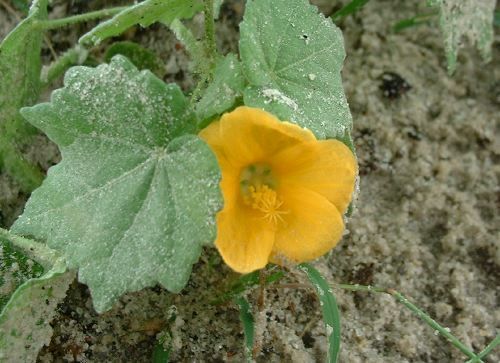
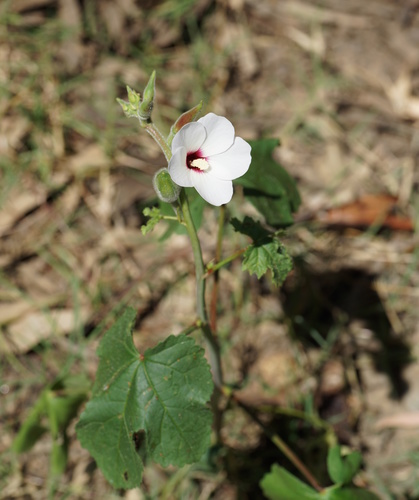
A tall erect branching herb. It grows to 60 cm tall. It grows each year from seeds. The branches are angular and can have some hairs. The leaves are simple and with teeth along the edge. There are a pair of stiff hairs at the bottom of the leaf and another pair where the leaf joins the stem. The flowers are small and yellow. The fruit are long thin pods. These are divided at the top into 3 short spreading horns.
Nutrition Score: 35/100
| Part | Moisture | kJ | kcal | Protein | Vit A | Vit C | Iron | Zinc |
|---|---|---|---|---|---|---|---|---|
| Leaves | 81 | 296 | 72 | 4.5 | — | — | — | — |
How to Grow
Plants grow easily from seed.
Propagation: Seed - sown directly on well-prepared, manured beds at the beginning of the wet season, broadcast or drilled in rows spaced at 20 - 30 cm. The plants are thinned to 20 plants per m2. Germination may be poor due to seed dormancy, but a short immersion in boiling water or soaking overnight in warm water speeds up germination and makes it less erratic. The seeds retain their viability for 8 - 12 months when stored in well-sealed jars.
Medicinal Uses
The pods are used for a herbal drink.
Other Uses
Fibres obtained from the stem are used for fishing lines and rough cordage.
Production
Leaves are collected during the rainy season.
Other Information
It is an occasionally used vegetable. It is useful in dry climates. It is a cultivated food plant. It is a commonly used leaf in Mozambique. The leaves are sold in local markets.
Notes
There are about 100 Corchorus species.
Names & Synonyms
Dadi, Delele, Derere-renenje, Derere, Eiyo, Eteke, Gusha, Gwisha, Hachota, Idelele, Ifanhanyei, Isileleda, Koxolanhoun, Kibwando, Kimulikwi kidala, Koxolanhoun, Labelbada, Lalo baleo, Lalo bali, Legen, Ligusha, Maero, Malehiya, Mbodakh, Mlenda, Msafa, Namarete, Nkuse, Nop i khadji, Nzofe, Oloqloqota, Otigo-afuku, Ountcho, Phali, Quddah, Sanvoa, Senujaga, Sobo, Taxalupa, Tixante, Weakeh, Wilde jute, Zofon
References (77)
- Abbiw, D.K., 1990, Useful Plants of Ghana. West African uses of wild and cultivated plants. Intermediate Technology Publications and the Royal Botanic Gardens, Kew. p 42
- Achigan-Dako, E, et al (Eds), 2009, Catalogue of Traditional Vegetables in Benin. International Foundation for Science.
- Addis, G., Asfaw, Z & Woldu, Z., 2013, Ethnobotany of Wild and Semi-wild Edible Plants of Konso Ethnic Community, South Ethiopia. Ethnobotany Research and Applications. 11:121-141
- Addis, G., et al, 2013, The Role of Wild and Semi-wild Edible Plants in Household Food Sovereignty in Hamer and Konso Communities, South Ethiopia. Ethnobotany Research & Applications. 11:251-271
- Agea, J. G., et al 2011, Wild and Semi-wild Food Plants of Bunyoro-Kitara Kingdom of Uganda: etc. Environmental Research Journal 5(2) 74-86
- Al-Fatimi, M. A., Wild Edible Plants Traditionally Collected and Used in Southern Yemen. Research Square. University of Aden. p 17
- Ambasta, S.P. (Ed.), 2000, The Useful Plants of India. CSIR India. p 140
- Anywar, G., et al, 2014, Wild Plants Used as Nutraceuticals from Nebbi District, Uganda. European Journal of medicinal Plants. 4(6):641-660
- Asfaw, Z., Conservation and use of traditional vegetables in Ethiopia. FAO
- Asfaw, Z. and Tadesse, M., 2001, Prospects for Sustainable Use and Development of Wild Food Plants in Ethiopia. Economic Botany, Vol. 55, No. 1, pp. 47-62
- Awas, T., 1997, A Study on the Ecology and Ethnobotany of Non-cultivated Food Plants and Wild Relatives of Cultivated crops in Gambella Region, Southwestern Ethiopia. Addis Ababa University. p 69
- Ayantunde, A. A., et al, 2009, Uses of Local Plant Species by Agropastoralists in South-western Niger. Ethnobotany Research and Applications. Vol. 7: 53-66
- Boedecker, J., et al, 2014, Dietary contribution of Wild Edible Plants to women’s diets in the buffer zone around the Lama forest, Benin – an underutilized potential. Food Sec. 6:833–849
- Codjia, J. T. C., et al, 2003, Diversity and local valorisation of vegetal edible products in Benin. Cahiers Agricultures 12:1-12
- Dansi, A., et al, 2008, Traditional leafy vegetables and their use in the Benin Republic. Genet Resour Crop Evol (2008) 55:1239–1256
- Diarra, N. et al, 2016, Etude ethnobotanique des plantes alimentaires utilisées en période de soudure dans les régions Sud du Mali. Int. J. Biol. Chem. Sci. 10(1): 184-197
- Diouf, M., et al, Leafy Vegetables in Senegal. Bioversity webite
- Exell, A.W. et al, (Ed), 1963, Flora Zambesiaca Vol 2 Part 1 Crown Agents, London. p 88
- FAO, 1988, Traditional Food Plants, FAO Food and Nutrition Paper 42. FAO Rome p 218
- Flora of Pakistan. www.eFloras.org
- Flyman, M. V. & Afolayan, A. J., 2006, A Survey of plants used as wild vegetables in four districts of Botswana. Ecology of Food and Nutrition, 45:405-415
- Fowler, D. G., 2007, Zambian Plants: Their Vernacular Names and Uses. Kew. p 44
- Fox, F. W. & Young, M. E. N., 1982, Food from the Veld. Delta Books. p 349
- Freiberger, C. E., et al, 1998, Nutrient content of the edible leaves of seven wild plants from Niger. Plant Foods for Human Nutrition 53: 57–69,
- Gallagher, D. E., 2010, Farming beyond the escarpment: Society, Environment, and Mobility in Precolonial Southeastern Burkina Faso. PhD University of Michigan.
- Godfrey, J. et al, 2013, Harvesting, preparationand preservation of commonly consumed wild and semi-wild food plants in Bunyoro-Kitara Kingdom, Uganda. Int. J. Med. Arom. Plants. Vol.3 No.2 pp 262-282
- Grubben, G. J. H. and Denton, O. A. (eds), 2004, Plant Resources of Tropical Africa 2. Vegetables. PROTA, Wageningen, Netherlands. p 221
- Guil-Guerrero, J. L., et al, 2001, Edible Wild Plants. in Recent Progress in Medicinal Plants Vol. 8 Sci. Tech publishing, Texas
- Harkonen, M. & Vainio-Mattila, K., 1998, Some examples of Natural Products in the Eastern Arc Mountains. Journal of East African Natural History 87:265-278
- Hedrick, U.P., 1919, (Ed.), Sturtevant's edible plants of the world. p 216
- High, C. & Shackleton, C. M., 2000, The comparative value of wild and domestic plants in home gardens of a South African rural village. Agroforestry Systems 48: 141–156, 2000
- Jardin, C., 1970, List of Foods Used In Africa, FAO Nutrition Information Document Series No 2.p 69
- Long, C., 2005, Swaziland's Flora - siSwati names and Uses http://www.sntc.org.sz/flora/
- Lulekal, E., et al, 2011, Wild edible plants in Ethiopia: a review on their potential to combat food insecurity. Afrika Focus - Vol. 24, No 2. pp 71-121
- Lyimo, M., et al, 2003, Identification and nutrient composition of indigenous vegetables of Tanzania. Plant Foods for Human Nutrition. 58: 85-92
- Magwede, K., van Wyk, B.-E., & van Wyk, A. E., 2019, An inventory of Vhavenḓa useful plants. South African Journal of Botany 122 (2019) 57–89
- Maiga, A., et al, 2005, Determination of Some Toxic and Essential Metal Ions in Medicinal and Edible Plants from Mali. Journal of Agricultural and Food Chemistry 53: 2316-2321
- Majeed, M., et al, 2021, Gathered Wild Food Plants among Diverse Religious Groups in Jhelum District, Punjab, Pakistan. Foods 2021, 10, 594.
- Mant. pl. 2:566. 1771
- Maroyi, A., 2011, The Gathering and Consumption of Wild Edible Plants in Nhema Communal Area, Midlands Province, Zimbabwe. Ecology of Food and Nutrition 50:6, 506-525
- Maroyi, A., 2013, Use of weeds as traditional vegetables in Shurugwi District, Zimbabwe. Journal of Ethnobiology and Ethnomedicine 9:60
- Martin, F.W. & Ruberte, R.M., 1979, Edible Leaves of the Tropics. Antillian College Press, Mayaguez, Puerto Rico. p 221
- Maundu, P. et al, 1999, Traditional Food Plants of Kenya. National Museum of Kenya. 288p
- Mertz, O., Lykke, A. M., and Reenberg, A., 2001, Importance and Seasonality of Vegetable Consumption and Marketing in Burkina Faso. Economic Botany, 55(2):276-289
- Mpasiwakomu, R. A., 2017, The Diversity and Utilization of Wild Edible and Medicinal Plant Species found in Uvinza Miombo Woodlands, Tanzania. M. Sc. thesis University of Tanzania.
- Msola, D. K., 2007, The role of Wild Foods in Household Income and Food Security in Mufundi District, Tanzania. Morogoro, Tanzania. p 46
- Msuya, T. S., et al, 2010, Availability, Preference and Consumption of Indigenous Foods in the Eastern Arc Mountains, Tanzania, Ecology of Food and Nutrition, 49:3, 208-227
- Mutie, F. G., 2020, Conservation of Wild Food Plants and Their Potential for Combatting Food Insecurity in Kenya as Exemplified by the Drylands of Kitui County. Plants 2020, 9, 1017
- Mutie, F. M., et al, 2023, Important Medicinal and Food Taxa (Orders and Families) in Kenya, Based on Three Quantitative Approaches. Plants 2023, 12, 1145
- N'Danikou, S. et al, 2010, Eliciting Local Values of Wild Edible Plants in Southern Bénin to Identify Priority Species for Conservation. Economic Botany, 20(10), 2011, pp. 1–15.
- Ogle & Grivetti, 1985,
- Okigbo, B.N., Vegetables in Tropical Africa, in Opena, R.T. & Kyomo, M.L., 1990, Vegetable Research and development in SADCC countries. Asian Vegetable Research and development Centre. Taiwan. p 45
- Paczkowska, G . & Chapman, A.R., 2000, The Western Australian Flora. A Descriptive Catalogue. Western Australian Herbarium. p 561
- Peters, C. R., O'Brien, E. M., and Drummond, R.B., 1992, Edible Wild plants of Sub-saharan Africa. Kew. p 190
- Plowes, N. J. & Taylor, F. W., 1997, The Processing of Indigenous Fruits and other Wildfoods of Southern Africa. in Smartt, L. & Haq. (Eds) Domestication, Production and Utilization of New Crops. ICUC p 189
- Purseglove, J.W., 1968, Tropical Crops Dicotyledons, Longmans. p 613
- Royal Botanic Gardens, Kew (1999). Survey of Economic Plants for Arid and Semi-Arid Lands (SEPASAL) database. Published on the Internet; http://www.rbgkew.org.uk/ceb/sepasal/internet [Accessed 11th June 2011]
- Ruffo, C. K., Birnie, A. & Tengnas, B., 2002, Edible Wild Plants of Tanzania. RELMA p 228
- Ruiters-Welcome, A. K., 2019, Food plants of southern Africa. Ph.D. thesis. Univ. of Johannesburg p 75
- Scudder, 1971,
- Segnon, A. C. & Achigan-Dako, E. G., 2014, Comparative analysis of diversity and utilization of edible plants in arid and semi-arid areas in Benin. Journal of Ethnobiology and Ethnomedicine 2014, 10:80
- Shackleton, S. E., et al, 1998, Use and Trading of Wild Edible Herbs in the Central Lowveld Savanna Region, South Africa. Economic Botany, Vol. 52, No. 3, pp. 251-259
- Shava, S., et al, 2009, Traditional food crops as a source of community resilience in Zimbabwe. International Journal of the African Renaissance 4(1)
- Smith, F. I. and Eyzaquirre, P., 2007, African leafy vegetables: Their role in the World Health Organization's global Fruit and Vegetables Initiative. AJFAND, Vol. 7 No. 3
- Swaziland's Flora Database http://www.sntc.org.sz/flora
- Vainio-Mattila, K., 2000, Wild vegetables used by the Sambaa in the Usumbara Mountains, NE Tanzania. Ann. Bot. Fennici 37:57-67
- Vanderjagt, D. J. et al, 2000, The trypsin inhibitor content of 61 wild edible foods of Niger. Plant Foods for Human Nutrition. 55:335-346
- van Wyk, B., 2005, Food Plants of the World. An illustrated guide. Timber press. p 151
- van Wyk, Be., & Gericke, N., 2007, People's plants. A Guide to Useful Plants of Southern Africa. Briza. p 68
- van Wyk, B-E., 2011, The potential of South African plants in the development of new food and beverage products. South African Journal of Botany 77 (2011) 857–868
- Welcome, A. K. & Van Wyk, B.-E., 2019, An inventory and analysis of the food plants of southern Africa. South African Journal of Botany 122 (2019) 136–179
- Wheeler, J.R.(ed.), 1992, Flora of the Kimberley Region. CALM, Western Australian Herbarium, p 165
- Vernon, R., 1983, Field Guide to Important Arable Weeds of Zambia. Dept of Agriculture, Chilanga, Zambia. p 48
- Wilczek, R.,1963, Flore du Congo du Rwanda et du Burundi: Tiliaceae. vol. 10,
- World Checklist of Useful Plant Species 2020. Royal Botanic Gardens, Kew
- www.zimbabweflora.co.zw 2011
- Zon, A.P.M. van der, Grubben, G.J.H., 1976, Les legumes-feuilles spontanes et cultives du Sud-Dahomey, Communication 65, Royal Tropical Institute, Amsterdam, p 54