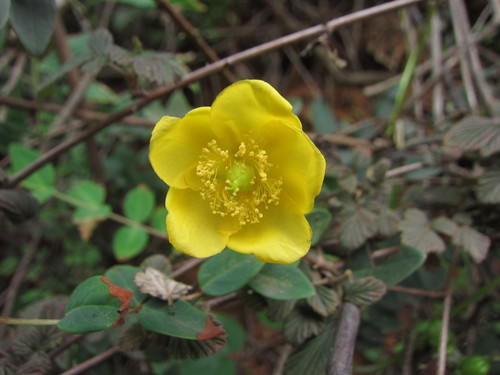
Hypericum maculatum
Crantz
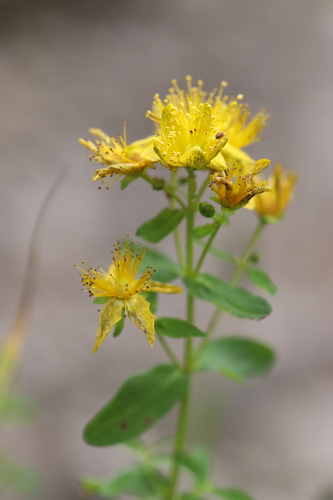
(c) John, some rights reserved (CC BY-NC), uploaded by John
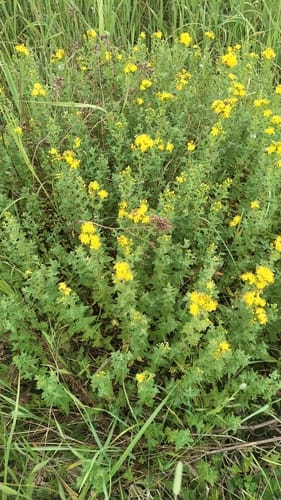
no rights reserved
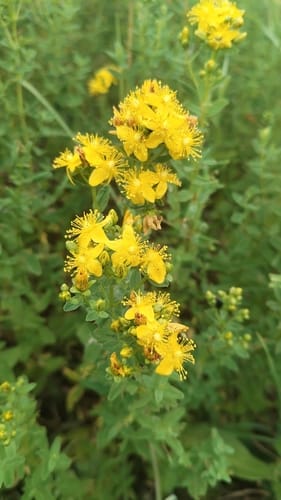
no rights reserved
What to Eat
Edible parts: Leaves - spice, Leaves - tea
It is considered to be a medicinal plant. Hypericum maculatum herb has been used in the traditional Austrian medicine internally as tea or oil extract, and externally as oil extract, ointment or cold maceration in ethanol for treatment of disorders of the skin, locomotor system, nervous system, gastrointestinal tract, respiratory tract, kidneys and urinary tract, cardiovascular system, infections, rheumatism and gout.
Where to Find It
It is a temperate plant.
Europe, Finland, Latvia, Lithuania, Luxembourg, Norway, Poland, Russia, Scandinavia, Slovenia, Switzerland,
How to Identify
A herb.
Wikipedia
Source ↗Hypericum maculatum, commonly known as imperforate St John's-wort, or spotted St. Johnswort, is a species of perennial herbaceous flowering plant in the family Hypericaceae. It is native to Europe and Western Asia where it grows in moist meadows.
Names & Synonyms
Firkantperikum, Kuzmanhattu, Pegasta krčnica, Zveraboj
References (5)
- Girard, N. J., 2020, Sustainable Foraging of Wild Edible Plants in Norway. A Biocultural Approach. M. Sc. thesis Norwegian University. p 132
- Kolosova, V., et al, 2020, Foraging in Boreal Forest: Wild Food Plants of the Republic of Karelia, NW Russia. Foods 2020, 9, 1015; p 17
- Prakofjewa, J., et al, 2023, Boundaries Are Blurred: Wild Food Plant Knowledge Circulation across the Polish-Lithuanian-Belarusian Borderland. Biology 2023, 12, 571.
- Pruse, B., et al, 2021, Active Wild Food Practices among Culturally Diverse Groups in the 21st Century across Latgale, Latvia. Biology 2021, 10, 551.
- Shikov, A. N. et al, 2017, Traditional and Current Food Use of Wild Plants Listed in the Russian Pharmacopoeia. Frontiers in Pharmacology. Vol. 8 Article 841