Daemonorops mollis
(Blanco) Merr.

Wikimedia Commons - Francisco Manuel Blanco (O.S.A.)

Wikimedia Commons - Francisco Manuel Blanco (O.S.A.)
What to Eat
Edible parts: Shoots
The fruit has a sweet flavour. This report does not say that the fruit is edible, though it is very unlikely to be in any way harmful.
Where to Find It
It is a tropical plant.
Asia, Pacific, Philippines, SE Asia,
How to Identify
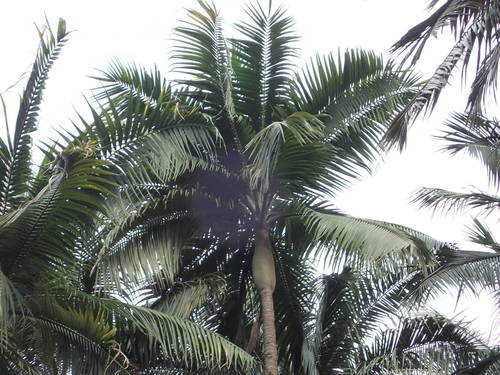
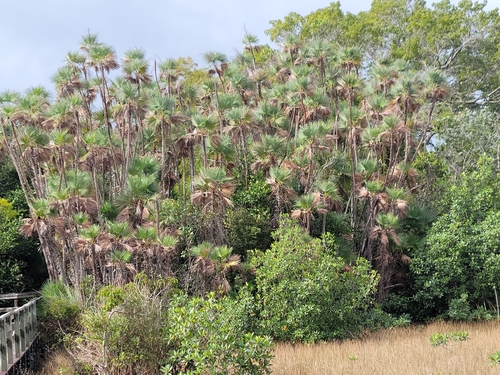
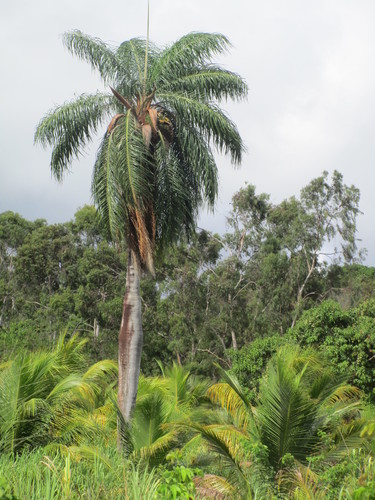
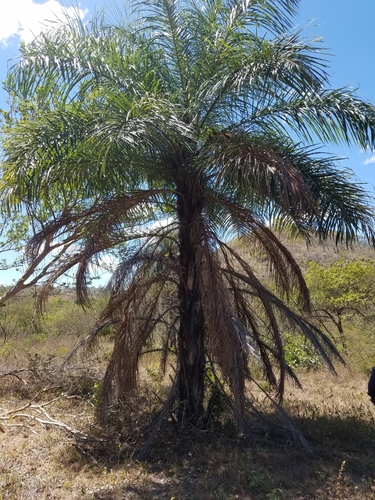
A tropical cane or rattan in the palm family (Arecaceae).
How to Grow
A plant of lowland moist tropics. Most species in this genus are more or less vigorous climbing plants in rainforests. In general, they are likely to grow best with their roots in the shade but with enough gap in the canopy to encourage their stems to grow up towards the light. They are also likely to grow best in a humus-rich soil. A dioecious species, both male and female forms need to be grown if fruit and seed are required.
Other Uses
The canes are used for craftwork and as a tying material. The canes are 10 - 20mm in diameter. The long and slender stems of rattan are put to various uses according to their size, length, flexibility, elasticity and toughness. The most slender canes are employed entire for binding purposes, and in making chairs, blinds, mats, wicker or basketwork, fishing implements, etc. Twisted together, they make very strong cables. The largest and more resistent canes are used entire as cables, the framework of wicker chairs etc. Usually, however, for many purposes the stems are split throughout their length into 2 - 4 or more strips from which the inner soft brittle and spongy portion is removed by means of a knife or same other instrument, so as to leave the external portion, which is hard, tough, flexible, elastic and has its outer surface very clean and smooth as if it had been varnished. Strips vary in width according to the use to which they are to be put. Those for delicate work, such as the network of furniture, small bags, hats, etc, are from 1 - 3mm wide; those employed as lashings in native housebuilding or in fastening the removable head of the Malay axe to its handle are from 5-6 mm wide. Collecting and preparing the stems is very simple. The stem is cut near the ground and detached from the trees by taking a strong hold of its base and thus pulling down the entire plant with its leaves. The most recent growth at the top of the plant is removed and then, handling it from the upper end, the stem is forcibly drawn in the opposite direction between two pieces of wood, thus removing the spiny coverings. It is then cut into lengths of about 5 metres, each piece is bent into two equal parts and the stems are fastened into bundles ready for market. The most valued stems are not thicker than a man's little finger and have a fine polished straw-yellow glassy surface. Freshly cut canes produce a milky sap.
Names & Synonyms
Dita an
References (1)
- Alegado, A. M. & De Guzman, R. B., 2014, Indigenous food crops of the Aetas tribe in the Philippines and their traditional methods of food preparation. in Promotion of Underutilized Indigenous Food Resources for Food Security and Nutrition in Asia and Pacific. FAO. Bangkok p 160