Bactris acanthocarpoides
Barb.Rodr.
ArecaceaeFruit

iNaturalist · cc-by-nc
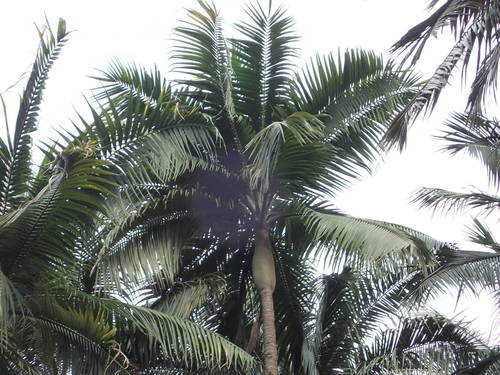
(c) Julien Piolain, some rights reserved (CC BY-NC), uploaded by Julien Piolain
(c) Julien Piolain, some rights reserved (CC BY-NC), uploaded by Julien Piolain
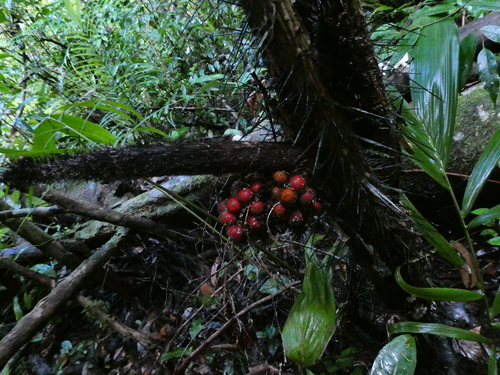
iNaturalist · cc-by-nc
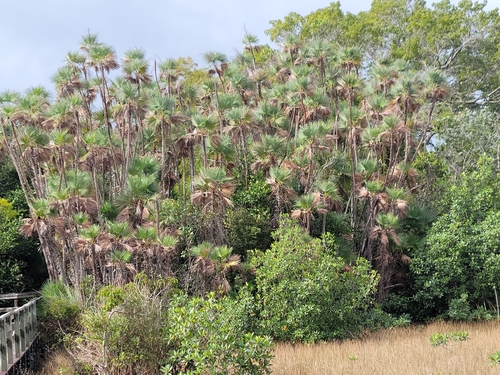
(c) Sebastien TRACLET, some rights reserved (CC BY-NC)
(c) Sebastien TRACLET, some rights reserved (CC BY-NC)
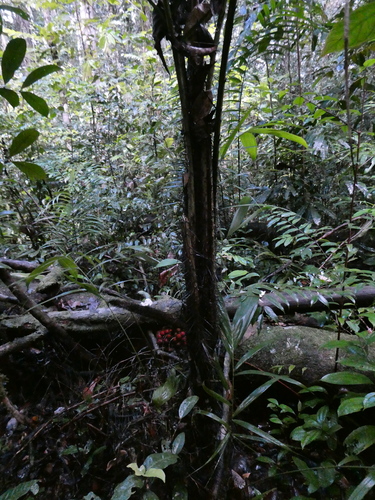
iNaturalist · cc-by-nc
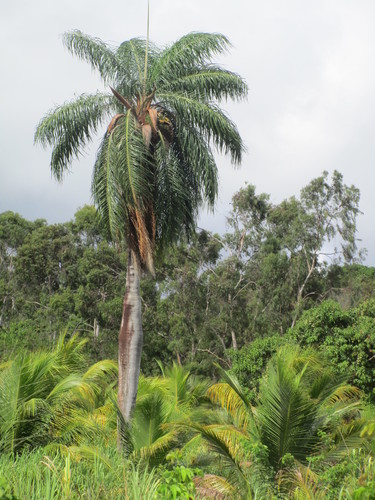
(c) Sebastien TRACLET, some rights reserved (CC BY-NC)
(c) Sebastien TRACLET, some rights reserved (CC BY-NC)
What to Eat
Edible parts: Fruit
Bactris gasipaes, the peyibaye or peach palm, was domesticated in pre-Columbian times and is cultivated for its starchy fruit and palm heart throughout the Neotropics, especially in Brazil, Colombia, Peru and Costa Rica. Other species used for food include B. brongniartii, B. campestris, B. concinna and B. major. Bactris acanthophora and B. campestris are used medicinally, while B. barronis, B. pilosa and B. setulosa are used in construction.
Where to Find It
It is a tropical plant.
Amazon, Brazil, Guianas, Peru, South America,
How to Identify
A tropical palm in the family Arecaceae, producing spiny fruits.
Names & Synonyms
Neja, Nejilla, Njilla
References (1)
- Grandtner, M. M. & Chevrette, J., 2013, Dictionary of Trees, Volume 2: South America: Nomenclature, Taxonomy and Ecology. Academic Press p 56