Brunfelsia macrocarpa
Plowman
Bigfruit raintree

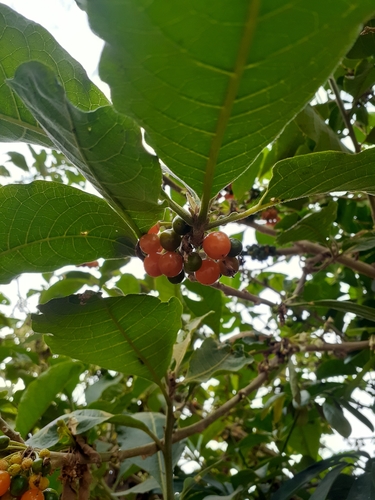
(c) Gustavo Yaselga, some rights reserved (CC BY-NC), uploaded by Gustavo Yaselga

President and Fellows of Harvard College

Field Museum of Natural History - Botany Department | GDI 2013-2015
What to Eat
Edible parts: Fruit
The fruit is edible.
Known Hazards
Where to Find It
It is a tropical plant.
Colombia, Ecuador, South America,
How to Identify
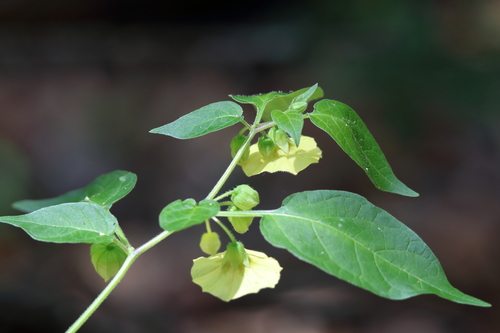
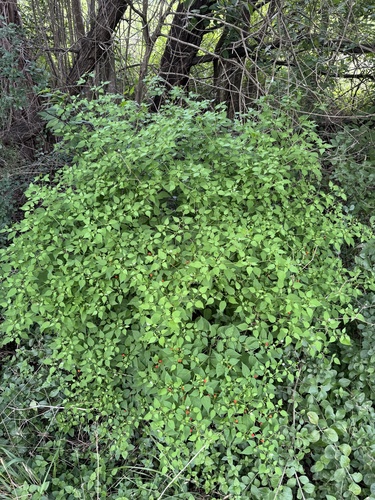
A tropical tree in the Solanaceae family, native to tropical regions.
How to Grow
Grows best in a position with partial shade - when growing in full sun the foliage may scorch and drop. Prefers a loamy, fertile, humus-rich, moist but well-drained soil. Many species in this genus grow wild in alkaline soils and, in non-alkaline soils, all members of the genus can benefit from the addition of some ground limestone. The large, showy flowers are said to be fragrant with the odour of honeysuckle
Propagation: Seed - it has a short period of viability and does not tolerate dessication. Sown fresh, it germinates within 2 - 4 weeks. Layering.
Names & Synonyms
Manzana
References (3)
- Grandtner, M. M. & Chevrette, J., 2013, Dictionary of Trees, Volume 2: South America: Nomenclature, Taxonomy and Ecology. Academic Press p 74
- Roa, J. A. G. & Boada, D. S. G., 2018, Fundación para el Fortalecimiento de la Fruticultura y Plantas Alimenticias no Convencionales en Colombia.
- Torre, de la, L., et al, 2008, Enciclopedia de las Plantas Útiles del Ecuador. Herbario QCA. Pontificia Universidad Católica del Ecuador. p 581