Capsicum annuum
L.
Capsicum
(c) platoro, some rights reserved (CC BY-NC)
(c) bigdannyb, some rights reserved (CC BY-NC), uploaded by bigdannyb

(c) Miguel Ángel Serrano, some rights reserved (CC BY-NC), uploaded by Miguel Ángel Serrano
What to Eat
Edible parts: Fruit, Leaves, Herb, Spice, Vegetable
The fruit varies enormously across cultivars. Hot types — chilli and cayenne — are used as pungent flavourings, dried and ground into powders such as paprika, or used to colour food. Milder sweet pepper cultivars have a pleasant, slightly sweet flavour and are often eaten raw in salads. Fruits range widely in size and shape, from a few centimetres long to more than 30cm. Young leaves are said to be edible with some caution advised; they are steamed as a potherb or added to soups and stews, and contain about 4–6% protein. Seed can be dried and ground into a pepper. Flowers are also edible raw or cooked.
Known Hazards
Where to Find It
A tropical or subtropical plant. Plants grow from sea level up to about 2400 m altitude. They are killed by frost. Soils need to be well drained and fertile. The fruit and plants can rot in the middle of the wettest seasons. They need a temperature above 4°C. A night temperature of 16-18°C and a day temperature of 26-28°C is best. A pH of 5.4-6.9 is suitable. They suit plant hardiness zones 8-12.
Africa, Albania, Andorra, Angola, Asia, Australia, Austria, Balkans, Bangladesh, Barbados, Benin, Bhutan, Bolivia, Brazil, British Indian Ocean Terr., BIOT, Bulgaria, Burkina Faso, Cambodia, Cape Verde, Caribbean, Caucasus, Central Africa, Central America, Central Asia, China, Colombia, Congo DR, Cook Islands, Costa Rica, Cuba, Dominican Republic, East Africa, East Timor, Ecuador, Egypt, Ethiopia, Europe, Fiji, FSM, Georgia, Ghana, Grenada, Guam, Guatemala, Guiana, Guianas, Guyana, Haiti, Hawaii, Himalayas, Honduras, Hungary, India, Indochina, Indonesia, Italy, Japan, Kazakhstan, Kenya, Kiribati, Korea, Kyrgyzstan, Laos, Macedonia, Madagascar, Malawi, Malaysia, Marquesas, Mediterranean, Mexico, Moldova, Mozambique, Myanmar, Nauru, Nepal, Niger, Nigeria, North Africa, North America, Northeastern India, Pacific, Pakistan, Papua New Guinea, PNG, Peru, Philippines, Pohnpei, Romania, Rotuma, Sahel, Samoa, Sao Tome and Principe, SE Asia, Serbia, Sierra Leone, Sikkim, Slovenia, Somalia, South Africa, Southern Africa, South America, Spain, Sri Lanka, St Helena, Suriname, Switzerland, Taiwan, Tajikistan, Tasmania, Thailand, Timor-Leste, Tonga, Turkey, Türkiye, Tuvalu, Uganda, Ukraine, Uruguay, USA, Uzbekistan, Vanuatu, Venezuela, Vietnam, West Africa, West Indies, Yugoslavia, Zambia, Zimbabwe,
How to Identify
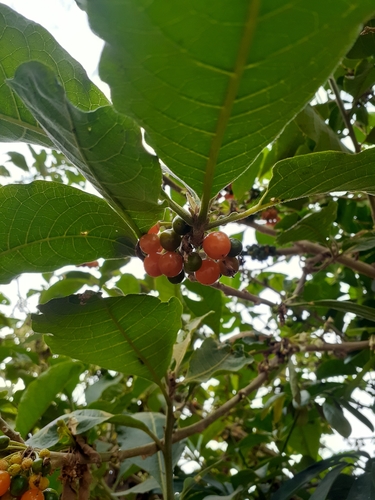
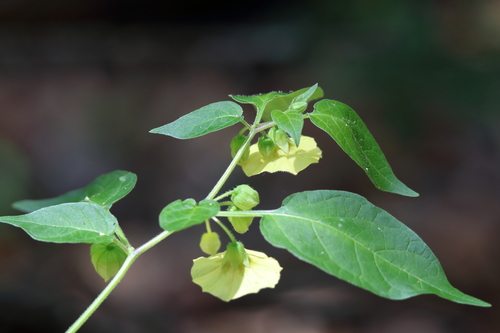
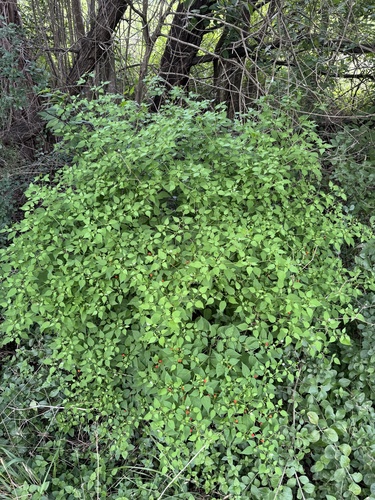
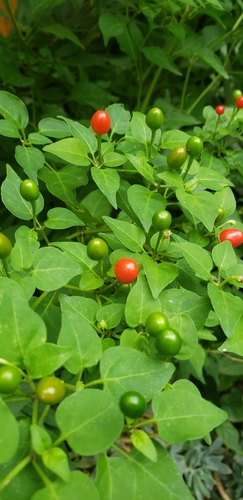
An annual plant up to 1.5 m high. The leaves can be long and sword shaped or oval to rounded. The leaves can be 12 cm long. The flowers are produced singly, and are yellow or white. They are bell shaped. The flowers are 1.5 cm across and in the axils of leaves. Fruit are about 10 cm long and 6 cm wide and red when fully ripe. They are hollow. They contain many seeds. Kinds with different shaped fruit also occur.
Nutrition Score: 40/100
| Part | Moisture | kJ | kcal | Protein | Vit A | Vit C | Iron | Zinc |
|---|---|---|---|---|---|---|---|---|
| Leaves | 82.1 | 222 | 53 | 5.8 | — | 68 | 1.4 | — |
| Fruit yellow raw | 92 | 113 | 27 | 1 | 24 | 183.5 | 0.5 | 0.2 |
| Fruit green raw | 93.5 | 65 | 15 | 0.9 | 59 | 100 | 0.4 | 0.2 |
| Fruit green boiled | 93.7 | 59 | 14 | 0.9 | 59 | 60 | 0.4 | 0.2 |
How to Grow
Requires a very warm sunny position and a fertile well-drained soil. Prefers a light sandy soil that is slightly acid. Tolerates a pH in the range 4.3 to 8.3. Plants can tolerate a small amount of frost, but this species does not normally do well outdoors in an average British summer and so it is usually grown in a greenhouse in this country. However, if a very warm sheltered position outdoors is chosen then reasonable crops could be obtained in good summers. This species is widely grown throughout the world, but especially in warm temperate to tropical climates, for its edible fruit - the sweet and chilli peppers. There are many named varieties. There are five basic forms of fruits, each form having various varieties. These forms are:- Cerasiforme. These have small cherry-shaped pungent fruits. Conioides. These fruits are cone-shaped and up to 5cm long. Many of them are grown as ornamentals, but some are also cultivated for food.. Fasciculatum. Also cone-shaped, but with pungent red fruits up to 7.5cm long. Grossum. These are the sweet peppers with large bell-shaped fruits and thick flesh. Longum. These are the cultivated hot cayenne and chilli peppers with long thin fruits up to 30cm long. The pungency of peppers depends upon the presence of a single gene, cultivars that lack this gene are the sweet peppers. A short-lived evergreen perennial in the tropics, though the plants are grown as annuals in temperate zones. Sweet pepper plants are good companions for basil and okra. They should not be grown near apricot trees, however, because a fungus that the pepper is prone to can cause a lot of harm to the apricot tree. In garden design, as well as the above-ground architecture of a plant, root structure considerations help in choosing plants that work together for their optimal soil requirements including nutrients and water. Peppers are usually harvested in late summer to autumn, depending on the variety and climate. Capsicum annuum typically flowers from late spring to early summer.
Propagation: Sow seed in late winter to early spring in a warm greenhouse; germination typically takes 3–4 weeks at 20°C. Prick seedlings out into individual pots of reasonably rich soil and grow on quickly. For outdoor cultivation, plant out after the last expected frosts and protect with a cloche or frame until plants are well established.
Medicinal Uses
The fruit of hot, pungent cultivars is antihaemorrhoidal when taken in small amounts, antirheumatic, antiseptic, diaphoretic, digestive, irritant, rubefacient, sialagogue, and tonic. Internally it is used in the treatment of the cold stage of fevers, debility in convalescence or old age, varicose veins, asthma, and digestive problems. Externally it is applied for sprains, unbroken chilblains, neuralgia, and pleurisy. It is also an effective sea-sickness preventative. The German Commission E Monographs approve Capsicum for muscular tension and rheumatism.
Other Uses
Sweet pepper plants grow well alongside basil and okra but should not be planted near apricot trees, as a fungus the pepper is prone to can seriously harm apricots. Pepper flowers can attract pollinators such as bees. The fruits provide food for wildlife, and seeds are eaten by some birds. Foliage can offer limited cover for beneficial insects. The strong scent of pepper plants may help deter some pests, making them useful in companion planting.
Wikipedia
Source ↗Capsicum annuum is a flowering plant in the family Solanaceae (nightshades), native to the northern regions of South America and to southwestern North America. The plant produces berries of many colors including red, green, and yellow, often with pungent taste. It is one of the oldest cultivated crops, with domestication dating back to around 6,000 years ago in regions of Mexico. The genus Capsicum has over 30 species but Capsicum annuum is the primary species in its genus, as it has been widely cultivated for human consumption for a substantial amount of time and has spread across the world. This species has many uses in culinary, medicine, self-defense, and ornamental applications.
Production
The first fruit can be harvested after 3-4 months.
Other Information
It is a cultivated food plant. In Papua New Guinea it is becoming a popular vegetable to eat raw.
Notes
There are 10 Capsicum species. The various Capsicum annuum varieties may be synonyms of Capsicum annuum. It possibly has anti-cancer properties.
Names & Synonyms
Adimaeti, Aji, Aji dulce, Aji rojo, Amashito, Bell peppers, Berbere sibira, Chilar de monte, Chile de color, Epeba, Gochu, Kamalra, Kamulali, Khursani, Laat jiu, Libokeg, Malu miris, Mermit, Milagai, Mirch, Miris, Misewe, Mixamixo, Niba, Ndungu zi mafofolo, Ngayok, Ot, Perec, Pilopilo, Pimentao, Pirpiri, Prik chee faa, Sakay, Sakay fanendy, Sakay tsilandimilahy, Tattasai, Togarashi, Tsilampin, Tsi-tra-ka
References (111)
- Abbiw, D.K., 1990, Useful Plants of Ghana. West African uses of wild and cultivated plants. Intermediate Technology Publications and the Royal Botanic Gardens, Kew. p 35
- Anderson, E. F., 1993, Plants and people of the Golden Triangle. Dioscorides Press. p 205
- Awas, T., 1997, A Study on the Ecology and Ethnobotany of Non-cultivated Food Plants and Wild Relatives of Cultivated crops in Gambella Region, Southwestern Ethiopia. Addis Ababa University. p 67
- Baa-Poku, F. & Asante, I. K., 2020, Use of Neglected and Underutilized Crop Species (NUCS) in some farming communities in the Upper Afram and Upper Dayi River Basins in Ghana. International Journal of Technology and Management Research 5 (2): 48-63
- Balemie, K., & Kebebew, F., 2006, Ethnobotanical study of wild edible plants in Derashe and Kucha Districts, South Ethiopia. Journal of Ethnobiology and Ethnomedicine.
- Bennett, B. C., 1990, Useful Plants of Amazonian Ecuador. US Agency for International Development. Fifth Progress Report. New York Botanical Gardens. p 39
- Bernholt, H. et al, 2009, Plant species richness and diversity in urban and peri-urban gardens of Niamey, Niger. Agroforestry Systems 77:159-179
- Bianchini, F., Corbetta, F., and Pistoia, M., 1975, Fruits of the Earth. Cassell. p 94
- Brickell, C. (Ed.), 1999, The Royal Horticultural Society A-Z Encyclopedia of Garden Plants. Convent Garden Books. p 226
- Brouk, B., 1975, Plants Consumed by Man. Academic Press, London. p 92, 286
- Burkill, H. M., 1985, The useful plants of west tropical Africa, Vol. 1. Kew.
- Bussman, R. W., et al, 2016, A comparative ethnobotany of Khevsureti, Samtskhe-Javakheti, Tusheti, Svaneti, and Racha-Lechkhumi, Republic of Georgia (Sakartvelo), Caucasus. Journal of Ethnobiology and Ethnomedicine.
- Bussman, R. W. et al, 2017, Ethnobotany of Samtskhe-Javakheti, Sakartvelo (Republic of Georgia), Caucasus. Indian Journal of Traditional Knowledge Vol. 16(1) pp 7-24
- Bussman, R. W., et al, 2021, Unity in diversity—food plants and fungi of Sakartvelo (Republic of Georgia), Caucasus. Journal of Ethnobiology and Ethnomedicine (2021) 17:72 p 15
- Caballero-Serrano, V., et al, 2019, Traditional ecological knowledge and medicinal plant diversity in Ecuadorian Amazon home gardens. Global Ecology and Conservation 17 (2019) e00524 p 14
- Cheifetz, A., (ed), 1999, 500 popular vegetables, herbs, fruits and nuts for Australian Gardeners. Random House p 50
- Chin, H. F., 1999, Malaysian Vegetables in Colour. Tropical Press. p 86 (As Capsicum annuum var. acuminatum)
- Ching, L. S. & Mohamed, S., 2001, Alpha-Tocopherol Content in 62 Edible Tropical Plants. J. Agric. Food Chem. 2001, 49, 3101−3105 (red)
- Chizmar Fernandez, C., et al, 2009, Plantas comestibles de Centroamerica. Instituto de Biodiversidad, Costa Rica. p 299
- Creasy, R., 2000, The Edible Asian Garden. Periplus p 52
- D'Ambrosio, U., & Puri, R. K., 2016, Foodways in transition: food plants, diet and local perceptions of change in a Costa Rican Ngäbe community. Journal of Ethnobiology and Ethnomedicine (2016) 12:3 p 27
- Dangol, D. R. et al, 2017, Wild Edible Plants in Nepal. Proceedings of 2nd National Workshop on CUAOGR, 2017.
- Dansi, A., et al, 2008, Traditional leafy vegetables and their use in the Benin Republic. Genet Resour Crop Evol (2008) 55:1239–1256
- Duarte, M. C., et al, 2022, Diversity of Useful Plants in Cabo Verde Islands: A Biogeographic and Conservation Perspective. Plants 2022, 11, 1313 p 16
- Ekman Herbarium records Haiti
- Epenhuijsen C.W. van., 1974, Growing Native vegetables in Nigeria. FAO Rome, p 44
- Esperanca, M. J., 1988. Surviving in the wild. A glance at the wild plants and their uses. Vol. 1. p 182
- Facciola, S., 1998, Cornucopia 2: a Source Book of Edible Plants. Kampong Publications, p 231
- Flora of China. www.eFloras.org
- Flora of Pakistan. www.eFloras.org
- Foo, J.T.S.(ed), 1996, A Guide to Common Vegetables. Singapore Science Foundation. p 130
- Food Composition Tables for use in Africa FAO http://www.fao.org/infoods/directory No. 746 (As Capsicum abyssinicum)
- Fowler, D. G., 2007, Zambian Plants: Their Vernacular Names and Uses. Kew. p 61
- Fox, F. W. & Young, M. E. N., 1982, Food from the Veld. Delta Books. p 342
- French, B.R., 1986, Food Plants of Papua New Guinea, A Compendium. Asia Pacific Science Foundation p 136
- French, B.R., 2010, Food Plants of Solomon Islands. A Compendium. Food Plants International Inc. p 154
- Goode, P., 1989, Edible Plants of Uganda. FAO p 26
- Grubben, G. J. H. and Denton, O. A. (eds), 2004, Plant Resources of Tropical Africa 2. Vegetables. PROTA, Wageningen, Netherlands. p 155
- Grubben, G.J.H. & El Tahir Ibrahim Mohamed, 2004. Capsicum annuum L. [Internet] Record from Protabase. Grubben, G.J.H. & Denton, O.A. (Editors). PROTA (Plant Resources of Tropical Africa), Wageningen, Netherlands. < http://database.prota.org/search.htm>. Accessed 14 October 2009. (Includes other varieties)
- Hedrick, U.P., 1919, (Ed.), Sturtevant's edible plants of the world. p 154
- Heiser, C.B., 1979, Peppers, in Simmonds, N.W., (ed), Crop Plant Evolution. Longmans. London. p 265
- Hermandez Bermejo, J.E., and Leon, J. (Eds.), 1994, Neglected Crops. 1492 from a different perspective. FAO Plant Production and Protection Series No 26. FAO, Rome. p 12
- Huxley, A. (Ed.), 1977, The Encyclopedia of the Plant Kingdom. Chartweil Books. p 56
- Jardin, C., 1970, List of Foods Used In Africa, FAO Nutrition Information Document Series No 2.p 63 (Also as Capsicum conicum) and (As Capsicum abyssinicum)
- Kapelle, M., et al, 2000, Useful plants within a Campesino Community in a Costa Rican Montane Cloud Forest. Mountain Research and Development, 20(2): 162-171
- Kebebew, M. & Leta, G., 2016, Wild Edible Plant Bio-diversity and Utilization System in Nech Sar National Park, Ethiopia. International Journal of Bio-resource and Stress Management 2016, 7(4):885-896
- Khanal, R., et al, 2014, Documenting abundance and use of underutilized plant species in the mid hill region of Nepal. ECOPRINT 21: 63-71, 2014
- Kiple, K.F. & Ornelas, K.C., (eds), 2000, The Cambridge World History of Food. CUP p 433
- Kuo, W. H. J., (Ed.) Taiwan's Ethnobotanical Database (1900-2000), http://tk.agron.ntu.edu.tw/ethnobot/DB1.htm
- Kybal, J., 1980, Herbs and Spices, A Hamlyn Colour Guide, Hamlyn Sydney p 64
- Latham, P., 2004, Useful Plants of Bas-Congo province. Salvation Army & DFID p 68
- Lautenschläger, T., et al, 2018, First large-scale ethnobotanical survey in the province of Uíge, northern Angola. Journal of Ethnobiology and Ethnomedicine (2018) 14:51
- Lazarides, M. & Hince, B., 1993, Handbook of Economic Plants of Australia, CSIRO. p 47
- Lembogi Biologi Nasional, 1980m Sayur-sayuran. Balai Pustaka, Jakarta. p 18
- Lentz, D. L., 1986, Ethnobotany of the Jicaque of Honduras. Economic Botany 40(2):210-219
- Macmillan, H.F. (Revised Barlow, H.S., et al) 1991, Tropical Planting and Gardening. Sixth edition. Malayan Nature Society. Kuala Lumpur. p 344
- Maghirang, R. G., et al, 2018. Ethnobotanical Studies of Some Plants Commonly Used as Vegetables in Selected Provinces of the Philippines. Journal of Nature Studies. 17(2), 30-43.
- Mapes, C. & Basurto, F., 2016, Biodiversity and Edible Plants of Mexico. Chapter 5 in R. Lira, et al. (eds.), Ethnobotany of Mexico, Ethnobiology, Springer. p 106
- Martin, F.W. & Ruberte, R.M., 1979, Edible Leaves of the Tropics. Antillian College Press, Mayaguez, Puerto Rico. p 46, 219
- Miguel, E., et al, 1989, A checklist of the cultivated plants of Cuba. Kulturpflanze 37. 1989, 211-357
- Molla, A., Ethiopian Plant Names. http://www.ethiopic.com/aplants.htm (As Capsicum abyssinicum)
- Murakami, A. et al, 2014, Screening for the In Vitro Anti-tumor-promoting Activities of Edible Plants from Malaysia. Bioscience, Biotechnology, and Biochemistry, 64:1, 9-16.
- Murtem, G. & Chaudhrey, P., 2016, An ethnobotanical note on wild edible plants of Upper Eastern Himalaya, India. Brazilian Journal of Biological Sciences, 2016, v. 3, no. 5, p. 63-81
- Niwano, Y. et al., 2009, Extensive Screening for Plant Foodstuffs in Okinawa, Japan with Anti-Obese Activity on Adipocytes, in vitro. Plant Foods in Human Nutrition 64:6-10
- Norrington, L., & Campbell, C., 2001, Tropical Food Gardens. Bloomings Books. p 26
- Owen, S., 1993, Indonesian Food and Cookery, INDIRA reprints. p 50
- Pascual-Mendoza, S. et al, 2021, Traditional knowledge of edible plants in an indigenous community in the Sierra Norte of Oaxaca, Mexico. Plant Biosystems - An International Journal Dealing with all Aspects of Plant Biology
- Peekel, P.G., 1984, (Translation E.E.Henty), Flora of the Bismarck Archipelago for Naturalists, Division of Botany, Lae, PNG. p 492, 495
- Phangchopi, U., et al, 2015, Diversity of wild edible plants in Marat Longri Wildlife Sanctuary, Assam. Indian Journal of Natural Products and Resources Vol. 6(4), December 2015 pp. 305-313
- Phon, P., 2000, Plants used in Cambodia. © Pauline Dy Phon, Phnom Penh, Cambodia. p 132
- Piedra-Malagón, E. M., et al, 2022, Edible native plants of the Gulf of Mexico Province. Biodiversity Data Journal 10: e80565 p 30
- Pieroni, A., 2008, Local plant resources in the ethnobotany of Theth, a village in the Northern Albanian Alps. Genet Resour Crop Evol (2008) 55:1197–1214
- Pio-Leon, J. F., et al, 2017, Prioritizing Wild Edible Plants of potential new crops based on Deciduous Forest traditional knowledge by a Rancher community. Botanical Sciences 95(1): 47-59 (as var. aviculare)
- Plants for a Future database, The Field, Penpol, Lostwithiel, Cornwall, PL22 0NG, UK. http://www.scs.leeds.ac.uk/pfaf/
- Plants of Haiti Smithsonian Institute http://botany.si.edu/antilles/West Indies
- Purseglove, J.W., 1968, Tropical Crops Dicotyledons, Longmans. p 524
- Rajapaksha, U., 1998, Traditional Food Plants in Sri Lanka. HARTI, Sri Lanka. p 469
- Rangel-Landa, S., et al, 2017, Sociocultural and ecological factors influencing management of edible and non-edible plants: the case of Ixcatlan, Mexico. Journal of Ethnobiology and Ethnomedicine. 13:59
- Rashid, H. E., 1977, Geography of Bangladesh. Westview. p 276
- Razanameharizaka, J., et al, 2022, Catalogue Legumes Traditionnels de Madagascar. Université d’Antananarivo, Antananarivo (101), Madagascar. Vol. 1. p 55
- Roa, J. A. G. & Boada, D. S. G., 2018, Fundación para el Fortalecimiento de la Fruticultura y Plantas Alimenticias no Convencionales en Colombia.
- Rosero-Toro, et al, 2018, Cultural significance of the flora of a tropical dry forest in the Doche vereda (Villavieja, Huila, Colombia). Journal of Ethnobiology and Ethnomedicine (2018) 14:22 p 12
- Ruiters-Welcome, A. K., 2019, Food plants of southern Africa. Ph.D. thesis. Univ. of Johannesburg p 102
- Salako, V. K. et al, 2013, Home gardens: an assessment of their biodiversity and potential contribution to conservation of threatened species and crop wild relatives in Benin. Genet Resour Crop Evol
- Samuels, J., 2015, Biodiversity of Food Species of the Solonaceae Family: A Preliminary Taxonomic Inventory of Subfamily Solanoideae. Resources 2015, 4. 277-322
- Seidemann J., 2005, World Spice Plants. Economic Usage, Botany, Taxonomy. Springer. p 81
- Senbeta, F., et al, 2013, Diversity of Useful Plants in the Coffee Forests of Ethiopia. Ethnobotany Research & Applications 11:049-069
- Siemonsma, J. S. and Piluek, K. (Eds), 1994, Plant Resources of South-East Asia No. 8 Vegetables. Prosea Foundation, Bogor, Indonesia, p 136
- Small, E., 2009, Top 100 Food Plants. The world's most important culinary crops. NRC Research Press. p 177
- Song, M., et al, 2013, Traditional knowledge of wild edible plants in Jeju Island, Korea. Indian Journal of Traditional Knowledge. 12(2) pp 177-194
- Staples, G.W. and Herbst, D.R., 2005, A tropical Garden Flora. Bishop Museum Press, Honolulu, Hawaii. p 532
- Sukenti, K., et al, 2016, Ethnobotanical study on local cuisine of the Sasak tribe in Lombok Island, Indonesia. Journal of Ethnic Foods. 3 (2016) 189-200 p 198
- Terra, G.J.A., 1973, Tropical Vegetables. Communication 54e Royal Tropical Institute, Amsterdam, p 35
- Thaman, R.R., 1976, The Tongan Agricultural System, University of the South Pacific, Suva, Fiji. p 386
- Thaman, R. R, 2016, The flora of Tuvalu. Atoll Research Bulletin No. 611. Smithsonian Institute p 114
- Tindall, H.D., & Williams, J.T., 1977, Tropical Vegetables and their Genetic Resources, International Board for Plant Genetic Resources, Rome, p 30
- Tindall, H.D., 1983, Vegetables in the Tropics, Macmillan p 347
- Topp, J. M. W., 1988, An Annotated Check List of the Flora of Diego Garcia, British Ocean Territory. Atoll Research Bulletin No. 313
- Torre, de la, L., et al, 2008, Enciclopedia de las Plantas Útiles del Ecuador. Herbario QCA. Pontificia Universidad Católica del Ecuador. p 581
- Tredgold, M.H., 1986, Food Plants of Zimbabwe. Mambo Press. p 39
- USDA, ARS, National Genetic Resources Program. Germplasm Resources Information Network - (GRIN). [Online Database] National Germplasm Resources Laboratory, Beltsville, Maryland. Available: www.ars-grin.gov/cgi-bin/npgs/html/econ.pl (10 April 2000)
- Vickery, M.L. and Vickery, B., 1979, Plant Products of Tropical Africa, Macmillan. p 45
- Vlkova, M., et al, 2015, Edible Plants Sold on Marginal Rural Markets in Fergana Valley, Southern Kyrgyzstan. Bulgarian Journal of Agricultural Science, 21 (No 2) 2015, 243–250
- Walter, A. & Lebot, V., 2007, Gardens of Oceania. ACIAR Monograph No. 122. p 259
- Welcome, A. K. & Van Wyk, B.-E., 2019, An inventory and analysis of the food plants of southern Africa. South African Journal of Botany 122 (2019) 136–179
- Wiersema, J. H. & Leon, B., 2013, World Economic Plants. A Standard Reference CRC Press. 2nd Ed. p 140
- Williamson, J., 2005, Useful Plants of Malawi. 3rd. Edition. Mdadzi Book Trust. p 55
- World Checklist of Useful Plant Species 2020. Royal Botanic Gardens, Kew
- Yeshi, K. et al, 2017, Taxonomical Identification of Himalayan Edible Medicinal Plants in Bhutan and the Phenolic Contents and Antioxidant Activity of Selected Plants. TBAP 7 (2) 2017 pp 89 - 106
- Zaldivar, M. E., et al, 2002, Species Diversity of Edible Plants Grown in Homegardens of Chibehan Amerindians from Costa Rica. Human Ecology, Vol. 30, No. 3, pp. 301-316
- Zeven, A. C. & de West, J. M. J., 1982, Dictionary of cultivated plants and their regions of diversity. Wageningen. p 79