Corema conradii
(Torr.) Torr. ex Loudon
Poverty grass, Broom Crowberry

(c) Stephanie Andreescu, some rights reserved (CC BY-NC), uploaded by Stephanie Andreescu
(c) Burkhard, some rights reserved (CC BY-NC-SA)
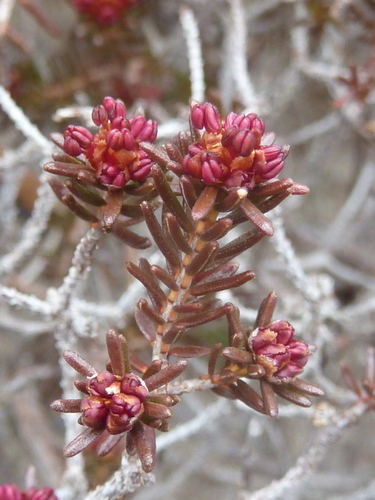
(c) Burkhard, some rights reserved (CC BY-NC-SA)
What to Eat
Edible parts: Fruit
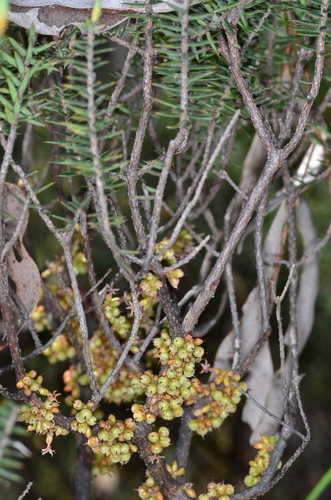
The fruit can be eaten raw or cooked, though it is very small and dry, measuring less than 3mm in diameter.
Where to Find It
It is a cool temperate plant. It suits USDA hardiness zones 3-7.
Britain, Europe, North America, USA,
How to Identify
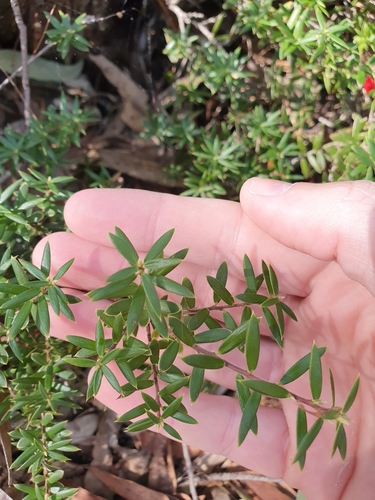
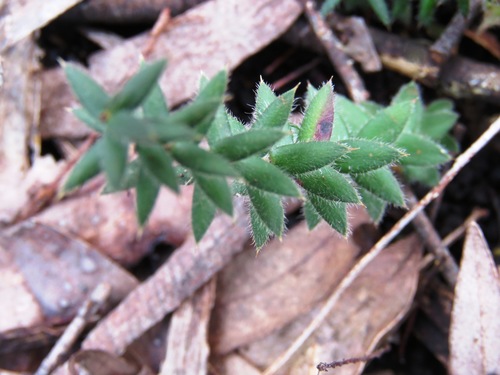
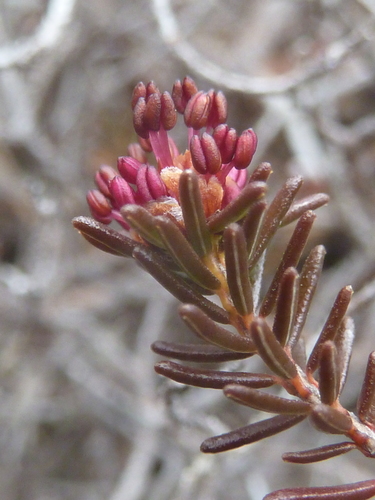
A shrub. It grows 30-60 cm tall. The leaves are narrow and needle like. They are 6 mm long. The fruit are 2 mm wide.
How to Grow
Propagation: Seed is best sown as soon as it is ripe in a cold frame. Stored seed requires 5 months of warm stratification followed by 3 months at 5°C. Prick seedlings into individual pots once large enough to handle and grow on in the greenhouse through at least their first winter. Plant out into permanent positions in late spring or early summer, after the last expected frosts. Cuttings of half-ripe wood can be taken in July/August in a frame. Cuttings of mature wood from the current year's growth can be taken in November in a frame.
Medicinal Uses
None known.
Other Uses
None known.
Wikipedia
Source ↗Corema conradii is a species of flowering plant in the heath family known by the common name broom crowberry. It is native to eastern North America, where it has a disjunct distribution, occurring intermittently from Nova Scotia to Massachusetts, in the Shawangunk Mountains of New York, and in the Pine Barrens of New Jersey. Studies indicate that the plant might be a hybrid between ancestral populations of Corema album and Ceratiola.
References (3)
- Encycl. trees shrubs 1092. 1842
- Heywood, V.H., Brummitt, R.K., Culham, A., and Seberg, O. 2007, Flowering Plant Families of the World. Royal Botanical Gardens, Kew. p 141
- Plants for a Future database, The Field, Penpol, Lostwithiel, Cornwall, PL22 0NG, UK. http://www.scs.leeds.ac.uk/pfaf/