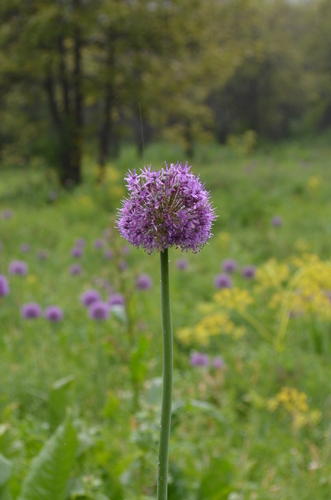
Allium rosenorum
R. M. Fritsch
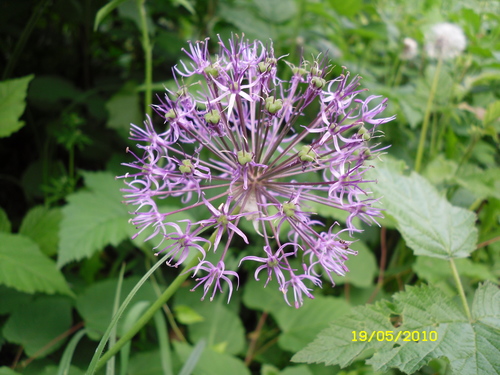
iNaturalist · cc-by-nc
(c) Andrii Churilov, some rights reserved (CC BY-NC), uploaded by Andrii Churilov
(c) Andrii Churilov, some rights reserved (CC BY-NC), uploaded by Andrii Churilov
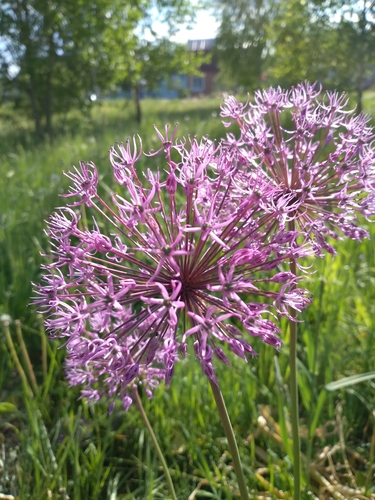
iNaturalist · cc-by-nc
(c) Mikhail Prigarov, some rights reserved (CC BY-NC)
(c) Mikhail Prigarov, some rights reserved (CC BY-NC)
What to Eat
Edible parts: Bulb, Leaves
Young leaves are used fresh in soup or boiled and dried for winter storage. The bulb is also edible.
Where to Find It
It is a temperate plant.
Asia, Central Asia, China, Tajikistan, Uzbekistan,
Countries: United Arab Emirates, Afghanistan, Armenia, Azerbaijan, Bangladesh, Bahrain, Brunei, Bhutan, China, Georgia, Indonesia, Israel, India, Iraq, Iran, Jordan, Japan, Kyrgyzstan, Cambodia, North Korea, South Korea, Kuwait, Kazakhstan, Laos, Lebanon, Sri Lanka, Myanmar, Mongolia, Maldives, Malaysia, Nepal, Oman, Philippines, Pakistan, Qatar, Saudi Arabia, Singapore, Syria, Thailand, Tajikistan, Timor-Leste, Turkmenistan, Turkey, Taiwan, Uzbekistan, Vietnam, Yemen
How to Identify
A temperate onion herb in the Amaryllidaceae family.
Medicinal Uses
Young leaves are boiled and dried for use during winter.
Wikipedia
Source ↗Allium rosenorum is a species of wild onion native to Tajikistan and Uzbekistan. Its 'Michael H. Hoog' cultivar has gained the Royal Horticultural Society's Award of Garden Merit as an ornamental, and is also considered by them as a good plant to attract pollinators.
Names & Synonyms
Saalaf, Sialaf, Shovesha, Sijo alaf, Siolaf
References (4)
- Hisoriev, H., et al, 2017, Collection, germplasm introduction and conservation of Allium in Xinjiang and its collection garden construction. China Botanical Congress.
- Keusgan, M., et al, 2006, Wild Allium species (Alliaceae) used in folk medicine of Tajikistan and Uzbekistan. Journal of Ethnobiology and Ethnomedicine 2006, 2:18
- Khassanov, F. O., 2007, Edible Alliums of Uzbekistan. in First Kazbegi workshop on "Botany, taxonomy and phytochemistry of wild Allium L. species of the Caucasus and Central Asia".
- Soukand, R., et al, 2021, The trauma of no-choice: Wild food ethnobotany in Yaghnobi and Tajik villages, Varzob Valley, Tajikistan. Genetic Resources and Crop Evolution · December 2021