Marah macrocarpa

(Greene) Greene
CucurbitaceaeFruitPotential hazards — see below
Caution — Parts of this plant may be toxic or require specific preparation. Verify with multiple sources before consuming.
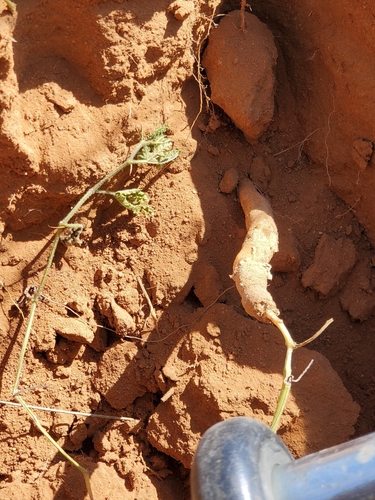
Marah macrocarpa
iNaturalist · cc-by
(c) Evrytte Carlson, some rights reserved (CC BY), uploaded by Evrytte Carlson
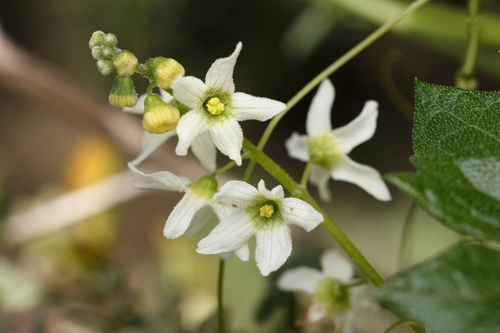
Marah macrocarpa
iNaturalist · cc-by
(c) Adam J. Searcy, some rights reserved (CC BY)
Marah macrocarpa
iNaturalist · cc-by
(c) Adam J. Searcy, some rights reserved (CC BY)

What to Eat

Edible parts: Fruit

The fruit are eaten as a vegetable.

Known Hazards

Ethnographic accounts report that the most common use of Marah macrocarpa was for treating hair loss and baldness on the head. It was reported that the Chumash, Kawaiisu, and Cahuilla peoples roasted the seeds and mashed them into an oily black salve that was applied to the head. Pharmacological research suggests that the Cucurbitacins found in Marah are structurally similar to the antiandrogen medication finasteride and may show similar biological activity, providing support to the traditional uses of the plants for treating hair loss. The Kumeyaay, Luiseño, Kawaiisu, and Tongva peoples also used M. macrocarpa for the relief of pain and inflammation. The black salve from the roasted seeds was applied to areas of irritation or sores. The black salve was also used for body painting. All parts of the plants are toxic due to the presence of cucurbitacins and ribosome-inactivating proteins, so it was not traditionally consumed. Other Marah species in different regions were historically consumed in difficult conditions to commit suicide or euthanasia.

Where to Find It

It is a tropical plant.

Asia, Myanmar, SE Asia,

Countries: United Arab Emirates, Afghanistan, Armenia, Azerbaijan, Bangladesh, Bahrain, Brunei, Bhutan, China, Georgia, Indonesia, Israel, India, Iraq, Iran, Jordan, Japan, Kyrgyzstan, Cambodia, North Korea, South Korea, Kuwait, Kazakhstan, Laos, Lebanon, Sri Lanka, Myanmar, Mongolia, Maldives, Malaysia, Nepal, Oman, Philippines, Pakistan, Qatar, Saudi Arabia, Singapore, Syria, Thailand, Tajikistan, Timor-Leste, Turkmenistan, Turkey, Taiwan, Uzbekistan, Vietnam, Yemen

How to Identify

A vine in the pumpkin family (Cucurbitaceae) found in tropical regions.

Wikipedia

Source ↗

Marah macrocarpa is a species of plant in the genus Marah commonly referred to as chilicothe, wild cucumber, manroot or bigroot. It is a perennial herb with a large tuber native to Southern California and northern Baja California. It grows in a diverse number of habitats in coastal and inland regions. A member of the gourd family, it produces a large, green, prickly fruit. Indigenous peoples traditionally used it for treating hair loss and pain relief. All parts of the plant are toxic, as it contains cucurbitacins and ribosome-inactivating proteins.

Names & Synonyms

Kin-mon-tee

Marah leptocarpa (Greene) GreeneMegarrhiza californica Torr.Micrampelis leptocarpa GreeneMicrampelis macrocarpa (Greene) Greene
References (1)
  • Shin, T., et al, 2018, Traditional knowledge of wild edible plants with special emphasis on medicinal uses in Southern Shan State, Myanmar. Journal of Ethnobiology and Ethnomedicine (2018) 14:48

More from Cucurbitaceae