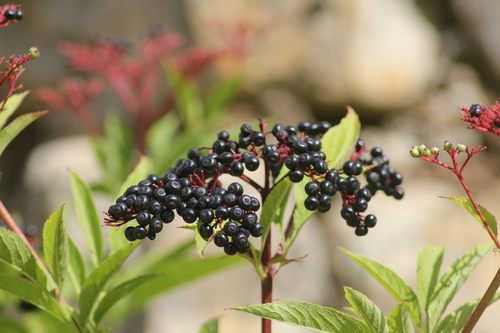
Sambucus glauca
Nutt.
Blue-berried elder

(c) Matthew Zlatunich, some rights reserved (CC BY-NC)

(c) Matthew Zlatunich, some rights reserved (CC BY-NC)

(c) Matthew Zlatunich, some rights reserved (CC BY-NC)
What to Eat
Edible parts: Fruit
The flower blossoms can be used to make tea. The fruits can be eaten raw (despite containing a toxin), dried, or as jelly.
Known Hazards
Dangerous Lookalikes
This plant can be confused with the following toxic species. Always verify identification carefully before consuming any wild plant.


Pokeweed: Thick red/purple herbaceous stems (no bark), berries in a line (raceme), simple large leaves, large white taproot.
Blue-berried elder: Woody bark, berries in broad flat clusters (cymes), compound leaves with 5-7 leaflets.
Where to Find It
It is a temperate plant.
North America, USA,
How to Identify
A temperate shrub in the Adoxaceae family that produces blue berries. The berries can be boiled, dried, and stored for later use.
Notes
Also put in the Caprifoliaceae family. An unresolved name in The Plant List.
References (1)
- Stubbs, R. D., 1966, An investigation of the Edible and Medicinal Plants used by the Flathead Indians. MA thesis University of Montana. p 41