Corydalis juncea
Wall.

(c) Elizabeth Byers, some rights reserved (CC BY-NC), uploaded by Elizabeth Byers

(c) Elizabeth Byers, some rights reserved (CC BY-NC)
What to Eat
Edible parts: Root
The root is edible. No further details are given.
Known Hazards
Where to Find It
It grows in alpine shrubs between 3,600-4,400 m above sea level in tibet.
Asia, Bhutan, China, Himalayas, India, Nepal, Northeastern India, Tibet,
How to Identify
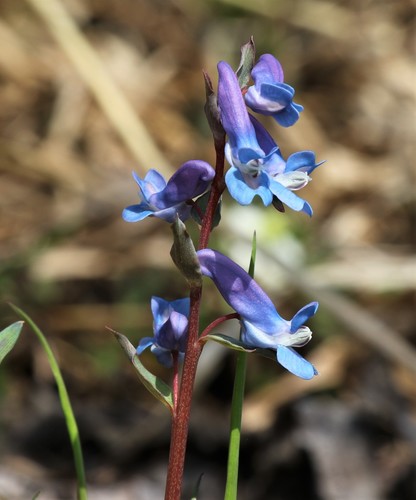
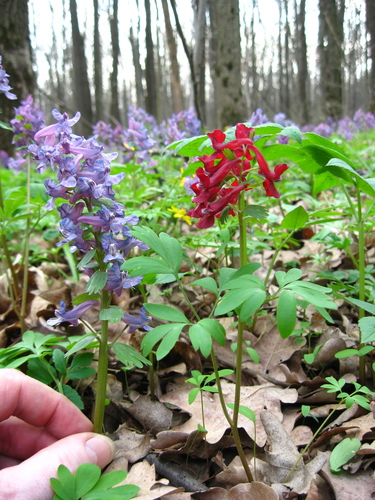
A herb that keeps growing from year to year. It grows 10-45 cm tall. There are several spindle shaped storage roots. These are 1-5 cm long by 2-6 mm wide. The leaves have a white powdery coating underneath. The leaves are D shaped and 4-7 cm long by 4-10 cm wide. They are divided 2 or 3 times.
How to Grow
We have very little information on this species and do not know if it will be hardy in Britain, though judging by its native range it should succeed outdoors in many parts of this country. This species belongs to the section 'Fasciculatae' of the genus. The roots of many, if not all the species in that section, are eaten in the Himalayas. The following notes are based on the general needs of the genus. Prefers a moist, well-drained rather light soil, thriving in semi-shade. Grows well in a woodland garden or peat bed. Plants seem to be immune to the predations of rabbits.
Propagation: Seed is best sown as soon as it is ripe, as it rapidly loses viability if allowed to dry out. Surface sow and keep moist; germination usually occurs in 1–3 months at 15°C, though one report indicates germination in spring. Two months of warm stratification followed by cold stratification improves germination of stored seed. Sow thinly so seedlings can remain undisturbed in the pot for their first year, and apply liquid feed at intervals during the growing season. Seedlings produce only one leaf in their first year and are very prone to damping off. Once dormant, divide seedlings into individual pots and grow on in a partially shaded area of a greenhouse for at least another year before planting out into permanent positions while dormant. Division can also be done after flowering.
Medicinal Uses
None known.
Other Uses
None known.
Wikipedia
A perennial herb with hermaphrodite flowers pollinated by bees. Adapts to light sandy or medium loamy, well-drained soils across mildly acidic to mildly alkaline pH ranges. Can grow in semi-shaded woodland or full sun, preferring consistently moist soil.
Notes
There are about 300 Corydalis species.
References (1)
- Plants for a Future database, The Field, Penpol, Lostwithiel, Cornwall, PL22 0NG, UK. http://www.scs.leeds.ac.uk/pfaf/