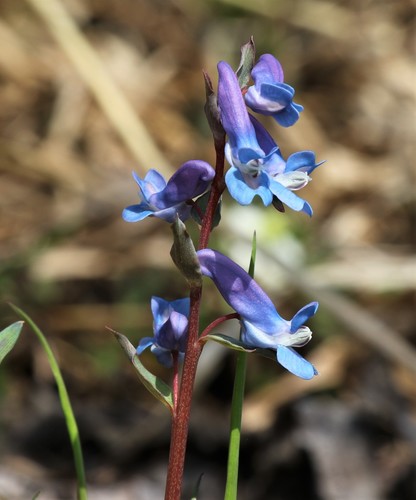
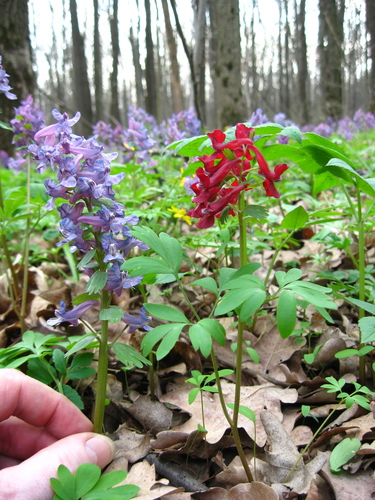
Corydalis ochotensis
Turcz.
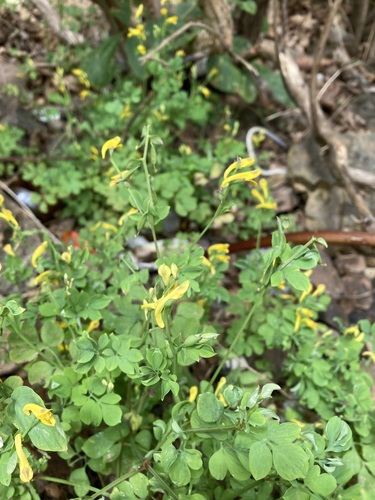
(c) Дмитрий Мезенин, some rights reserved (CC BY-NC), uploaded by Дмитрий Мезенин
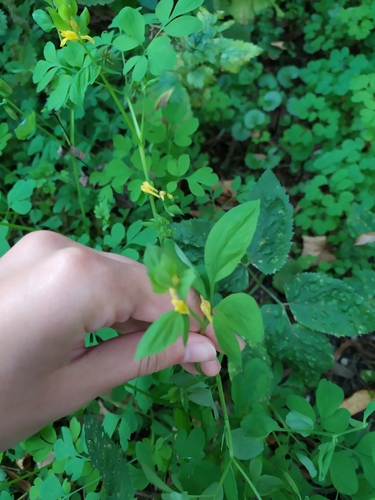
(c) Anna Kartasheva, some rights reserved (CC BY-NC)
What to Eat
Edible parts: Leaves
Young plants can be cooked and eaten.
Known Hazards
Where to Find It
It is a temperate plant. It grows in mixed forests and beside streams.
Asia, China, Japan, Korea, North Korea, Russia, Siberia, Taiwan,
How to Identify
A herb. It completes its life-cycle over 2 years. It grows 50-90 cm tall. The stems are often zigzag and squashy and have ridges or wings. The leaves at the base have long leaf stalks. The leaves are D shape and divided 3 times.
How to Grow
Prefers a moist, well-drained rather light soil, thriving in semi-shade. Grows well in a woodland garden or peat bed. Plants seem to be immune to the predations of rabbits.
Propagation: Seed is best sown as soon as it is ripe, as it rapidly loses viability if allowed to dry out. Surface sow and keep moist; germination usually occurs in 1–3 months at 15°C, though one report indicates germination in spring. Two months of warm stratification followed by cold stratification improves germination of stored seed. Seedlings produce only one leaf in their first year and are very prone to damping off. As a biennial, this species probably germinates more easily than the perennial species.
Medicinal Uses
None known.
Other Uses
None known.
Wikipedia
A biennial reaching 1 m (3 ft 3 in) in height with hermaphrodite bee-pollinated flowers. Grows in light to medium well-drained soils with mildly acidic to mildly alkaline pH. Tolerates both semi-shaded woodland and open sunny conditions, preferring moist soil.
Notes
There are about 300 Corydalis species.
References (2)
- Bull. Soc. Imp. Naturalistes Moscou 13(1):62. 1840
- Plants for a Future database, The Field, Penpol, Lostwithiel, Cornwall, PL22 0NG, UK. http://www.scs.leeds.ac.uk/pfaf/