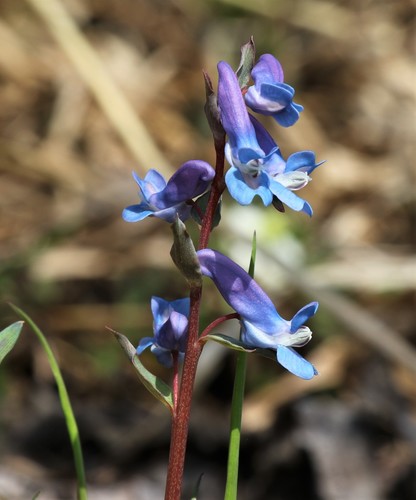
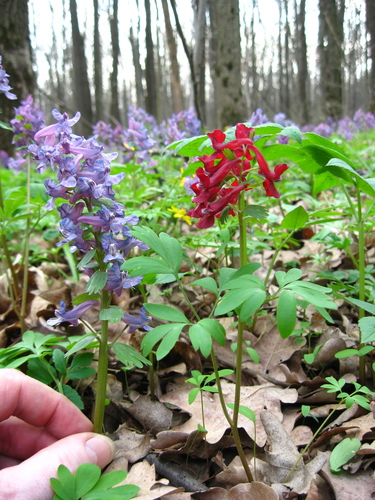
Corydalis pallida
(Thunb.)Pers.
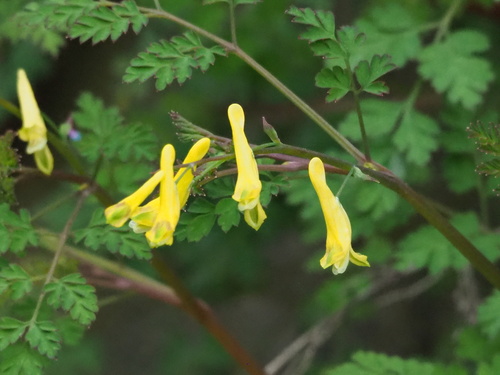
no rights reserved, uploaded by 葉子
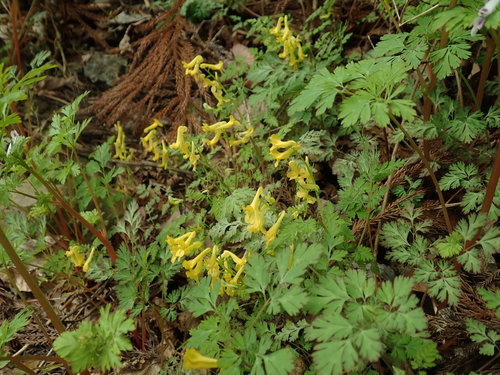
(c) Mizuki Shimoda, some rights reserved (CC BY-NC)
What to Eat
Edible parts: Leaves
Young leaves are eaten cooked.
Where to Find It
It is a temperate plant.
Asia, China, Japan, Korea,
How to Identify
A biennial reaching 0.3 m (1 ft) tall with hermaphrodite flowers pollinated by bees. Grows in light sandy to medium loamy, well-drained soils across mildly acidic to mildly alkaline pH levels. Tolerates both semi-shaded woodland and full sun, preferring moist soil conditions.
How to Grow
Propagation: Seed is best sown as soon as it is ripe, as it rapidly loses viability if allowed to dry out. Surface sow and keep moist; germination usually occurs within 1–3 months at 15°C, though one source reports spring germination. For stored seed, two months of warm stratification followed by a cold period improves germination rates. Seedlings produce only one leaf in their first year and are very prone to damping off. As a biennial, this species generally germinates more readily than perennial relatives.
Medicinal Uses
None known
Other Uses
None known
Wikipedia
A biennial reaching 0.3 m (1 ft) tall with hermaphrodite flowers pollinated by bees. Grows in light sandy to medium loamy, well-drained soils across mildly acidic to mildly alkaline pH levels. Tolerates both semi-shaded woodland and full sun, preferring moist soil conditions.
Notes
There are about 300 Corydalis species.
References (2)
- Plants for a Future database, The Field, Penpol, Lostwithiel, Cornwall, PL22 0NG, UK. http://www.scs.leeds.ac.uk/pfaf/
- www.efloras.org Flora of China. Volume 7