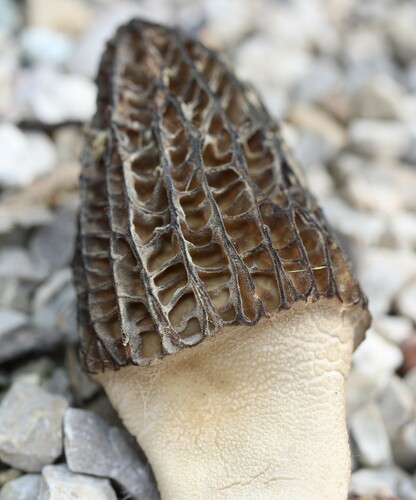
Morchella diminutiva
M.Kuo, Dewsbury, Moncalvo & S. L. Stephenson
Deliciosas, White morel, Tulip morel

(c) Wendy Frauchiger, some rights reserved (CC BY-NC), uploaded by Wendy Frauchiger
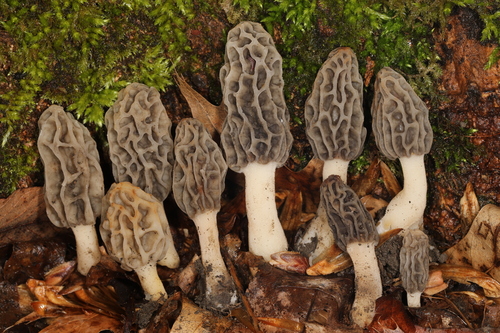
(c) John Plischke, some rights reserved (CC BY-NC-SA), uploaded by John Plischke

(c) Brian Hunt, some rights reserved (CC BY), uploaded by Brian Hunt
What to Eat
Edible parts: Mushroom, Fungus
The mushroom must be cooked before eating.
Dangerous Lookalikes
This plant can be confused with the following toxic species. Always verify identification carefully before consuming any wild plant.


False Morel: Irregular brain-like wrinkles/folds, chambered or solid inside (not hollow), cap often hangs free from stem.
Deliciosas: Regular honeycomb/pitted pattern on cap, completely hollow inside, cap attached directly to stem.
Where to Find It
It is a temperate plant.
North America, USA,
How to Identify
A mushroom in the family Morchellaceae found in temperate regions.
Wikipedia
Source ↗Morchella diminutiva is a species of fungus in the family Morchellaceae native to North America. Described as new to science in 2012, it occurs in eastern North America, usually near Fraxinus americana and Liriodendron tulipifera, but also under other hardwoods like species of Carya.