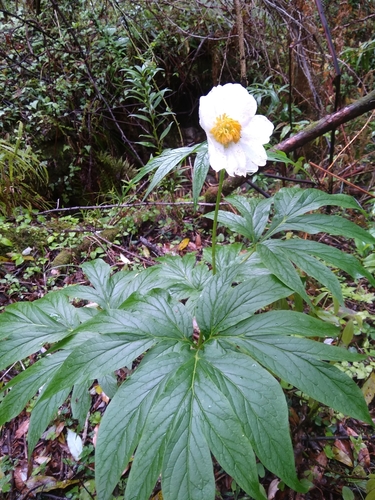
Paeonia mascula
(L.) Mill.

(c) Franck Le Driant, some rights reserved (CC BY-NC), uploaded by Franck Le Driant
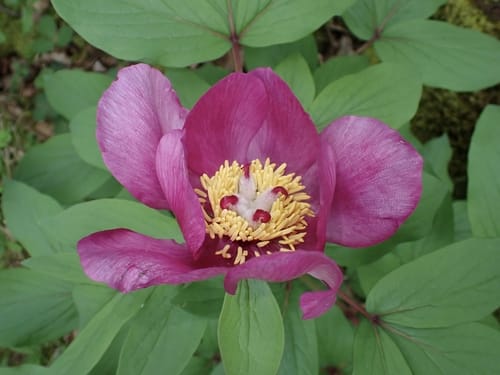
(c) Matthieu Gauvain, some rights reserved (CC BY-NC)
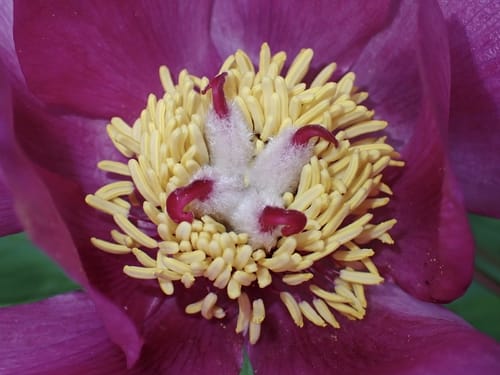
(c) Matthieu Gauvain, some rights reserved (CC BY-NC)
What to Eat
Edible parts: Leaves
No edible uses are known.
How to Identify
A herbaceous perennial reaching 1 m in height and width at medium rate. Hardy to UK zone 8, frost tender. Flowers in May. Hermaphrodite and self-fertile, pollinated by insects. Grows in light sandy, medium loamy, and heavy clay soils with mildly acid to basic pH. Tolerates semi-shade or full sun, adapts to dry or moist soil, and withstands drought.
How to Grow
Propagation: Seed — best sown as soon as it is ripe in a cold frame. Fresh seed produces a root around 6 weeks after sowing, with shoots forming in spring. Stored seed is much slower and may take 18 months or more to germinate, so sow as soon as possible. Because roots are very sensitive to disturbance, many growers leave seedlings in their pots for 2 growing seasons before potting on, which allows a more robust root system to develop. If doing this, sow thinly and apply regular liquid feeds during the growing season. Alternatively, prick seedlings into individual pots as soon as they are large enough to handle and grow on in a cold frame for at least two growing seasons before planting out in spring. Divide with great care in spring or autumn, ensuring each portion has a leaf bud. Standing the lifted root in shade for several hours makes it less brittle and easier to divide. Divisions with several buds generally flower in the second year; those with only one or two buds will take considerably longer.
Medicinal Uses
The root is antispasmodic and tonic. A tea made from the dried crushed petals of various peony species has been used as a cough remedy and as a treatment for haemorrhoids and varicose veins.
Other Uses
No other uses are known.
Wikipedia
Source ↗Paeonia mascula is a species of peony. It is a herbaceous perennial 0.5–1.5 m (1.6–4.9 ft) tall, with leaves that are divided into three segments, and large red flowers in late spring and early summer. Native to Syria, Spain, France, Italy, Croatia, Bosnia and Herzegovina, Serbia, Cyprus, Montenegro, Bulgaria Greece, Turkey, Iraq, Lebanon and Israel, this wild peony has become naturalised on two small islands in the UK.
Names & Synonyms
Ayigulu
References (1)
- Ertug, F, Yenen Bitkiler. Resimli Türkiye Florası -I- Flora of Turkey - Ethnobotany supplement