Abies cilicica
(Antoine & Kotschy) Carriere

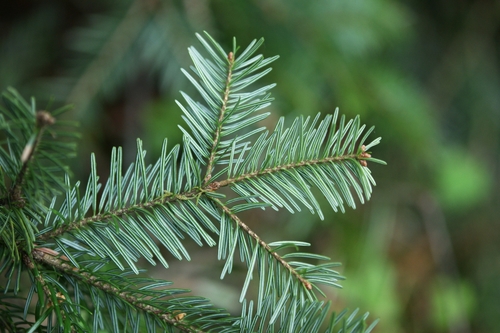
(c) elias ziade, some rights reserved (CC BY), uploaded by elias ziade

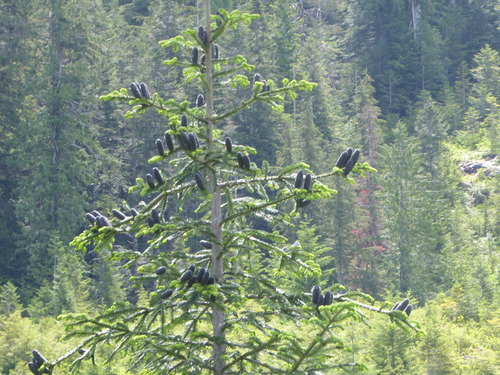
(c) Roberto Sindaco, some rights reserved (CC BY-NC-SA), uploaded by Roberto Sindaco

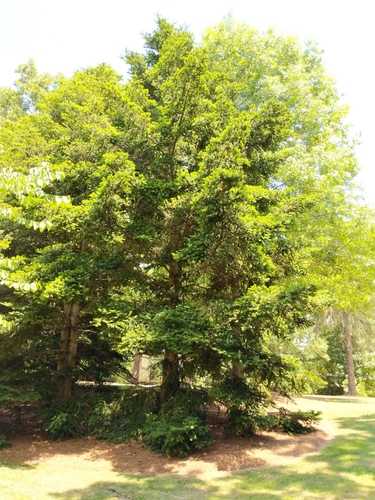
(c) elias ziade, some rights reserved (CC BY), uploaded by elias ziade
What to Eat
Edible parts: Seed
Where to Find It
It is a temperate plant. Arboretum Tasmania.
Europe, Tasmania, Turkey, Türkiye,
How to Identify
A shrub or small tree. It grows 5 m tall. There are prickles along the stem. The leaves are twice divided and there are 8-18 pairs of pinnae. There are up to 50 pairs of pinnules on each pinnae. The flowers are yellow. They are in large clusters at the ends of branches. The pods are flattened.
Wikipedia
Source ↗Abies cilicica, also known as Cilician fir or Taurus fir, is a species of conifer in the family Pinaceae. It is found in Lebanon, Syria, and Turkey. Abies cilicica and Cedrus libani, together with Acer hyrcanum subsp. tauricolum and Sorbus torminalis subsp. orientalis, are the predominant trees in the phytocoenosis Abeti-Cedrion, a type of forest of the middle and eastern Taurus Mountains of Turkey. These forests occur between 800 and 2,100 meters elevation. Over 5,000 years of logging, burning, and grazing have reduced these forests to enclaves. In 2009 at Berenice Troglodytica, the Egypto-Roman port on the Red Sea, archaeologists found: "two blocks of resin from the Syrian fir tree (Abies cilicica), one weighing about 190 g and the other about 339 g, recovered from 1st-century AD contexts in one of the harbour trenches. Produced in areas of greater Syria and Asia Minor, this resin and its oil derivative were used in mummification, as an antiseptic, a diuretic, to treat wrinkles, extract worms and promote hair growth." The Cilician fir is a significant source of timber in Turkey, where it is relatively common; it is primarily used for plywood for construction. It is not commonly cultivated, however, because of its susceptibility to late frost in early spring.
Names & Synonyms
Toros goknan, Toros koknari
References (1)
- Ertug, F, Yenen Bitkiler. Resimli Türkiye Florası -I- Flora of Turkey - Ethnobotany supplement