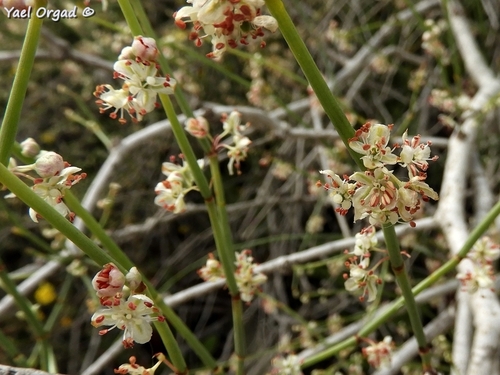
Polygonum bistorta
L.
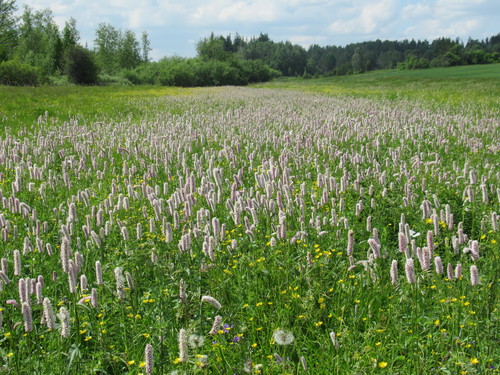
(c) Сергей, some rights reserved (CC BY-NC)
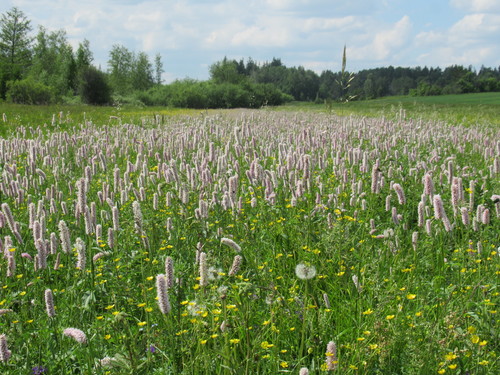
(c) Сергей, some rights reserved (CC BY-NC)
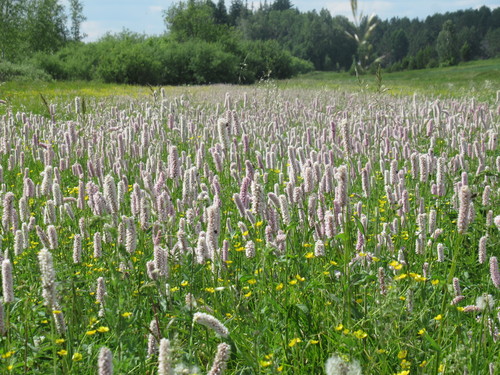
(c) Сергей, some rights reserved (CC BY-NC)
What to Eat
Edible parts: Leaves
Leaves can be eaten raw or cooked as an excellent spinach substitute. Young leaves have a fairly mild flavour, though the texture can be somewhat chewy when raw; they become noticeably tougher as the season progresses. Leaves are available from late winter through to early autumn in most years. In northern England they are a traditional ingredient of Easter ledger pudding, a bitter Lenten dish eaten at Lent. The leaves are a good source of vitamins A and C. A nutritional breakdown per 100g of fresh leaves shows: water 82.6%, protein 3g, fat 0.8g, carbohydrate 7.9g, fibre 3.2g, and ash 2.4g. The seed is edible raw or cooked but is very small and fiddly to use. The starchy root, which contains 30% starch, 1% calcium oxalate, and 15–36% tannin, can be eaten raw or cooked; it is steeped in water and then roasted to reduce the tannin content, after which it is considered tasty and nutritious. The root can also be boiled, added to soups and stews, or dried and ground into a powder for making bread.
Known Hazards
Where to Find It
It is a temperate plant.
Asia, Canada, China, Europe, Italy, North America, Switzerland, Turkey, Türkiye, USA,
How to Identify
A herb. It keeps growing from year to year. The rhizomes or underground stems are black-brown and curved. They are 1-3 cm across. There are 2 or 3 stems and they are 50-80 cm tall. The leaves at the base have long stalks 10-20 cm long. The leaves are oval and 4-18 cm long by 2-5 cm wide. The leaves on the stems do not have stalks. The flowering shoots are at the top fo the plant.
How to Grow
Succeeds in an ordinary garden soil but prefers a moisture retentive not too fertile soil in sun or part shade. The plant repays generous treatment. A very cold-hardy plant, tolerating temperatures down to at least -25°c. Bistort was formerly cultivated as a medicinal and edible plant, though it has now fallen into virtual disuse. Plants are somewhat spreading, forming quite extensive colonies especially in low-lying pastures. They seem to be immune to the predations of rabbits.
Propagation: Seed should be sown in spring in a cold frame, where germination is usually free and easy. Prick seedlings into individual pots when large enough to handle and plant out during summer if sufficiently developed, or overwinter in a cold frame and plant out the following spring after the last expected frosts. Division in spring or autumn is very easy. Larger divisions can be planted directly into permanent positions, while smaller ones do better potted up and grown on in light shade in a cold frame until well established before planting out in late spring or early summer.
Medicinal Uses
Bistort is among the most powerfully astringent of all herbs, used to contract tissues and stop blood flow. The root is strongly astringent, demulcent, diuretic, febrifuge, laxative, and styptic. It is gathered in early spring when leaves are just beginning to shoot, then dried. It is used extensively both internally and externally for internal and external bleeding, diarrhoea, dysentery, and cholera. Internally it is also taken for catarrh, cystitis, irritable bowel syndrome, peptic ulcers, ulcerative colitis, and excessive menstruation. Externally it makes a useful wash for small burns and wounds, and treats pharyngitis, stomatitis, vaginal discharge, and anal fissure. As a mouthwash or gargle it addresses spongy gums, mouth ulcers, and sore throats. The leaves are astringent and have a strong reputation for treating wounds. In Chinese medicine the rhizome is used for epilepsy, fever, tetanus, carbuncles, snake and mosquito bites, scrofula, and cramps in the hands and feet. It is also considered useful in diabetes.
Other Uses
The roots contain up to 21% tannin.
Wikipedia
Source ↗Fast-growing perennial reaching 0.5 m tall and wide. Hermaphrodite flowers bloom June to September with seeds ripening August to October, pollinated by insects. Tolerates light sandy, medium loamy, or heavy clay soils across mildly acid to very acid pH ranges. Grows in semi-shade or full sun and thrives in moist or wet soil. Hardy to UK zone 4.
Names & Synonyms
Cimen evelegi
References (2)
- Ertug, F, Yenen Bitkiler. Resimli Türkiye Florası -I- Flora of Turkey - Ethnobotany supplement (As Polygonum bistorta)
- Mattalia, G., et al, 2012, Traditional uses of wild food and medicinal plants among Brigasc, Kye ́, and Provenc ̧al communities on the Western Italian Alps. Genet Resour Crop Evol. Springer