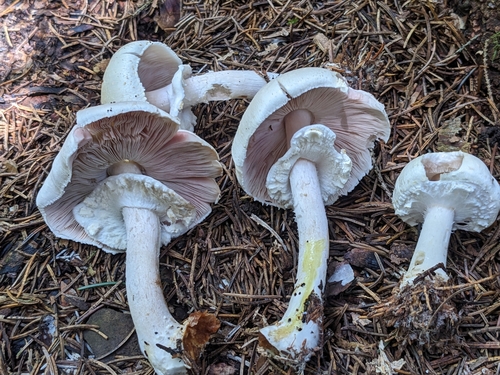
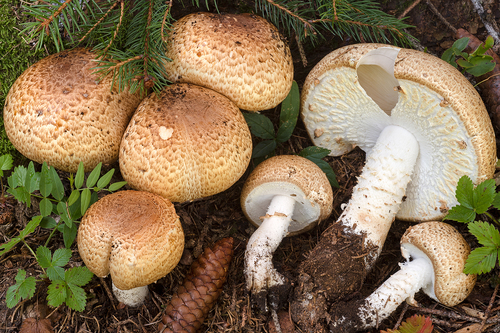
Agaricus sylvaticus
Schaeff.
AgaricaceaeMushrooms
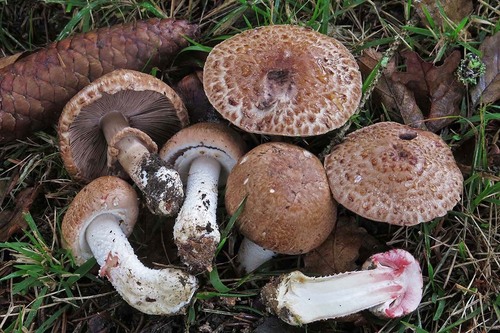
iNaturalist · cc-by-nc
(c) Felipe Hidalgo, some rights reserved (CC BY-NC), uploaded by Felipe Hidalgo
(c) Felipe Hidalgo, some rights reserved (CC BY-NC), uploaded by Felipe Hidalgo
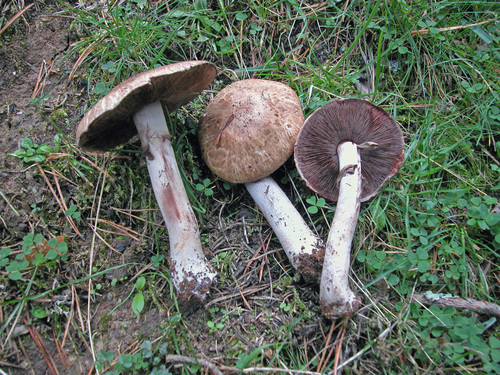
iNaturalist · cc-by-nc
(c) Luis Ballester, some rights reserved (CC BY-NC), uploaded by Luis Ballester
(c) Luis Ballester, some rights reserved (CC BY-NC), uploaded by Luis Ballester

iNaturalist · cc-by-nc
(c) pinonbistro, some rights reserved (CC BY-NC), uploaded by pinonbistro
(c) pinonbistro, some rights reserved (CC BY-NC), uploaded by pinonbistro
What to Eat
Edible parts: Mushroom, Fungus
The species is edible cooked, but resembles inedible mushrooms.
Where to Find It
It is a subtropical plant.
Bulgaria, Europe, Mexico,
Countries: Andorra, Albania, Austria, Bosnia & Herzegovina, Belgium, Bulgaria, Belarus, Switzerland, Cyprus, Czechia, Germany, Denmark, Estonia, Spain, Finland, France, United Kingdom, Greece, Croatia, Hungary, Ireland, Iceland, Italy, Liechtenstein, Lithuania, Luxembourg, Latvia, Monaco, Moldova, Montenegro, North Macedonia, Malta, Mexico, Netherlands, Norway, Poland, Portugal, Romania, Serbia, Russia, Sweden, Slovenia, Slovakia, San Marino, Ukraine
How to Identify
A mushroom in the family Agaricaceae found in subtropical regions. It is popular and edible.
Other Information
It is popular.
Names & Synonyms
Gavilan, Hongo de zacate, Totolita
References (3)
- Cortes, L.E.U., et al, 2018, Ethnomycology and mushroom selling in a market from Northwest Puebla, México. Scientia Fungorum vol. 47: 47-55
- Farfan B., et al, 2007, Mazahua Ethnobotany and Subsistence in the Monarch Butterfly Biosphere Reserve, Mexico. Economic Botany 61(2) pp 173-191
- Stoyneva-Gartner, M.P. & Uzunov, B.A., 2015, An Ethnobiological Glance on Globalization Impact on the Traditional Use of Algae and Fungi as Food in Bulgaria. J Nutr Food Sci 2015, 5:5