Areca mandacanii
Heatubun
Ngafa
ArecaceaeFruit

iNaturalist · cc-by-nc
(c) georgfritz, some rights reserved (CC BY-NC)
(c) georgfritz, some rights reserved (CC BY-NC)

iNaturalist · cc-by-nc
(c) Hannes Marais, some rights reserved (CC BY-NC), uploaded by Hannes Marais
(c) Hannes Marais, some rights reserved (CC BY-NC), uploaded by Hannes Marais

iNaturalist · cc-by-nc
(c) georgfritz, some rights reserved (CC BY-NC)
(c) georgfritz, some rights reserved (CC BY-NC)

gbif · cc-by
Royal Botanic Gardens, Kew
Royal Botanic Gardens, Kew

gbif · cc-by
Royal Botanic Gardens, Kew
Royal Botanic Gardens, Kew

gbif · cc-by
Royal Botanic Gardens, Kew
Royal Botanic Gardens, Kew
What to Eat
Edible parts: Fruit - masticatory
The fruit are used as a masticatory (chewing preparation).
Where to Find It
It is a tropical plant. It grows between the swamp forest and the lowland rainforest on the Bird's Head Peninsula in Western New Guinea.
Asia, Indonesia, Papua, SE Asia,
Countries: United Arab Emirates, Afghanistan, Armenia, Azerbaijan, Bangladesh, Bahrain, Brunei, Bhutan, China, Georgia, Indonesia, Israel, India, Iraq, Iran, Jordan, Japan, Kyrgyzstan, Cambodia, North Korea, South Korea, Kuwait, Kazakhstan, Laos, Lebanon, Sri Lanka, Myanmar, Mongolia, Maldives, Malaysia, Nepal, Oman, Philippines, Pakistan, Qatar, Saudi Arabia, Singapore, Syria, Thailand, Tajikistan, Timor-Leste, Turkmenistan, Turkey, Taiwan, Uzbekistan, Vietnam, Yemen
How to Identify
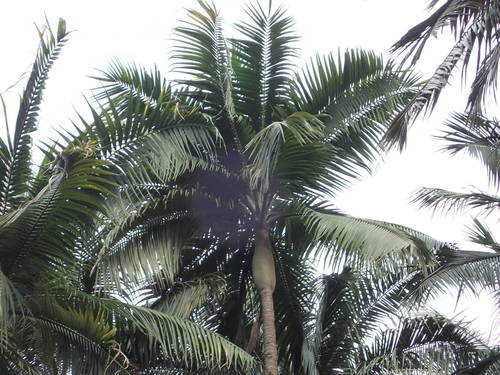
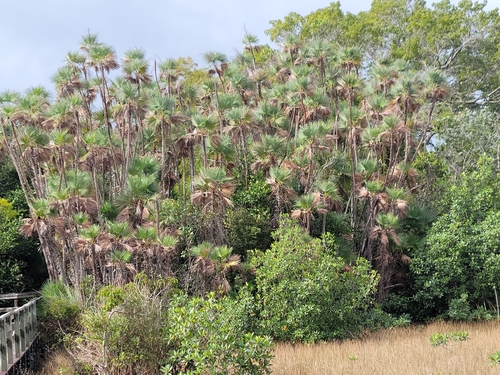
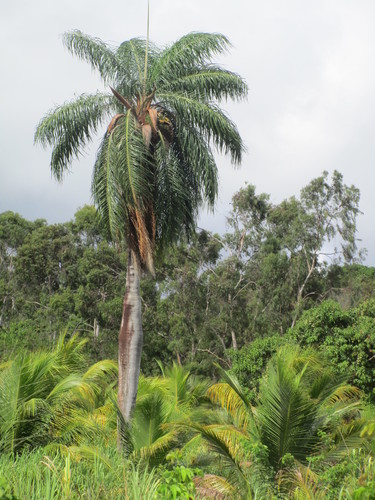
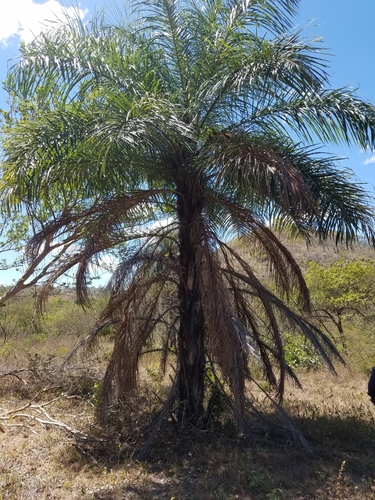
A palm. The trunk is 15 m tall. It is 8-10 cm across. The internodes on the trunk are 13-30 cm long. They are dark green and shiny and the scars are white. There are 8 leaves in the crown. The leaves have leaflets along the stalk. The leaf sheath is tube shaped and 90 cm long. The leaves are 200-250 cm long. The fruit are 6-7 cm long by 4.2-4.5 cm wide. They have a disk shaped depression near the tip. The seeds are 2.8 cm long by 2.5 cm wide.
References (1)
- Heatubun, C. D. et al, 2012, A monograph of the betel nut palms (Areca: Arecaceae) of East Malesia. Botanical Journal of the Linnean Society, 2012, 168, 147–173