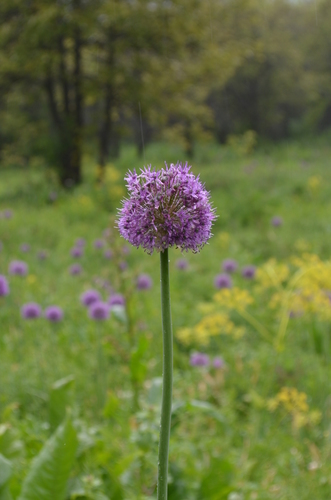
Allium sabulosum
Steven ex Bunge
AmaryllidaceaeRoots
iNaturalist · cc-by-nc
(c) vladimir_epiktetov, some rights reserved (CC BY-NC), uploaded by vladimir_epiktetov
(c) vladimir_epiktetov, some rights reserved (CC BY-NC), uploaded by vladimir_epiktetov

iNaturalist · cc-by
(c) Alexander Dubynin, some rights reserved (CC BY)
(c) Alexander Dubynin, some rights reserved (CC BY)
iNaturalist · cc-by-nc
(c) abdullokh, some rights reserved (CC BY-NC)
(c) abdullokh, some rights reserved (CC BY-NC)
What to Eat
Edible parts: Bulb
The bulb is traditionally added to camel milk.
Where to Find It
It is a temperate plant. It grows in desert areas.
Asia, Central Asia, China, Tajikistan, Uzbekistan,
Countries: United Arab Emirates, Afghanistan, Armenia, Azerbaijan, Bangladesh, Bahrain, Brunei, Bhutan, China, Georgia, Indonesia, Israel, India, Iraq, Iran, Jordan, Japan, Kyrgyzstan, Cambodia, North Korea, South Korea, Kuwait, Kazakhstan, Laos, Lebanon, Sri Lanka, Myanmar, Mongolia, Maldives, Malaysia, Nepal, Oman, Philippines, Pakistan, Qatar, Saudi Arabia, Singapore, Syria, Thailand, Tajikistan, Timor-Leste, Turkmenistan, Turkey, Taiwan, Uzbekistan, Vietnam, Yemen
How to Identify
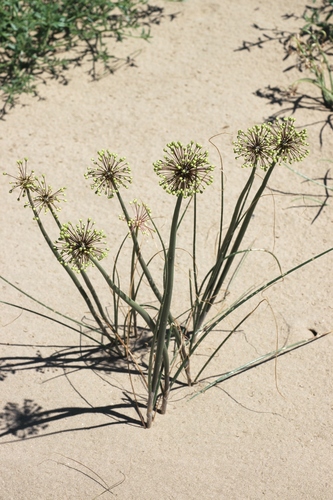
Allium sabulosum is a small bulbous herb in the Amaryllidaceae family with bulbs 1-2 cm across. It grows in temperate desert areas.
Wikipedia
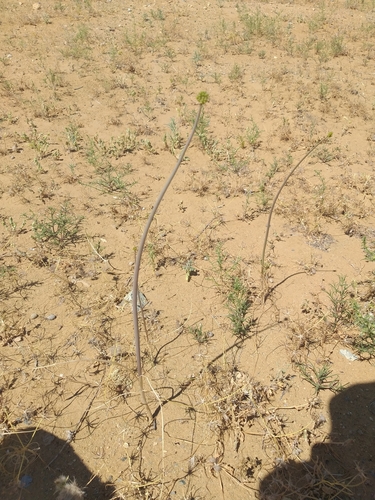
Source ↗Allium sabulosum is a Eurasian species of wild onion native to European Russia, Kazakhstan, Kyrgyzstan, Iran, Tajikistan, Turkmenistan, Uzbekistan and Xinjiang. Allium sabulosum produces one egg-shaped bulb up to 20 mm in diameter. Scape is up to 60 cm tall. Leaves are tubular, shorter than the scape. Umbel is densely packed with many green flowers.
Names & Synonyms
Allium lessingii Kar. ex Ledeb.Allium sabulosum var. inaequale Regel
References (1)
- Khassanov, F. O., 2007, Edible Alliums of Uzbekistan. in First Kazbegi workshop on "Botany, taxonomy and phytochemistry of wild Allium L. species of the Caucasus and Central Asia".