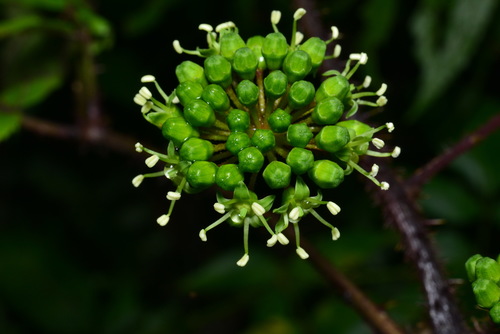
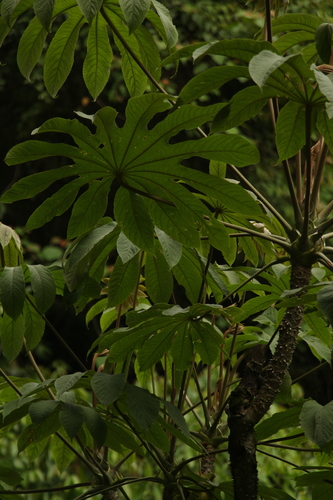
Brassaiopsis mitis
C. B. Clarke
iNaturalist · cc-by
(c) Siddarth Machado, some rights reserved (CC BY), uploaded by Siddarth Machado
(c) Siddarth Machado, some rights reserved (CC BY), uploaded by Siddarth Machado

iNaturalist · cc-by-sa
(c) Dinesh Valke, some rights reserved (CC BY-SA)
(c) Dinesh Valke, some rights reserved (CC BY-SA)
What to Eat
Edible parts: ?
Where to Find It
It is a subtropical plant.
Asia, Bhutan, Himalayas, India, Nepal, Northeastern India, Sikkim,
Countries: United Arab Emirates, Afghanistan, Armenia, Azerbaijan, Bangladesh, Bahrain, Brunei, Bhutan, China, Georgia, Indonesia, Israel, India, Iraq, Iran, Jordan, Japan, Kyrgyzstan, Cambodia, North Korea, South Korea, Kuwait, Kazakhstan, Laos, Lebanon, Sri Lanka, Myanmar, Mongolia, Maldives, Malaysia, Nepal, Oman, Philippines, Pakistan, Qatar, Saudi Arabia, Singapore, Syria, Thailand, Tajikistan, Timor-Leste, Turkmenistan, Turkey, Taiwan, Uzbekistan, Vietnam, Yemen
How to Identify
A tree. It grows 6 m tall. There are spines on the main stem. The leaves have 7-12 lobes spread out like fingers on a hand. The leaves are 60 cm by 60 cm and the lobes are narrow with teeth along the edge. The flower panicles are 50 cm long. The flowers are cream.
Names & Synonyms
Dhapre, Phutta
Euraliopsis mitis (C. B. Clarke) N. P. Balakr.Pseudobrassaiopsis mitis (C. B. Clarke) R. N. Banerjee
References (1)
- Sundriyal, M. & Sundriyal, R. C., 2004, Structure, Phenology, Fruit Yield, and Future Prospects of some Prominent Wild Edible Plant Species of the Sikkim Himalaya, India. Journal of Ethnobiology 24(1): 113-138