Triumfetta bogotensis
DC.
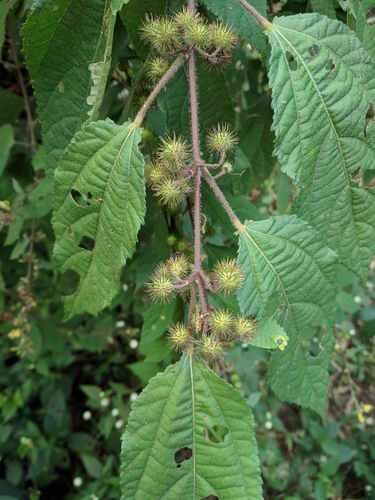
(c) Macelo Costa, some rights reserved (CC BY), uploaded by Macelo Costa

(c) Andrea Mayen, some rights reserved (CC BY-NC)

(c) Andrea Mayen, some rights reserved (CC BY-NC)
What to Eat
Edible parts: Leaves - mucilage
An astringent mucilage obtained from the plant is used for clarifying syrup. The leaves and bark contain a sweet, slightly astringent mucilage that is used to purify or clarify syrup when making sugar.
Known Hazards
Where to Find It
It is a tropical plant.
Argentina, Bolivia, Brazil, Caribbean, Central America, Costa Rica, Guatemala, Mexico, Paraguay, Peru,
How to Identify
A herb or shrub that keeps growing from year to year. The stems are woody at the base. They are much branched and grow 1-1.5 m tall.
How to Grow
A plant of low to moderate elevations in the tropics and subtropics, where it is found at elevations from sea level to over 2,200 metres. The plant produces seed capsules covered in hooked spines that adhere strongly to animal fur, clothing etc, and are thus easily transported to new sites. The 'mozotes' or burs of these plants are a great nuisance, especially in the lowlands, where they most abound. They cling tenaciously to clothing and to the pelage of animals, being thus dispersed widely. The manes and tails of horses sometimes become so filled with the burs that the hair must be cut away.
Medicinal Uses
The sap is more or less mucilaginous. The boiled extract of the plant is used as a remedy for jaundice; for treating inflammation of the stomach; and for gonorrhoea.
Other Uses
A strong, fine fibre is obtained from the bark. The tough, flexible branches are sometimes used for making rough brooms or brushes.
Names & Synonyms
Mozote
References (2)
- D'Ambrosio, U., & Puri, R. K., 2016, Foodways in transition: food plants, diet and local perceptions of change in a Costa Rican Ngäbe community. Journal of Ethnobiology and Ethnomedicine (2016) 12:3 p 27
- Ferns, Useful Tropical plants