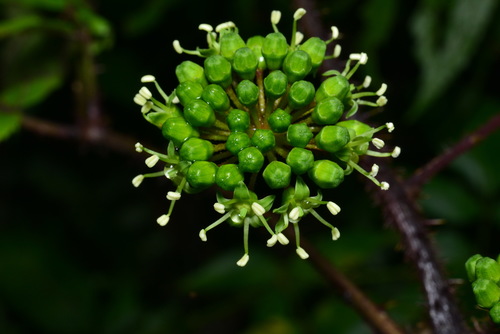
Hedera helix
L.
(c) Marianna Boi, some rights reserved (CC BY), uploaded by Marianna Boi
(c) Gianni Del Bufalo bygdb, some rights reserved (CC BY), uploaded by Gianni Del Bufalo bygdb
(c) Gianni Del Bufalo bygdb, some rights reserved (CC BY), uploaded by Gianni Del Bufalo bygdb
What to Eat
Edible parts: Caution, Leaves - tea, Stems, Medicine
Although almost certainly not edible, the seeds have been reported to contain 16.2% protein and 35.1% fat.
Known Hazards
Where to Find It
It is a temperate plant.
Andorra, Australia, Colombia, Europe, Ireland, South America, Spain, Switzerland, Tasmania,
How to Identify
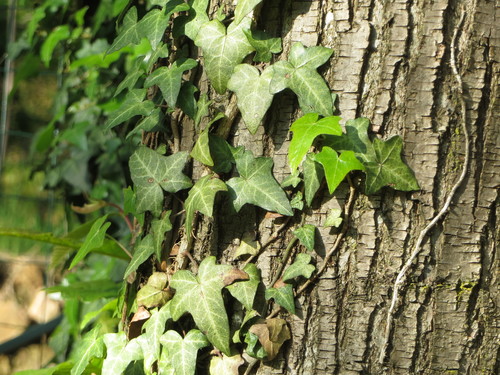
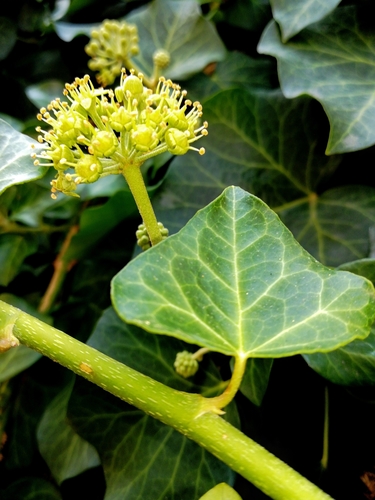
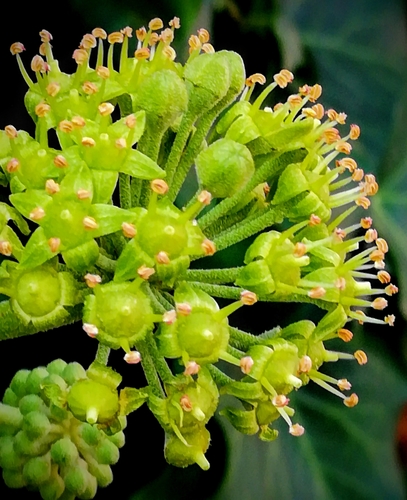
A climbing plant. It grows 30 m long. The young shoots and flowers are hairy. The leaves are dark green and shiny. They come in 2 forms.
How to Grow
It grows well in heavy clay soils. Prefers some lime in the soil. Tolerates very dense shade, though it may not flower in such a position. The plant is very hardy and tolerant of atmospheric pollution. Established plants are drought tolerant. A very ornamental and hardy plant, it tolerates temperatures down to about -25°c. There are many named varieties, the variegated forms are less hardy than the species and also require more light. Ivy is a rampant climbing plant, clinging by means of aerial roots and often trailing on the ground in woods and hedges. It is of benefit rather than harm when growing on a wall because it keeps the wall dry and acts as an insulation. It does not damage the structure of a wall. Similarly, it does not harm large trees when climbing into them, though it can shade out smaller and ailing trees. It is not a parasitic plant, but instead obtains all its nutrient from the sun and the soil. A very good plant for wild-life, it provides dense shelter for birds, spiders etc, an abundant late supply of nectar for insects and a supply of seeds for winter food. It is a food plant for the larvae of many species of butterfly. A very variable plant, there are many named varieties. This species is notably resistant to honey fungus. In garden design, as well as the above-ground architecture of a plant, root structure considerations help in choosing plants that work together for their optimal soil requirements including nutrients and water.
Propagation: Remove the flesh from the seed, as it inhibits germination, and sow in spring in a cold frame. Four weeks of cold stratification will improve germination. Prick out seedlings into individual pots when large enough to handle and overwinter in a cold frame during the first year, then plant out in late spring or early summer after the last expected frosts. Cuttings of half-ripe wood taken in July/August and placed in a shady frame give a good success rate. Cuttings of mature wood, 12 cm long, can be taken in November and rooted in a cold frame. Layering is also possible and often occurs naturally.
Medicinal Uses
Ivy is a bitter, aromatic herb with a nauseating taste, commonly used in folk remedies — particularly for rheumatism and as an external application to skin eruptions, swollen tissue, painful joints, burns, and suppurating cuts. Research has identified the compound emetine, an amoebicidal alkaloid, in the leaves, along with triterpene saponins effective against liver flukes, molluscs, internal parasites, and fungal infections. The leaves are antibacterial, antirheumatic, antiseptic, antispasmodic, astringent, cathartic, diaphoretic, emetic, emmenagogue, stimulant, sudorific, vasoconstrictor, vasodilator, and vermifuge. Internally, the plant is used for gout, rheumatic pain, whooping cough, bronchitis, and as a parasiticide. Some caution is advised for internal use, as the plant is mildly toxic — excessive doses destroy red blood cells and can cause irritability, diarrhoea, and vomiting; it should only be used under the supervision of a qualified practitioner. An infusion of the twigs in oil is recommended for sunburn. Leaves are harvested in spring and early summer and can be used fresh or dried. The German Commission E Monographs approve Hedera helix for cough and bronchitis.
Other Uses
A yellow and a brown dye are obtained from the twigs. A decoction of the leaves can restore colour to black fabrics and be used as a hair rinse to darken the hair. Leaves boiled with soda serve as a soap substitute for washing clothes. Ivy makes an excellent ground cover for shady positions, succeeding even in dense tree shade, and is a very effective weed suppresser — cultivars 'Hibernica', 'Lutzii', and 'Neilsonii' have been especially noted for this. Plants can also be trained along fences to form a hedge, with the variety 'Digitata' particularly suited to this use. Growing plants indoors in pots can help remove toxins from the atmosphere, especially formaldehyde and other chemical vapours; plants benefit from being placed outdoors during summer. The wood is very hard and can substitute for Buxus sempervirens in engraving and similar work, though one source describes it as very soft and porous and of little use except as a strop for sharpening knives.
Wikipedia
Source ↗Hedera helix, simply ivy, or common ivy, English ivy, European ivy, King's choice ivy, is a species of flowering plant in the family Araliaceae. It is native to most of Europe and parts of western Asia. Ivy is a clinging evergreen vine that grows on tree trunks, walls, and fences in gardens, waste spaces, and wild habitats. Ivy is popular as an ornamental plant, but escaped plants have become naturalised outside its native range. Ivy has considerable cultural significance and symbolism. Synonyms include Hedera acuta, Hedera arborea ('tree ivy'), Hedera baccifera, and Hedera grandifolia. Other common names are bindwood and lovestone.
Names & Synonyms
Eidhnean, Hiedra, Ivy, Yedra, English Ivy