Hydriastele lurida
(Becc.) W. J. Baker & Loo
ArecaceaeShoots

iNaturalist · cc-by-nc-sa
(c) Yanuar Ishaq Dc, some rights reserved (CC BY-NC-SA), uploaded by Yanuar Ishaq Dc
(c) Yanuar Ishaq Dc, some rights reserved (CC BY-NC-SA), uploaded by Yanuar Ishaq Dc
What to Eat
Edible parts: Shoots
Shoot apices consumed. The palm heart (the inner core and growing bud of the plant) is harvested. It provides a crispy food, rich in nutrients, that can be eaten raw or cooked. Harvesting the heart will lead to the death of the plant since it is unable to produce new shoots.
Where to Find It
It is a tropical plant. It grows in lowland swamps. It grows up to 500 m above sea level.
Papua New Guinea, PNG,
Countries: Papua New Guinea
How to Identify
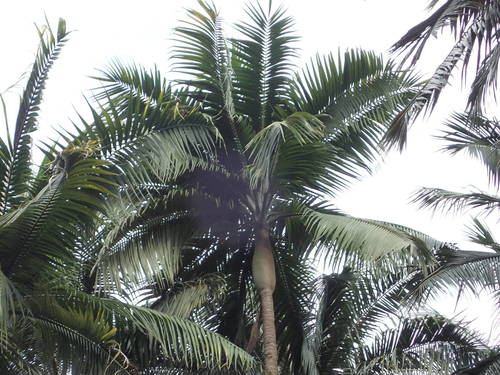
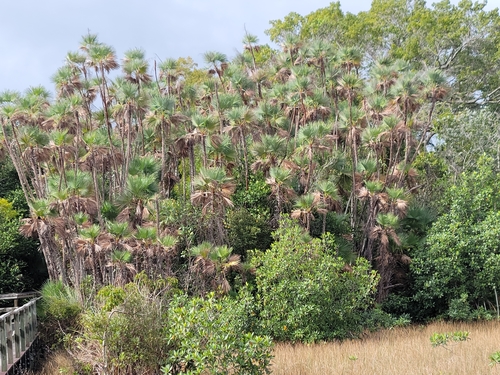
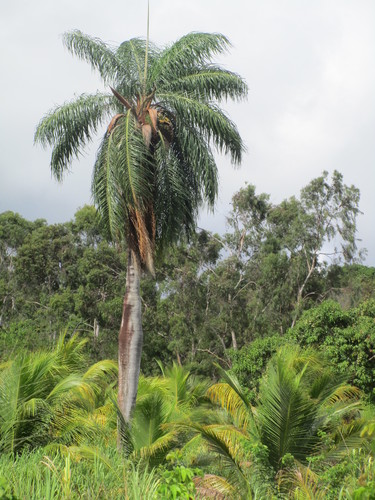
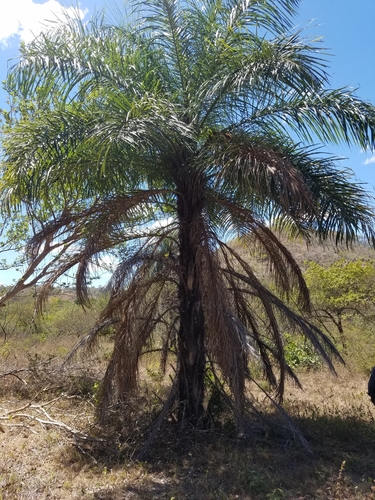
A slender palm. It grows 25 m tall. There are about 8-12 leaves at the crown. The sheath is 50-100 cm long. There are 27-40 irregularly places leaflets on each side.
Other Uses
The leaves are used for roofing. The stems are used for making harpoons, floors and beds.
Names & Synonyms
Ansan, Gulbotom, Omdar, Sirata
Gronophyllum luridum Becc.
References (2)
- Palmpedia
- World Checklist of Useful Plant Species 2020. Royal Botanic Gardens, Kew