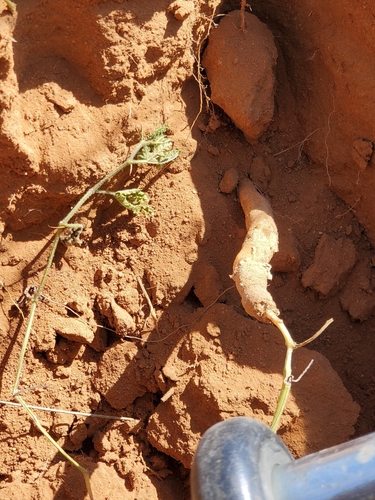
Melothria campestris
(Naudin) H. Schaef. & S. S. Renner
Cerrado watermelon
CucurbitaceaeFruit
iNaturalist · cc-by-nc
(c) Laurent Quéno, some rights reserved (CC BY-NC), uploaded by Laurent Quéno
(c) Laurent Quéno, some rights reserved (CC BY-NC), uploaded by Laurent Quéno
iNaturalist · cc-by-nc
(c) Laurent Quéno, some rights reserved (CC BY-NC), uploaded by Laurent Quéno
(c) Laurent Quéno, some rights reserved (CC BY-NC), uploaded by Laurent Quéno
What to Eat
Edible parts: Fruit
The fruit is eaten.
Where to Find It
It is a tropical plant. It grows in seasonally dry areas. It has been recorded at 1,150 m above sea level.
Argentina, Bolivia, Brazil, Central America, North America, South America,
Countries: Antigua & Barbuda, Argentina, Barbados, Bolivia, Brazil, Bahamas, Belize, Canada, Chile, Colombia, Costa Rica, Cuba, Dominica, Dominican Republic, Ecuador, Grenada, French Guiana, Guatemala, Guyana, Honduras, Haiti, Jamaica, St Kitts & Nevis, St Lucia, Mexico, Nicaragua, Panama, Peru, Puerto Rico, Paraguay, Suriname, El Salvador, Trinidad & Tobago, United States, Uruguay, St Vincent, Venezuela
How to Identify
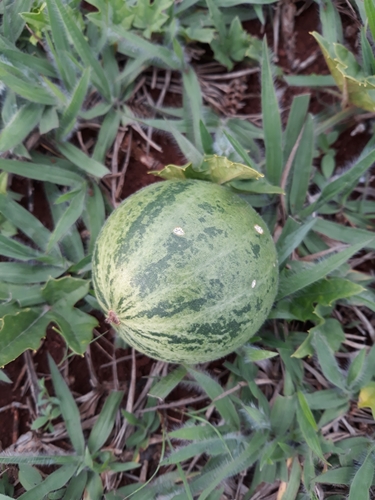
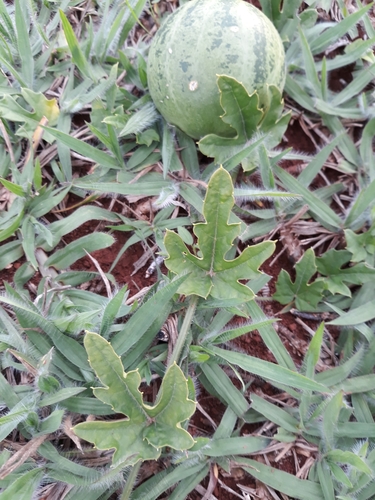
A climbing plant. The stems can be 4 m long. The leaves have deep lobes. The flowers are small and yellow-green. The fruit are cylinder shaped and berry like. They are striped light and dark green. They are juicy sweet pulp.
How to Grow
PLants can be grown from fresh seed.
Names & Synonyms
Melancia de tatu, Melancia do campo
Melancium campestre Naudin
References (1)
- World Checklist of Useful Plant Species 2020. Royal Botanic Gardens, Kew