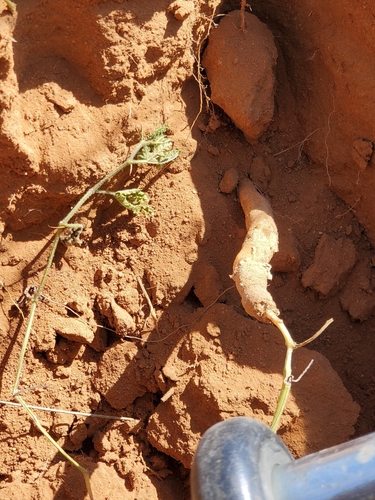
Cucumella kelleri
(Cogn.) Jeffrey

gbif · cc-by
Meise Botanic Garden
Meise Botanic Garden

gbif · cc-by
Royal Botanic Gardens, Kew
Royal Botanic Gardens, Kew
What to Eat
Edible parts: Plant, Leaves, Fruit
Young fruit are eaten.
Where to Find It
It is a tropical plant. It grows in dry soils often over limestone material. It grows between 175-980 m above sea level. It can grow in arid places.
Africa, East Africa, Ethiopia, Kenya, Somalia, South Africa, Southern Africa,
Countries: Angola, Burkina Faso, Burundi, Benin, Botswana, Congo (DRC), Central African Republic, Congo (Republic), Cote d'Ivoire, Cameroon, Cape Verde, Djibouti, Algeria, Egypt, Eritrea, Ethiopia, Gabon, Ghana, Gambia, Guinea, Equatorial Guinea, Guinea-Bissau, Kenya, Comoros, Liberia, Lesotho, Libya, Morocco, Madagascar, Mali, Mauritania, Mauritius, Malawi, Mozambique, Namibia, Niger, Nigeria, Rwanda, Seychelles, Sudan, Sierra Leone, Senegal, Somalia, South Sudan, Sao Tome & Principe, Eswatini, Chad, Togo, Tunisia, Tanzania, Uganda, South Africa, Zambia, Zimbabwe
How to Identify
A herb. It can lie along the ground or be a climber. It quickly becomes woody. The leaf blades are oval and 2-10 cm long by 1-8 cm wide. They can have 3 lobes. Male and female flowers are on separate plants. Male flowers occur in groups of 2-15 and female flowers occur singly. The fruit is oval and 1.3 cm long by 0.6 cm wide. The seeds are 4.5 mm long.
Names & Synonyms
Anexo, Hinguran, Oowaiho, Uneexo
Cucumella rebecchii Chiov.Oreosyce kelleri Cogn.
References (5)
- Jardin, C., 1970, List of Foods Used In Africa, FAO Nutrition Information Document Series No 2.p 71
- Kew Bull. 15:350. 1962
- Lulekal, E., et al, 2011, Wild edible plants in Ethiopia: a review on their potential to combat food insecurity. Afrika Focus - Vol. 24, No 2. pp 71-121
- Martin, F.W. & Ruberte, R.M., 1979, Edible Leaves of the Tropics. Antillian College Press, Mayaguez, Puerto Rico. p 189 (As Cucumello robecchii)
- Royal Botanic Gardens, Kew (1999). Survey of Economic Plants for Arid and Semi-Arid Lands (SEPASAL) database. Published on the Internet; http://www.rbgkew.org.uk/ceb/sepasal/internet [Accessed 15th April 2011]