Quercus sinuata
Walter
FagaceaeSeeds/Nuts
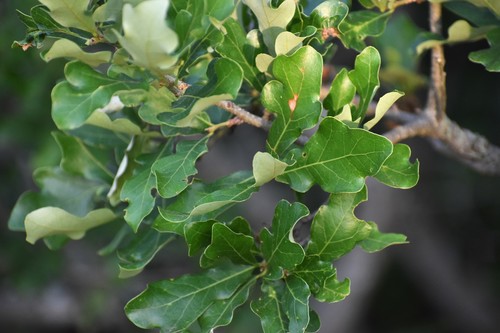
iNaturalist · cc-by-nc
(c) Mike Farley, some rights reserved (CC BY-NC), uploaded by Mike Farley
(c) Mike Farley, some rights reserved (CC BY-NC), uploaded by Mike Farley

iNaturalist · cc-by
(c) Tyler Cannon, some rights reserved (CC BY)
(c) Tyler Cannon, some rights reserved (CC BY)

iNaturalist · cc-by-nc
(c) Mark Bailey, some rights reserved (CC BY-NC)
(c) Mark Bailey, some rights reserved (CC BY-NC)
What to Eat
Edible parts: Acorns, Seeds
The acorns and seeds are edible.
Where to Find It
It is a temperate plant.
North America, USA,
Countries: Antigua & Barbuda, Barbados, Bahamas, Belize, Canada, Costa Rica, Cuba, Dominica, Dominican Republic, Grenada, Guatemala, Honduras, Haiti, Jamaica, St Kitts & Nevis, St Lucia, Mexico, Nicaragua, Panama, Puerto Rico, El Salvador, Trinidad & Tobago, United States, St Vincent
How to Identify
A small tree. It grows 15m tall. It loses its leaves during the year. The bark is grey and peels off.
Wikipedia
Source ↗Quercus sinuata is a species of oak comprising two distinct varieties, Quercus sinuata var. breviloba and Quercus sinuata var. sinuata, occurring in southeast North America.
Names & Synonyms
Quercus durandii BuckleyQuercus emoryi Porter & Coult.amd others
References (1)
- World Checklist of Useful Plant Species 2020. Royal Botanic Gardens, Kew
More from Fagaceae

Castanea alnifolia
Bush chinkapin, Florida chinkapin, Trailing chinkapin, Downy chinquapin

Castanea crenata
Japanese chestnut

Castanea dentata
American chestnut, American sweet chestnut

Castanea henryi
Zhui li, Conic chestnut
Castanea mollissima
Chinese chestnut

Castanea ozarkensis
Ozark chinkapin, Ozark chestnut