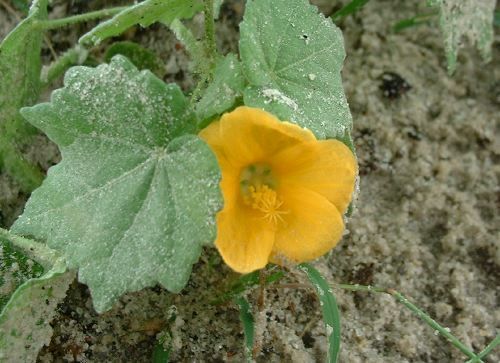
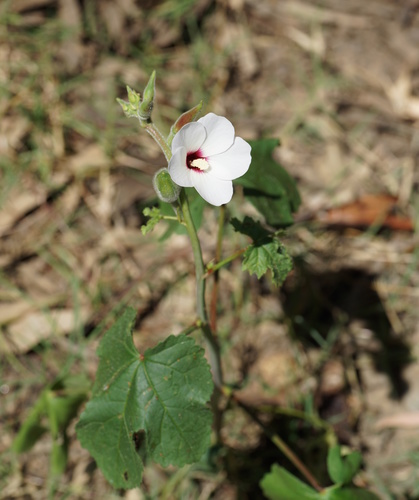
Colona scabra
(Sm.) Burret

gbif · cc0
President and Fellows of Harvard College
President and Fellows of Harvard College

gbif · cc0
President and Fellows of Harvard College
President and Fellows of Harvard College

gbif · cc0
President and Fellows of Harvard College
President and Fellows of Harvard College
What to Eat
Edible parts: ?
Where to Find It
It is a tropical plant.
Asia, Caroline islands, Indonesia, Pacific, Palau, SE Asia, Solomon Islands,
Countries: United Arab Emirates, Afghanistan, Armenia, Australia, Azerbaijan, Bangladesh, Bahrain, Brunei, Bhutan, China, Fiji, Micronesia, Georgia, Indonesia, Israel, India, Iraq, Iran, Jordan, Japan, Kyrgyzstan, Cambodia, Kiribati, North Korea, South Korea, Kuwait, Kazakhstan, Laos, Lebanon, Sri Lanka, Marshall Islands, Myanmar, Mongolia, Maldives, Malaysia, Nepal, Nauru, New Zealand, Oman, Papua New Guinea, Philippines, Pakistan, Palau, Qatar, Saudi Arabia, Solomon Islands, Singapore, Syria, Thailand, Tajikistan, Timor-Leste, Turkmenistan, Tonga, Turkey, Tuvalu, Taiwan, Uzbekistan, Vietnam, Vanuatu, Samoa, Yemen
How to Identify
A tropical tree in the Malvaceae family that grows approximately 20 m tall.
Notes
It has also been put in the family Tiliaceae.
Names & Synonyms
Columbia burretii Kaneh.Columbia scabra (Sm.) Kaneh.Grewia begonifolia (G. Don) Roxb.Grewia scabra (Sm.) DC.Microcos begoniifolia G. DonMicrocos scabra Sm.
References (1)
- World Checklist of Useful Plant Species 2020. Royal Botanic Gardens, Kew