Durio ceylanicus
Gardner
Ceylon durian
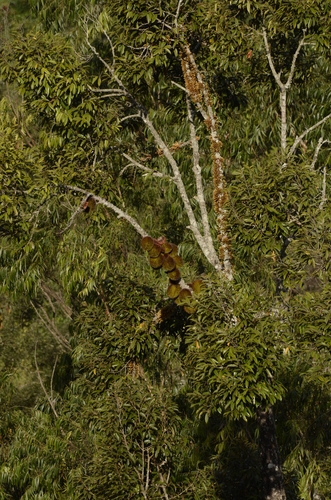
(c) P Jeganathan, some rights reserved (CC BY)

(c) 羅益旻, some rights reserved (CC BY-NC)

(c) cspin, some rights reserved (CC BY-NC)
What to Eat
Edible parts: Fruit
The fruit is edible, though less palatable than other durian varieties.
Known Hazards
Where to Find It
It is a tropical plant.
Asia, Sri Lanka,
How to Identify
A tropical tree in the Malvaceae family (subfamily Bombacoideae) that produces large, prickly fruits. The fruit is less commonly eaten than that of related durian species.
How to Grow
A plant of the lowland, moist tropics. This species closely resembles the durian (Durio zibethinus) in both foliage and structure of the fruit. The fruit of this species, however, is lacking the distinctive smell of the durian and is inedible.
Other Uses
The tree has sometimes been used as a rootstock for the durian (Durio zibethinus). Approach grafts are said to induce earlier flowering and produce greater growth than when planted on Durio zibethinus rootstocks. The pale, yellowish-brown wood is light in weight; soft to moderately hard; easily split. It is used for cases and cigar boxes. We do not have any more information on the wood of this species. However, a general description of the wood for species in this genus is as follows:- The heartwood is pink-brown, red, or deep red-brown; it is not always sharply demarcated from the white, pale yellow-brown or light reddish-yellow sapwood. The texture is coarse; the grain straight to interlocked; somewhat lustrous; it is reported to have a foetid odour. The wood is not durable, and not resistant to termite attack; the sapwood is prone to powder-post beetle attack. It dries rapidly, but thin boards may tend to cup. The wood saws easily and generally dresses smoothly; nailing qualities are good. It is used for purposes such as furniture components, veneer and plywood, light construction.
Notes
In the subfamily Bombacoideae.
Names & Synonyms
References (2)
- Peduruhewa, P. S., et al, 2021, Potential of Underutilized Wild Edible Plants as the Food for the Future – A Review. Journal of Food Security, Vol. 9, No. 4, 136-147
- World Checklist of Useful Plant Species 2020. Royal Botanic Gardens, Kew