Triumfetta amuletum
Sprague
MalvaceaeRoots

gbif · cc-by
Royal Botanic Gardens, Kew
Royal Botanic Gardens, Kew

gbif · cc-by
Meise Botanic Garden
Meise Botanic Garden

gbif · cc0
Ingrid P. Lin
Ingrid P. Lin
What to Eat
Edible parts: Roots, Rhizomes
The roots and rhizomes are used as a vegetable.
Where to Find It
It is a tropical plant. It can be in soil subject to waterlogging.
Africa, East Africa, Malawi, Mozambique, Zambia, Zimbabwe,
Countries: Angola, Burkina Faso, Burundi, Benin, Botswana, Congo (DRC), Central African Republic, Congo (Republic), Cote d'Ivoire, Cameroon, Cape Verde, Djibouti, Algeria, Egypt, Eritrea, Ethiopia, Gabon, Ghana, Gambia, Guinea, Equatorial Guinea, Guinea-Bissau, Kenya, Comoros, Liberia, Lesotho, Libya, Morocco, Madagascar, Mali, Mauritania, Mauritius, Malawi, Mozambique, Namibia, Niger, Nigeria, Rwanda, Seychelles, Sudan, Sierra Leone, Senegal, Somalia, South Sudan, Sao Tome & Principe, Eswatini, Chad, Togo, Tunisia, Tanzania, Uganda, South Africa, Zambia, Zimbabwe
How to Identify
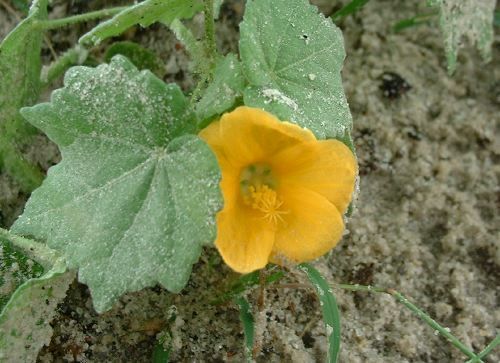
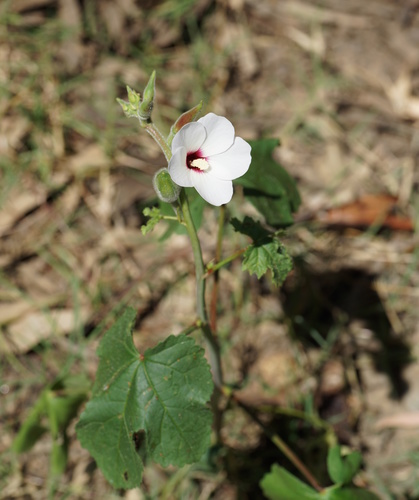
A shrub that is creeping or lies along the ground. It has many hairy stems. It can be 1.5 m long and has a woody rootstock. The leaves are broad and can have 3 lobes. They are 8-9 cm long by 9.5-12 cm wide. They have teeth along the edge. There are 2 or 3 clusters of flowers. They are yellow. The fruit are 20-25 mm across. They are covered with up to 60 spines 5 mm long.
Medicinal Uses
The roots or rhizomes are used traditionally in FPI medicine.
References (2)
- PROTA4U
- World Checklist of Useful Plant Species 2020. Royal Botanic Gardens, Kew