Cyathodes colensoi
(Hook. f.) Hook. f.

no rights reserved

(c) Simon Nicholas, some rights reserved (CC BY-NC)
(c) claire, some rights reserved (CC BY)
What to Eat
Edible parts: Fruit
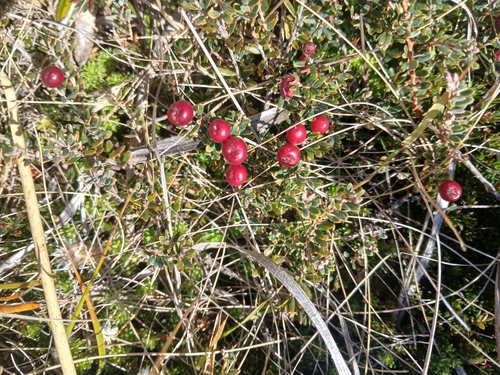
The fruit can be eaten raw or cooked and has a sweet, mealy flesh. It is about 5mm in diameter and is rarely seen on plants grown in Britain. One report notes that the fruit contains up to 24% oil by dry weight, though it is unclear whether this refers to the seed specifically.
Where to Find It
It is a temperate plant. It is best in a well-composted, well-drained soil. It needs a sheltered, shaded position. It is resistant to frost but damaged by drought.
Australia, Britain, Europe, New Zealand, Pacific,
How to Identify
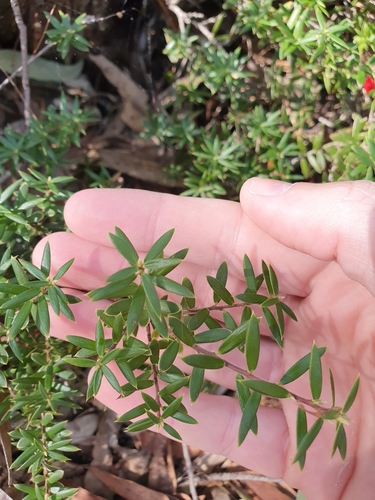
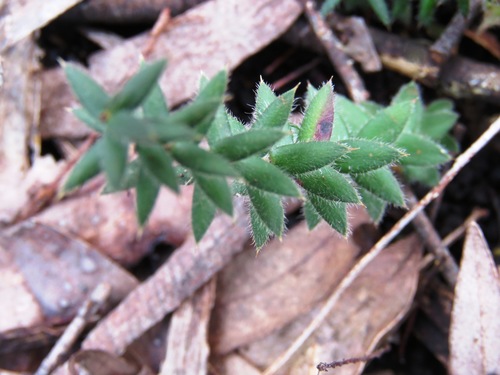
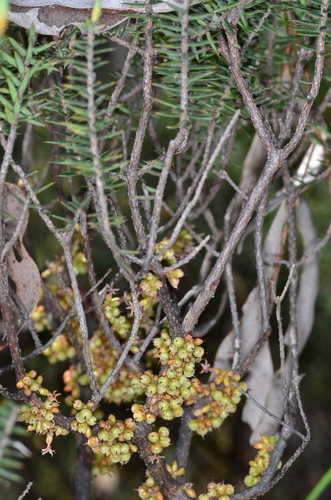
An evergreen shrub. It grows 50 cm high and spreads 2 m wide. The stem lies along the ground and is woody. The branches are spreading. The leaves are small and like needles. The flowers are small and white. They occur singly in the axils of leaves. The fruit are red berries.
How to Grow
Plants can be grown by seed or cuttings.
Propagation: Surface-sow in ericaceous soil in February or March in a cold frame, without excluding light. Germination can occur within one to two months at 18°C but often takes three to five years. Scarification reduces germination time, and two or three cycles of four to six weeks of cold stratification alternated with four weeks of warm stratification can also help; sowing seed as soon as it is ripe may be similarly beneficial. Seedlings are very slow to form roots and must be potted up with great care. Grow on in a greenhouse for at least two years before planting out in late spring or early summer. Cuttings of half-ripe wood can be taken in July or August in a frame, though this method is neither easy nor reliable. Air layering is another option.
Medicinal Uses
None known
Other Uses
An attractive ground-cover plant well suited to the winter garden.
Wikipedia
A compact evergreen shrub reaching 0.3 m tall and wide, growing slowly. Hardy to UK zone 8. Flowers from April to May. Hermaphrodite. Adapts to light, medium, or heavy soils with preference for well-drained conditions and mildly acid to neutral pH. Tolerates semi-shade and prefers moist soil.
Notes
There are about 15 Cyathodes species. Also put in the family Epacridaceae.
References (2)
- Bodkin, F., 1991, Encyclopedia Botanica. Cornstalk publishing, p 310
- Plants for a Future database, The Field, Penpol, Lostwithiel, Cornwall, PL22 0NG, UK. http://www.scs.leeds.ac.uk/pfaf/