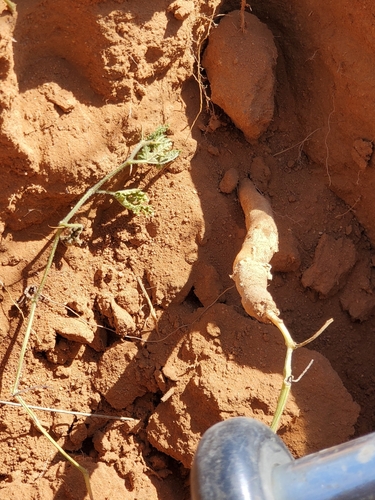
Cyclanthera brachystachya
(Ser.) Cogn.
Cuchinito

H. Zell (via Wikimedia Commons)

H. Zell (via Wikimedia Commons)

H. Zell (via Wikimedia Commons)
no rights reserved
no rights reserved
no rights reserved
What to Eat
Edible parts: Fruit, Vegetable
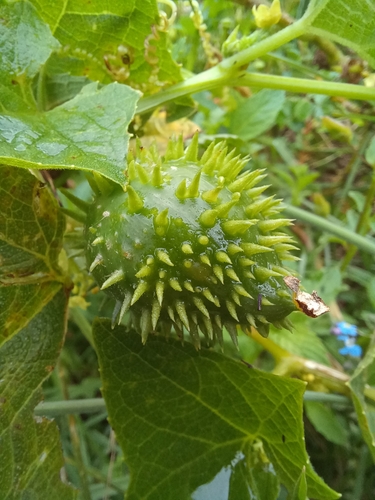
Fruit - raw or cooked. Eaten in salads, pickled, or boiled in the same way as a squash. The greenish fruit is up to 4cm long.
Where to Find It
A tropical plant. It grows in shrubland. It grows between 800-3,500 m above sea level. It can tolerate some cold. It is best in a warm sunny position in a rich, well-drained soil.
Africa, Andes, Asia, Cameroon, Central Africa, Central America, Colombia, Costa Rica, Ecuador, El Salvador, Guatemala, Mexico, North America, South America*,
How to Identify
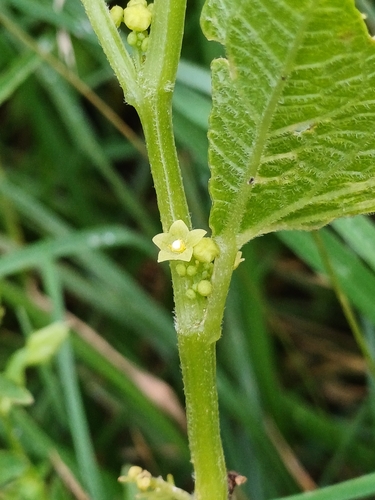
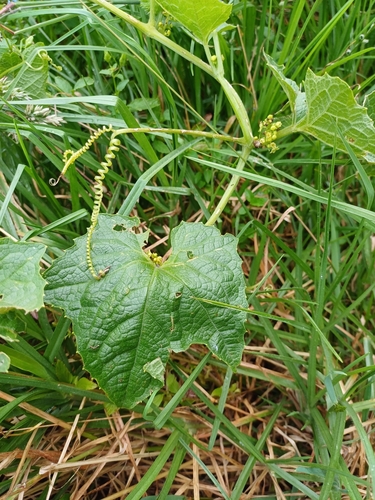
A pumpkin family plant. It grows each year from seeds. The vines are 3 m long. It can climb over other plants using tendrils. The fruit explode to release the seeds. The fruit are 2-4 cm long.
How to Grow
Plants can be grown from seeds. They are best put in a nursery and then transplanted.
Propagation: Sow seed in mid-spring in a rich compost in a warm greenhouse. Place 2 or 3 seeds per pot and thin to the strongest seedling. Plant out after the last expected frost, providing protection such as a cloche until plants are establishing well.
Medicinal Uses
None known.
Other Uses
None known.
Wikipedia
Source ↗Cyclanthera brachystachya, the exploding cucumber (but not to be confused with Ecballium elaterium), in the cucurbit or gourd family (Cucurbitaceae), is a herbaceous vine usually grown for its curiosity value, but the fruit is also edible.
Other Information
It is sometimes cultivated.
Names & Synonyms
References (8)
- Diagn. Cucurb. nouv. 2:64. 1877
- Fern, K., 2012, Tropical Species Database http://theferns.info/tropical/
- Kermath, B. M., et al, 2014, Food Plants in the Americas: A survey of the domesticated, cultivated and wild plants used for Human food in North, Central and South America and the Caribbean. On line draft. p 288 (As Cyclanthera explodens)
- Grubben, G. J. H. and Denton, O. A. (eds), 2004, Plant Resources of Tropical Africa 2. Vegetables. PROTA, Wageningen, Netherlands. p 278
- Plants for a Future database, The Field, Penpol, Lostwithiel, Cornwall, PL22 0NG, UK. http://www.scs.leeds.ac.uk/pfaf/
- Roa, J. A. G. & Boada, D. S. G., 2018, Fundación para el Fortalecimiento de la Fruticultura y Plantas Alimenticias no Convencionales en Colombia.
- Wiersema, J. H. & Leon, B., 2013, World Economic Plants. A Standard Reference CRC Press. 2nd Ed. p 223
- World Checklist of Useful Plant Species 2020. Royal Botanic Gardens, Kew