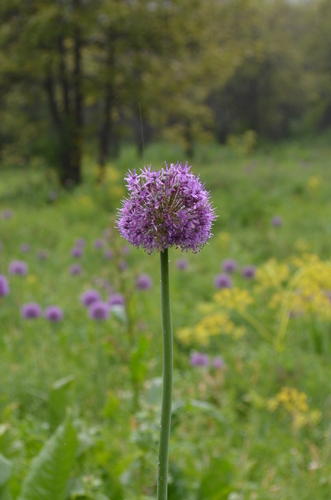
Cyrtanthus bicolor
R. A. Dyer
Fire lily
iNaturalist · cc-by-nc
(c) Linda Loffler, some rights reserved (CC BY-NC), uploaded by Linda Loffler
(c) Linda Loffler, some rights reserved (CC BY-NC), uploaded by Linda Loffler

iNaturalist · cc-by-nc
(c) Kate Braun, some rights reserved (CC BY-NC), uploaded by Kate Braun
(c) Kate Braun, some rights reserved (CC BY-NC), uploaded by Kate Braun

iNaturalist · cc-by-nc
(c) Kate Braun, some rights reserved (CC BY-NC)
(c) Kate Braun, some rights reserved (CC BY-NC)
What to Eat
Edible parts: Leaves, Flowers, Vegetable
The leaves and flowers are used as vegetables.
Where to Find It
A tropical plant. In Swaziland it grows in the highveld.
Africa, Eswatini, South Africa, Southern Africa*, Swaziland,
Countries: Angola, Burkina Faso, Burundi, Benin, Botswana, Congo (DRC), Central African Republic, Congo (Republic), Cote d'Ivoire, Cameroon, Cape Verde, Djibouti, Algeria, Egypt, Eritrea, Ethiopia, Gabon, Ghana, Gambia, Guinea, Equatorial Guinea, Guinea-Bissau, Kenya, Comoros, Liberia, Lesotho, Libya, Morocco, Madagascar, Mali, Mauritania, Mauritius, Malawi, Mozambique, Namibia, Niger, Nigeria, Rwanda, Seychelles, Sudan, Sierra Leone, Senegal, Somalia, South Sudan, Sao Tome & Principe, Eswatini, Chad, Togo, Tunisia, Tanzania, Uganda, South Africa, Zambia, Zimbabwe
How to Identify
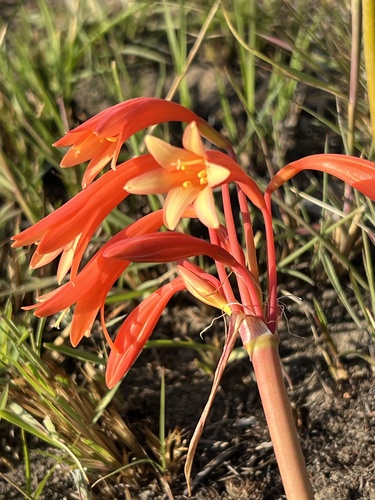
A herb. A bulb plant. The bulb is 3 cm across. There are 2 or 3 leaves and these reach full size 1-2 months after flowering. The leaves are narrow and taper to both ends. They are 40 cm long by 1 cm wide. The flowering stalk is 20-30 cm long. It is hollow. There can be up to 10 flowers. They are usually turned to 1 side and nodding. The flowers are tube shaped. They are red.
How to Grow
Plants are grown by seeds.
Notes
There are 47 Cyrtanthus species. They grow in tropical and southern Africa.
Names & Synonyms
Impimpiliza, Ummoimpiliza
References (10)
- Jardin, C., 1970, List of Foods Used In Africa, FAO Nutrition Information Document Series No 2.p 74
- Long, C., 2005, Swaziland's Flora - siSwati names and Uses http://www.sntc.org.sz/flora/
- Marinelli, J. (Ed), 2004, Plant. DK. p 232 (Other species)
- Martin, F.W. & Ruberte, R.M., 1979, Edible Leaves of the Tropics. Antillian College Press, Mayaguez, Puerto Rico. p 174
- Ogle & Grivetti, 1985,
- Okigbo, B.N., Vegetables in Tropical Africa, in Opena, R.T. & Kyomo, M.L., 1990, Vegetable Research and development in SADCC countries. Asian Vegetable Research and development Centre. Taiwan. p 38
- Peters, C. R., O'Brien, E. M., and Drummond, R.B., 1992, Edible Wild plants of Sub-saharan Africa. Kew. p 10
- Ruiters-Welcome, A. K., 2019, Food plants of southern Africa. Ph.D. thesis. Univ. of Johannesburg p 12
- Swaziland's Flora Database http://www.sntc.org.sz/flora
- Welcome, A. K. & Van Wyk, B.-E., 2019, An inventory and analysis of the food plants of southern Africa. South African Journal of Botany 122 (2019) 136–179