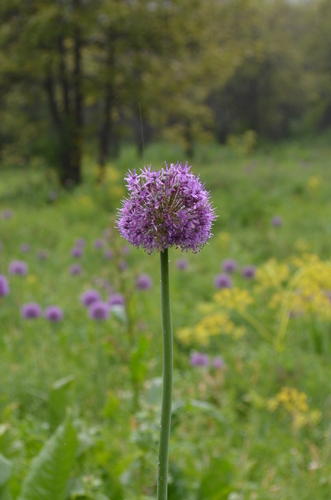
Cyrtanthus breviflorus
Harv.
Yellow flower lily

(c) Richard Booth, some rights reserved (CC BY-NC), uploaded by Richard Booth

(c) Robert Taylor, some rights reserved (CC BY), uploaded by Robert Taylor
What to Eat
Edible parts: Leaves, Flowers, Bulbs
The leaves are used as a food plant, though no further details on preparation or use are recorded.
Where to Find It
It is a tropical plant.
Africa, East Africa, Eswatini, Kenya, South Africa, Southern Africa*, Swaziland,
How to Identify
A herb. It does not have hairs. The bulb is 3 cm across. It is covered with thin leaf bases. There are only a few erect leaves. These are narrow and like straps. They are 15 cm long and 6 mm wide. The flowering stalk is about equal to the leaves. The flowers are yellow tubes 2 cm long. The fruit is dry.
How to Grow
Easily grown in a moist soil. Requires a free-draining light soil in full sun. This species is not very hardy in Britain, it tolerates temperatures down to about -5° if it is growing in a warm sheltered position in a well-drained soil. It is best given some protection over winter. Plants are deciduous in colder climates. It is best to keep the plants fairly dry when they are resting. A very variable plant.
Propagation: Sow seed in a greenhouse as soon as it is ripe, or alternatively in spring. Prick seedlings out into individual pots once large enough to handle, and grow on under glass for at least the first winter. Plant out into permanent positions in late spring or early summer, after the last expected frosts. Can also be propagated by division of offsets after flowering.
Medicinal Uses
None known.
Other Uses
None known.
Wikipedia
An evergreen bulb reaching 0.3 m tall and 0.1 m wide with year-round foliage. Hardy to UK zone 9. Hermaphroditic flowers are insect-pollinated. Requires full sun and well-drained sandy soil with pH ranging from mildly acidic to mildly alkaline. Prefers moist to wet conditions.
Names & Synonyms
Impimpiliza
References (8)
- Long, C., 2005, Swaziland's Flora - siSwati names and Uses http://www.sntc.org.sz/flora/
- Peters, C. R., O'Brien, E. M., and Drummond, R.B., 1992, Edible Wild plants of Sub-saharan Africa. Kew. p 10
- Plants for a Future database, The Field, Penpol, Lostwithiel, Cornwall, PL22 0NG, UK. http://www.scs.leeds.ac.uk/pfaf/
- Pooley, A., 1998, A Field Guide to Wild Flowers Kwazulu-Natal and the Eastern Region. Natal Flora Publications Trust, Durban
- Swaziland's Flora Database http://www.sntc.org.sz/flora
- Ruiters-Welcome, A. K., 2019, Food plants of southern Africa. Ph.D. thesis. Univ. of Johannesburg p 12
- Thes. cap. 2:25, t. 139. 1863
- Welcome, A. K. & Van Wyk, B.-E., 2019, An inventory and analysis of the food plants of southern Africa. South African Journal of Botany 122 (2019) 136–179