Caution — Parts of this plant may be toxic or require specific preparation. Verify with multiple sources before consuming.
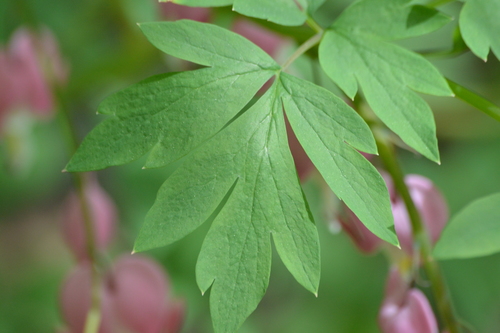
iNaturalist · cc-by-nc-sa (c) to.wi, some rights reserved (CC BY-NC-SA)
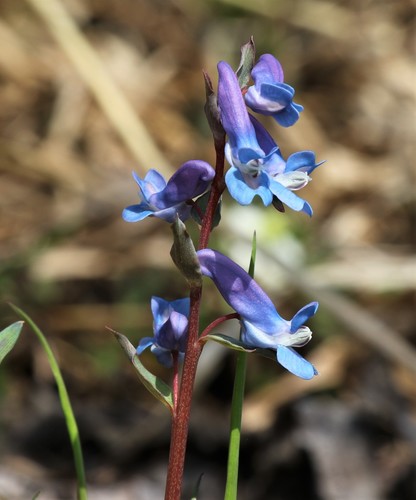
iNaturalist · cc-by-nc (c) Mark Kluge, some rights reserved (CC BY-NC), uploaded by Mark Kluge
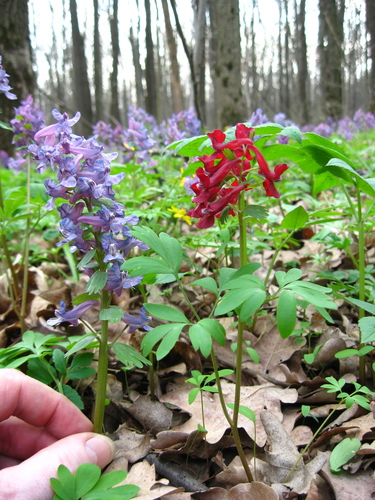
iNaturalist · cc-by-nc (c) Rebecca Stapornkul, some rights reserved (CC BY-NC), uploaded by Rebecca Stapornkul
What to Eat
Edible parts: Leaves
Known Hazards
Contact with the plant can cause skin irritation in certain individuals, due to its containing isoquinoline alkaloids, including protopine, while consumption of the leaves can give rise to neurological symptoms, including confusion and irritability.
Jeong et al. reported a case of (non-fatal) poisoning in Korea in 2015: a party of four dining out at a local restaurant suffered symptoms of varying severity after consuming a dish of crucian carp and Korean radish greens to which a (possibly) careless or inexperienced chef had added leaves of L. spectabilis, which he may have mistaken for radish leaves, while gathering pot-herbs to cook with the fish. They note that the severity of poisoning could be correlated with the amount of the poisoned dish consumed; the only individual with symptoms requiring hospitalisation being a middle-aged man, already in poor health, who had eaten the most. All those poisoned complained of lethargy, dizziness, palpitation, and dry mouth half an hour after consuming the meal.
The authors conclude that the clinical manifestations in this poisoning case suggest anticholinergic syndrome and speculate that the mental changes in the victims were attributable to the effects on the CNS of the alkaloids scoulerine (which can act as a GABAA receptor agonist) and corydine which can evoke narcotic effects. They note also that the neurologic effects of the alkaloid protopine are qualitatively comparable to those of the well-known delirient tropane alkaloid atropine.
The 45-year-old male admitted to A&E suffering from Lamprocapnos poisoning had a history of hypertension and chronic kidney disease and presented with a confused mental state, elevated blood pressure, tachycardia, mild fever, dry mouth and facial flushing. Neurological examination revealed his confusion to be intermittent and associated with irritability, and an inability to comprehend and obey commands. His motor function, however was normal and he showed no abnormal reflexes. Furthermore, his pupils were not anisochoric (i.e. were of the same size) and (as would not be so in a case of atropine poisoning) were responsive to light. His mental state began to return to normal 19 hours after admission to A&E, although his intermittent confusion persisted. He finally regained alert (normal) mentation 28 hours after admission.
Where to Find It
It is a temperate plant. It grows best in full sun. It is frost hardy. Because it is brittle it needs a sheltered position. It is often grown in shady places amongst rocks. It suits hardiness zones 6-9.
A herb. It keeps growing from year to year. It grows 60-120 cm high and 45-60 cm across. The stems are thin. The leaves are grey-green and divided. The flowers are dangling pink hearts with white petals.
How to Grow
It can be grown by dividing the roots in spring. They can also be grown from seed.
Medicinal Uses
玲珑奇巧涎欲滴,Delicate and quaint, with pendent drop of yearning unashamed
色彩绚丽若紫云;Bright as rosy clouds of eventide.
传言古时洛阳镇,'Tis said that, long ago, near ancient Luoyang town,
镇上玉女慧且纯;There dwelt a jade-bright maiden, wise and pure,
无奈情郎充军去,Whose secret love was called away to war,
只得寄情绣包存;Each month a wondrous purse embroidered she to hang upon the bough,
荷包香美已成串,Drawstring pulled tight upon sweet fragrance pent within.
可惜思君不见君。Pity the girl who pictured daily thus her pining heart.
王文英 (Wáng Wényīng)
Poems of a Hundred Flowers: number 70 - Purse Peony
Notes
There are about 20 Dicentra species.
Names & Synonyms
Carrying-bag tree Peony, Geumnanghwa, Hebaomudan, Lady's locket, Lyre flower
Hwang, HS, et al, 2014, Distribution characteristics of plant in the Ungseokbong Mountain, Gyeongsangnam-do, Korea. Journal of Asia-Pacific Biodiversity. 7(2014) e164-e178 (As Dicentra spectabilis)
Joyce, D., 1998, The Garden Plant Selector. Ryland, Peters and Small. p 222 (As Dicentra spectabilis)
Kim, H. & Song, M., 2013, Ethnobotanical analysis for traditional knowledge of wild edible plants in North Jeolla Province (Korea). Genetic. Resour. Crop Evol. (2013) 60:1571-1585 (As Dicentra spectabilis)
Marinelli, J. (Ed), 2004, Plant. DK. p 175 (As Dicentra spectabilis)
Plants for a Future database, The Field, Penpol, Lostwithiel, Cornwall, PL22 0NG, UK.
http://www.scs.leeds.ac.uk/pfaf/ (As Dicentra spectabilis)