Disterigma alaternoides
(H. B. Kunth) Nied.
Nigua, Salapa chica
(c) Diego Amaya,保留部分权利(CC BY-NC), 由 Diego Amaya 上传

(c) Nicolás Baresch Uribe, some rights reserved (CC BY)

(c) Nicolás Baresch Uribe, some rights reserved (CC BY)
What to Eat
Edible parts: Fruit
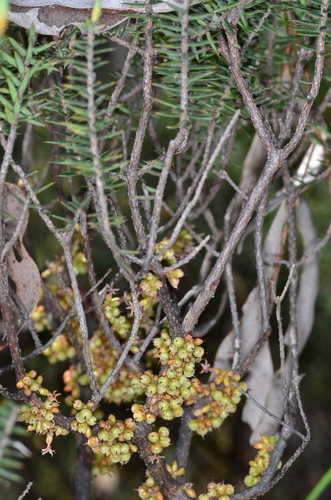
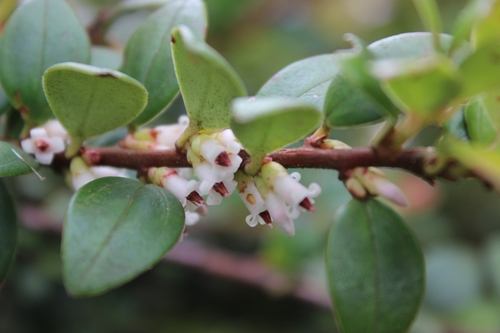
Fruit - raw. Soft, juicy, pulpy and acidulous. The fruit varies in colour, and can be translucent white or translucent pinkish, reddish-purple, or wine-red. It is up to 10mm in diameter.
Where to Find It
A tropical plant. It grows in rainforest and mountain forest. It can grow between 1,600-3,900 m above sea level but is mainly between 2,400-3,400 m above sea level.
Andes, Bolivia, Central America, Colombia, Ecuador, Panama, Peru, South America, Venezuela,
How to Identify
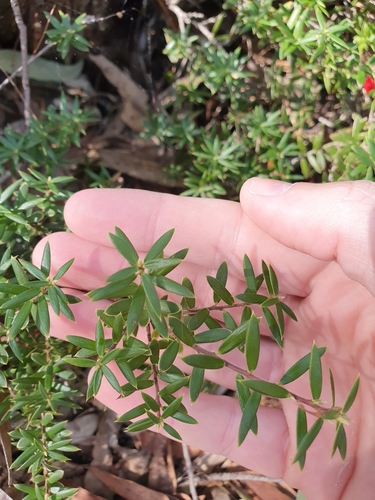
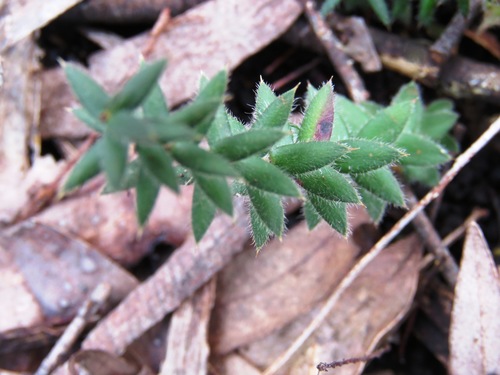
A shrub. It can grow in the soil or attached to other plants. It grows 4 m tall. The fruit is pink to red and lets light through.
How to Grow
A plant of higher elevations in the moist tropics.
Other Information
Fruit is sold in local markets.
Names & Synonyms
Fiapilla, Nigua, Perlillo, Salapa chica, Tira
References (12)
- Bot. Jahrb. Syst. 11:224. 1889
- Ferns, Useful Tropical Plants
- Fouqué, A. 1972. Espèces fruitières d'Amérique tropicale. Institut français de recherches fruitierès outre-me (As Disterigma popenoi)
- Joyal, E., 1987, Ethnobotanical Field Notes from Ecuador: Camp, Prieto, Jorgensen, and Giler. Economic Botany 41(2): 163-189
- Kermath, B. M., et al, 2014, Food Plants in the Americas: A survey of the domesticated, cultivated and wild plants used for Human food in North, Central and South America and the Caribbean. On line draft. p 317
- Kew Plants of the World On line
- Lopez-Diago, D. & Garcia, N., 2021, Wild edible fruits of Colombia. Biota ColomBiana 22 (2) p 35
- Martin, F. W., et al, 1987, Perennial Edible Fruits of the Tropics. USDA Handbook 642 p 94 (As Disterigma popenoi)
- NYBG herbarium "edible"
- Roa, J. A. G. & Boada, D. S. G., 2018, Fundación para el Fortalecimiento de la Fruticultura y Plantas Alimenticias no Convencionales en Colombia.
- Torre, de la, L., et al, 2008, Enciclopedia de las Plantas Útiles del Ecuador. Herbario QCA. Pontificia Universidad Católica del Ecuador. p 312
- Van den Eynden, V., et al, 2003, Wild Foods from South Ecuador. Economic Botany 57(4): 576-603