Veitchia subdisticha
(H. E. Moore) C. Lewis & Zona
Basibasi

Wikimedia Commons - Photo by David J. Stang

Wikimedia Commons - Photo by David J. Stang
What to Eat
Edible parts: Fruit
The orange fruit are occasionally eaten.
Where to Find It
A tropical plant. It grows naturally near the edges of the forest. They need good drainage, shade and plenty of water. It grows from sea level to about 300 m altitude.
Hawaii, Pacific, SE Asia, Singapore, Solomon Islands,
How to Identify
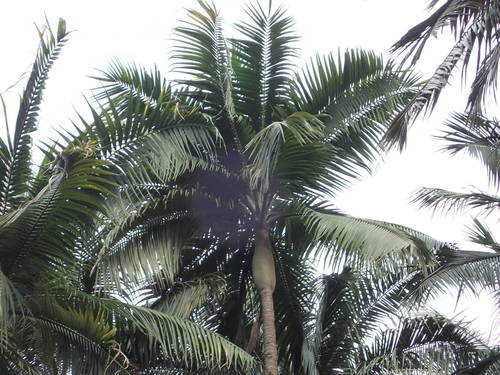
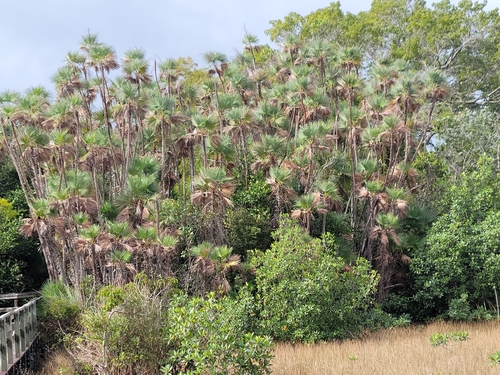
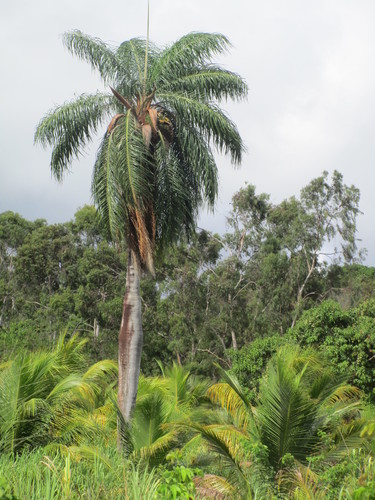
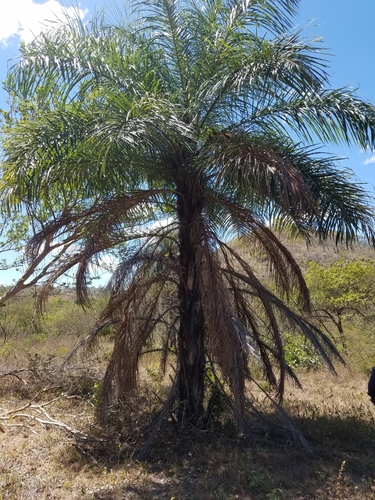
A single stemmed palm. The trunk can be 13 m tall and 13.5 cm across. The crown-shaft from the leaf sheaths is 53 cm long and is silvery green. The trunk is light brown or grey. There are darker rings of leaf base scars. There are about 8-9 leaves at the top of the palm. The leaves are 2-3 m long. There are 37 segments on either side of the leaf. The bracts near the fruiting stalk are 50 cm long. The flowering stalk arises below the crown shaft. The fruiting stalk is branched. The fruit are orange.
How to Grow
Plants can be grown from seed. Seed germinate in 2-3 months.
Wikipedia
Source ↗Veitchia subdisticha is a genus of plants. It was first described Harold Emery Moore. It was given its scientific name by C. Lewis and Scott Zona. Veitchia subdisticha belongs to the genus Veitchia and the family Arecaceae. It is found only in Solomon Islands. It is threatened by habitat loss.
Notes
There are 7-15 Drymophloeus species.
Names & Synonyms
Mamawa, Ori
References (4)
- French, B.R., 2010, Food Plants of Solomon Islands. A Compendium. Food Plants International Inc. p 285
- Monaco Nature Encyclopeda
- Moore, H. E., 1969, Principes 13:76.
- Riffle, R.L. & Craft, P., 2003, An Encyclopedia of Cultivated Palms. Timber Press. p 325