Durio oxleyanus
Griff.
Durian Sukang
(c) Ong Jyh Seng, some rights reserved (CC BY-SA), uploaded by Ong Jyh Seng

(c) Andre Ronaldo, some rights reserved (CC BY-NC)

(c) botani_ia, some rights reserved (CC BY-NC)
What to Eat
Edible parts: Fruit
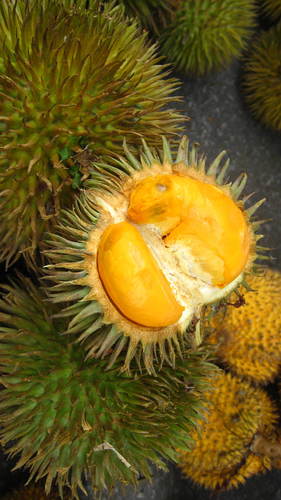
The small aril around the seed has a sweet flavour. The greyish-green, globose fruit is up to 20 cm in diameter with large, stiff, broadly pyramidal, slightly curved spines. It contains a number of seeds that are each surrounded by a fleshy, edible aril.
Where to Find It
A tropical plant. The grow naturally in Sarawak and Kalimantan. It grows up to 500 m above sea level. It grows on sandy soils. It grows in lowland evergreen forests.
Asia, Australia, Indonesia, Malaysia, SE Asia,
How to Identify
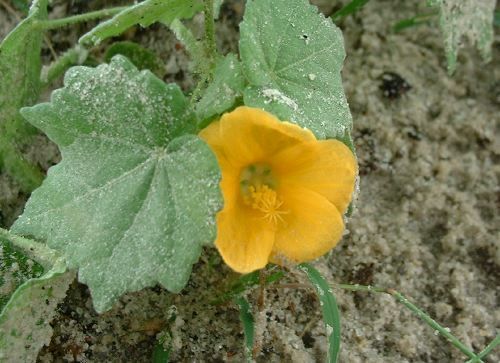
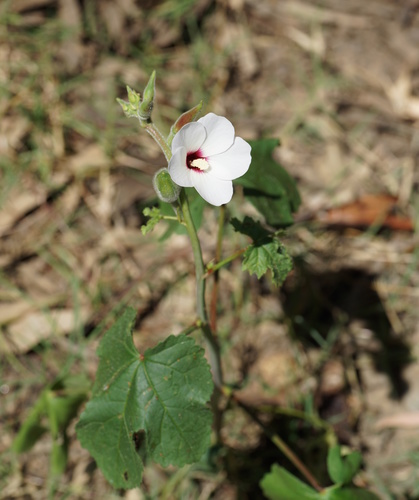
It is a large tree. It grows 50 m tall. It is often larger than the common durian. The branches are 20 m above ground level. The trunk is 100 cm across and has buttresses 3 m tall. The leaves are alternate and simple. The lower surface is whitish. The flowers are 15 mm across. They are white to yellow. The fruit is like a small durian. They are 14 cm long. They are bright green with a hairy appearance. They have a strong odour.
How to Grow
Plants are grown from seed.
Propagation: Seed - usually germinates rapidly, within a few days to a few weeks. The germination rates for fresh seed is 85% (12 out of 14 seeds) in 9-36 days.
Medicinal Uses
It is rarely cultivated for food in its native area. The timber from this plant is used for building houses. The species is also used for medicine to treat Malaria. In Indonesia, it is also used for ulcers and wounds. However, the plant has not been studied in pharmacology.
Other Uses
The heartwood is reddish or pale red. Tests on the machining properties of the wood showed good results for planing, shaping and sanding, but only moderate results for boring, mortising and turning. Wood of D. oxleyanus, absorbed preservatives very readily when soaked in a cold mixture of creosote and diesel fuel. The timber is used for planks in house building. We do not have any more information on the wood of this species. However, a general description of the wood for species in this genus is as follows:- The heartwood is pink-brown, red, or deep red-brown; it is not always sharply demarcated from the white, pale yellow-brown or light reddish-yellow sapwood. The texture is coarse; the grain straight to interlocked; somewhat lustrous; it is reported to have a foetid odour. The wood is not durable, and not resistant to termite attack; the sapwood is prone to powder-post beetle attack. It dries rapidly, but thin boards may tend to cup. The wood saws easily and generally dresses smoothly; nailing qualities are good. It is used for purposes such as furniture components, veneer and plywood, light construction.
Wikipedia
Source ↗Durio oxleyanus is a perennial plant species of tree in the family Malvaceae. It was once placed in the family Bombacaceae. The IUCN list the species as near threatened. It is a popular plant for food among humans and orangutans.
Other Information
It is sometimes cultivated. The fruit are sold in markets.
Notes
There are about 20 Durio species. Also put in the family Durionaceae. In the subfamily Bombacoideae.
Names & Synonyms
Beludu, Dian, Durian daun, Isu, Kerantongan, Kartungan, Kerantungan, Ketungan, Kutongan, Lai, Lai bengang, Pohon durian kerantongan, Pohon durian rimba, Sempak penaklak, Sukang
References (20)
- Arora, R. K., 2014, Diversity in Underutilized Plant Species - An Asia-Pacific Perspective. Bioversity International. p 69
- Burkill, I.H., 1966, A Dictionary of the Economic Products of the Malay Peninsula. Ministry of Agriculture and Cooperatives, Kuala Lumpur, Malaysia. Vol 1 (A-H) p 886
- Calcutta J. Nat. Hist. 5:115. 1845 ("1844")
- Dodo, 2015, Keanekaragaman dan konservasi Tumbuhan Buah Langka Indonesia. Pusat Konservasi Tumbuhan Kebun Raya – LIPI. Warta Kebun Raya 13(2)
- Hedrick, U.P., 1919, (Ed.), Sturtevant's edible plants of the world. p 283
- Kebler, P. J. A., & Kidiyasa, 1994, Trees of the Balikpapan-Samarinda area of East Kalimantan, Indonesia. The Tropenbos Foundation, Wageningen, The Netherlands. p 61
- Macmillan, H.F. (Revised Barlow, H.S., et al) 1991, Tropical Planting and Gardening. Sixth edition. Malayan Nature Society. Kuala Lumpur. p 281
- Milow, P., et al, 2013, Malaysian species of plants with edible fruits or seeds and their evaluation. International Journal of Fruit Science. 14:1, 1-27
- Ong, H., et al, 2012, Traditional knowledge and usage of edible plants among the Semai community of Kampung Batu 16, Tapah, Perak, Malaysia. Scientific Research and Essays Vol. 7(4), pp. 441-445, 30 January, 2012
- Saw, L.G., LaFrankie, J. V. Kochummen, K. M., Yap S. K., 1991, Fruit Trees in a Malaysian Rain Forest. Economic Botany, Vol. 45, No. 1, pp. 120-136
- Siong, K. H., 2003, Indigenous Fruits of Sarawak. ITTO & Sarawak Forest Department. p 27
- Slik, F., www.asianplant.net
- Sukarya, D. G., (Ed.) 2013, 3,500 Plant Species of the Botanic Gardens of Indonesia. LIPI p 251
- Suwardi, A. B., et al, 2020, Ethnobotany and conservation of indigenous edible fruit plants in South Aceh, Indonesia. Biodiversitas Vol. 21, No. 5, pp 1850-1860
- Tankard, G., 1990, Tropical fruit. An Australian Guide to Growing and using exotic fruit. Viking p 119
- USDA, ARS, National Genetic Resources Program. Germplasm Resources Information Network - (GRIN). [Online Database] National Germplasm Resources Laboratory, Beltsville, Maryland. Available: www.ars-grin.gov/cgi-bin/npgs/html/econ.pl (10 April 2000)
- Wiersema, J. H. & Leon, B., 2013, World Economic Plants. A Standard Reference CRC Press. 2nd Ed. p 259
- World Checklist of Useful Plant Species 2020. Royal Botanic Gardens, Kew
- Zawiah, N. & Othaman, H., 2012, 99 Spesies Buah di FRIM. Institut Penyelidikan Perhutanan Malaysia. p 106
- Zeven, A. C. & de West, J. M. J., 1982, Dictionary of cultivated plants and their regions of diversity. Wageningen. p 51