Durio testudinarum
Becc.
Durio kakura

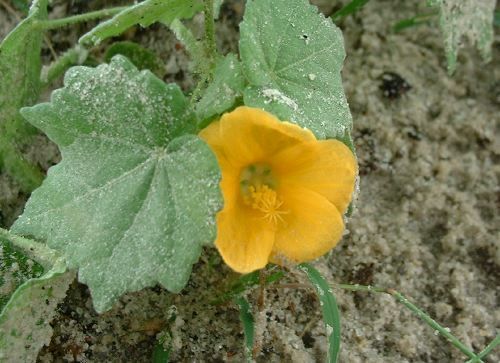
(c) Nina Lester Finley, some rights reserved (CC BY-NC)

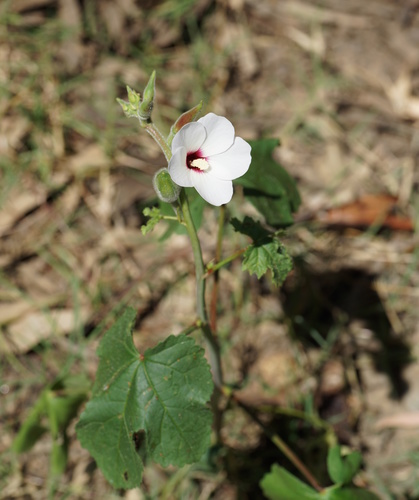
(c) Nina Lester Finley, some rights reserved (CC BY-NC)

Wikimedia Commons - Cmglee
What to Eat
Edible parts: Fruit, Aril
The fleshy aril around the seeds is edible. The fruit is a greenish-yellow, globose capsule 10 - 15 cm in diameter, superficially 5-lobed, covered with conical-pyramidal spines 7 - 10 mm long. The seeds are completely covered with an edible yellow aril.
Where to Find It
A tropical plant. They occur from Davao to Butuan and central Mindanao in the Philippines. It grows in lowland rain forest. It grows from sea level to 700 m above sea level.
Asia, Australia, Brunei, Indonesia, Malaysia, Pacific, Philippines, Sarawak, SE Asia,
How to Identify
A tree. It grows up to 10 or 25 m tall. The trunk is 35 cm across. The small branches are slender and covered with small golden scales fringed with hairs. The leaves are alternate, oval and with a pointy tip and rounded base. The leaf stalks are about 1.5 cm long. The flowers are white and in clusters on the trunk of the tree. They are about 15 to 30 cm from the ground. The fruit are on 8 to 10 cm long stalks. Fruit are green and yellow when ripe. They are rounded and about 5 to 15 cm across and with spines. The seeds are completely covered with a yellow seed covering.
How to Grow
Plants are grown from seeds.
Other Uses
The relatively durable wood is used in interior construction and for making cheaper types of furniture and packing cases. We do not have any more information on the wood of this species. However, a general description of the wood for species in this genus is as follows:- The heartwood is pink-brown, red, or deep red-brown; it is not always sharply demarcated from the white, pale yellow-brown or light reddish-yellow sapwood. The texture is coarse; the grain straight to interlocked; somewhat lustrous; it is reported to have a foetid odour. The wood is not durable, and not resistant to termite attack; the sapwood is prone to powder-post beetle attack. It dries rapidly, but thin boards may tend to cup. The wood saws easily and generally dresses smoothly; nailing qualities are good. It is used for purposes such as furniture components, veneer and plywood, light construction.
Other Information
It is occasionally cultivated as a fruit tree.
Notes
There are about 20 Durio species. Also put in the family Durionaceae.
Names & Synonyms
Durian kura-kura, Lujian beramatai, Panugianon, Rian kura-kura
References (9)
- Altschul, S.V.R., 1973, Drugs and Foods from Little-known Plants. Notes in Harvard University Herbaria. Harvard Univ. Press. Massachusetts. no. 2775
- Davis, S.D., Heywood, V.H., & Hamilton, A.C. (eds), 1994, Centres of plant Diversity. WWF. Vol 1 or 2. p 363
- Dodo, 2015, Keanekaragaman dan konservasi Tumbuhan Buah Langka Indonesia. Pusat Konservasi Tumbuhan Kebun Raya – LIPI. Warta Kebun Raya 13(2)
- Milow, P., et al, 2013, Malaysian species of plants with edible fruits or seeds and their evaluation. International Journal of Fruit Science. 14:1, 1-27
- Monsalud, M.R., Tongacan, A.L., Lopez, F.R., & Lagrimas, M.Q., 1966, Edible Wild Plants in Philippine Forests. Philippine Journal of Science. p 448
- Oldfield, S., et al, 1998, The World List of Threatened Trees. World Conservation Press. p 193
- PROSEA (Plant Resources of South East Asia) handbook, Volume 2, 1991, Edible fruits and nuts.
- Siong, K. H., 2003, Indigenous Fruits of Sarawak. ITTO & Sarawak Forest Department. p 29
- Verheij, E. W. M. and Coronel, R.E., (Eds.), 1991, Plant Resources of South-East Asia. PROSEA No 2. Edible fruits and nuts. Pudoc Wageningen. p 331