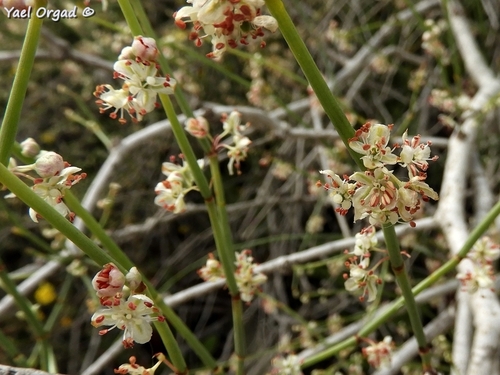
Emex spinosa
(L.) Campd.
Spiny emex, Devil's thorn, Little jack
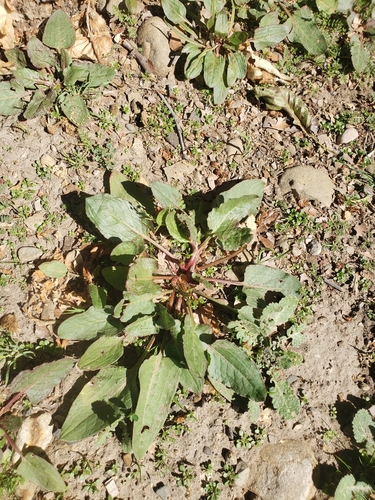
(c) ameliaolson, some rights reserved (CC BY-NC)
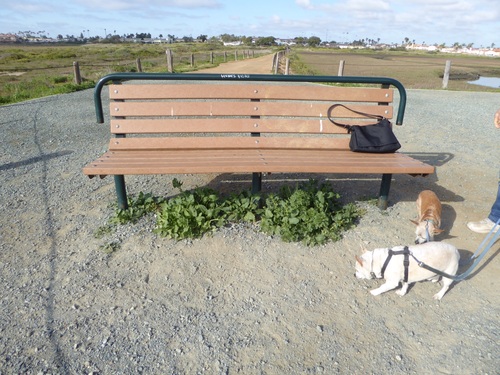
(c) Linda Pardy, some rights reserved (CC BY-NC)
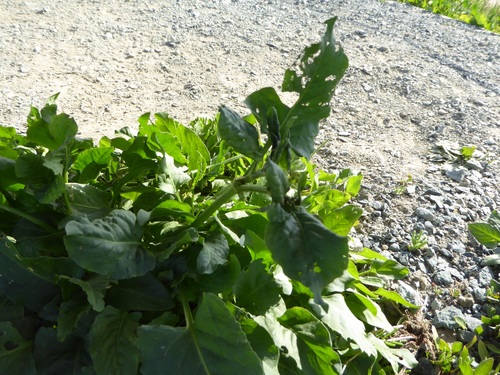
(c) Linda Pardy, some rights reserved (CC BY-NC)
What to Eat
Edible parts: Leaves, Root, Stems
Although bitter, the root and leaves can be eaten.
Where to Find It
It grows in warm temperate places. It grows on sandy shores. In Bahrain it grows in gravelly or stony soils. It can grow in arid places. In Argentina it grows below 500 m above sea level.
Africa, Arabia, Argentina, Australia, Azores, Bahrain, Brazil, Chile, East Africa, Egypt, Europe, Greece, Iran, Iraq, Israel, Italy, Kenya, Kuwait, Libya, Mediterranean, Middle East, Morocco, North Africa, North America, Oman, Pakistan, Portugal, Qatar, Saudi Arabia, Sinai, South America, Spain, Tunisia, Turkey, Türkiye, United Arab Emirates, UAE, Uruguay, Western Sahara, Yemen,
How to Identify
A low hairless annual herb. It is rather fleshy. The root looks like a parsnip. The stems are erect or sprawling. They are green with brownish-red stripes. The leaves have long leaf stalks. The leaves are oval and often have a a heart shaped base. The flowers have 6 segments. Male and female flowers are on the same plant. Female flowers are at the bottom and do not have stalks. Male flowers are at the top and have stalks. They grow in clusters in the axils of leaves. The fruit are spiny.
Other Information
It is a common weed and only occasionally eaten.
Names & Synonyms
Abrepuno, Ambasis, Bezzoult naaja, Cargatripas, Ders al ajoos, Emex, Hambaz, Hambizan, Hameedh, Hamrateras, Hanzab, Himbazah, Himbez, Homida, Hommaida, Irkaybah, Labas, Largatripas, Lesser Jack, Naba, Old woman's tooth, Prickly dock
References (27)
- Al-Sodany, Y. M., et al, 2013, Medicinal Plants in Saudi Arabia: I. Sarrwat Mountains at Taif, KSA. Academic Journal of Plant Sciences 6 (4): 134-145
- Bailey, C. and Danin, A., 1981, Bedouin Plant Utilization in Sinai and the Negev. Economic Botany 35(2): 145-162
- Ben Ismail, H., 2013, Edible Wild Vegetables Used in North West of Tunisia. PARIPEX - Indian Journal of Research 2(9) :219-221
- Bidak, L. M., et al, 2015, Goods and services provided by native plants in desert ecosystems: Examples from the northwestern coastal desert of Egypt. Global Ecology and Conservation 3 (2015) 433–447
- Blamey, M and Grey-Wilson, C., 2005, Wild flowers of the Mediterranean. A & C Black London. p 38
- Facciola, S., 1998, Cornucopia 2: a Source Book of Edible Plants. Kampong Publications, p 184
- Flora of Pakistan. www.eFloras.org
- Ghanimi, R., et al, 2022, Ethnobotanical study on wild edible plants traditionally used by Messiwa people, Morocco. Journal of Ethnobiology and Ethnomedicine. 18:16
- Hussey, B.M.J., Keighery, G.J., Cousens, R.D., Dodd, J., Lloyd, S.G., 1997, Western Weeds. A guide to the weeds of Western Australia. Plant Protection Society of Western Australia. p 198
- Jardin, C., 1970, List of Foods Used In Africa, FAO Nutrition Information Document Series No 2.p 76
- Kunkel,
- Lazarides, M. & Hince, B., 1993, Handbook of Economic Plants of Australia, CSIRO. p 89
- Lim, T. K., 2015, Edible Medicinal and Non Medicinal Plants. Volume 9, Modified Stems, Roots, Bulbs. Springer p 40
- Mahklouf, M. H., 2019, Ethnobotanical Study of Edible Wild Plants in Libya. European Journal of Ecology. 5(2): 30-40
- Malezas Comestibles del Cono Sur, INTA, 2009, Buernos Aires
- Mandaville, J. P., 2004, Bedouin ethnobotany: Plant concepts and plant use in a desert pastoral world. PhD thesis University of Arizona. p 155
- Martin, F.W. & Ruberte, R.M., 1979, Edible Leaves of the Tropics. Antillian College Press, Mayaguez, Puerto Rico. p 213
- Monogr. Rumex 58. 1819
- Nassif, F., & Tanji, A., 2013, Gathered food plants in Morocco: The long forgotten species in Ethnobotanical Research. Life Science Leaflets 3:17-54
- Paczkowska, G . & Chapman, A.R., 2000, The Western Australian Flora. A Descriptive Calatogue. Western Australian Herbarium. p 460
- Phillips, D. C., 1988, Wild Flowers of Bahrain. A Field Guide to Herbs, Shrubs, and Trees. Privately published. p 85
- Rivera, D. et al, 2006, Gathered Mediterranean Food Plants - Ethnobotanical Investigations and Historical Development, in Heinrich M, Müller WE, Galli C (eds): Local Mediterranean Food Plants and Nutraceuticals. Forum Nutr. Basel, Karger, 2006, vol 59, pp 18–74
- Royal Botanic Gardens, Kew (1999). Survey of Economic Plants for Arid and Semi-Arid Lands (SEPASAL) database. Published on the Internet; http://www.rbgkew.org.uk/ceb/sepasal/internet [Accessed 4th June 2011]
- Tanji, A and Nassif, F., 1995, Edible Weeds in Morocco. Weed Technology. Vol. 9, No. 3, pp. 617-620
- Tardio, J., et al, Ethnobotanical review of wild edible plants in Spain. Botanical J. Linnean Soc. 152 (2006), 27-71
- Tbatou, M, et al, 2016, Wild Edible Plants traditionally used in the countryside of El Jadida, Coastal Area in the Center of Morocco. Life Sciences Leaflets 75:28-48
- World Checklist of Useful Plant Species 2020. Royal Botanic Gardens, Kew (As Rumex spinosus)