Empetrum eamesii subsp. atropurpureum
(Fernald. & Wiegand)
Purple Crowberry

Université Laval

RSA - California Botanic Garden Herbarium (RSA-RSA)

President and Fellows of Harvard College
What to Eat
Edible parts: Fruit
The fruit can be eaten raw, with flavor improved by freezing, and is usually eaten with sugar. The fruit is also fermented for alcoholic drinks.
Known Hazards
Where to Find It
They grow in cool temperate regions. They can grow on exposed, windswept sites. They do best on moist, lime free soil. They need an open sunny position.
Australia, Canada, North America, USA,
How to Identify
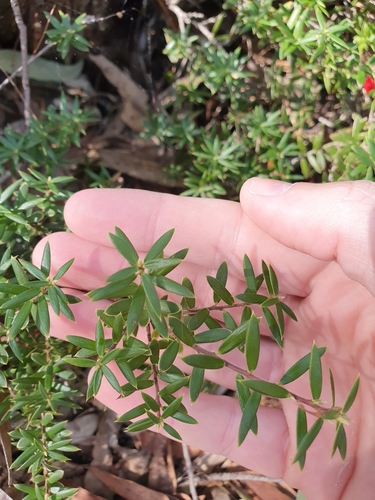
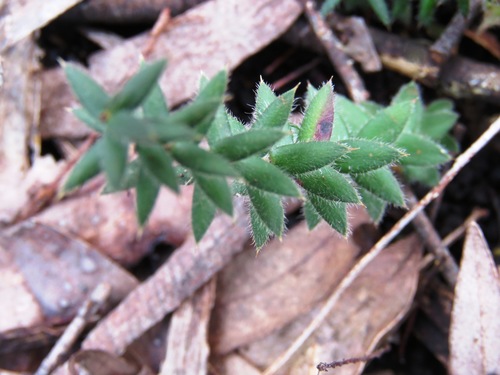
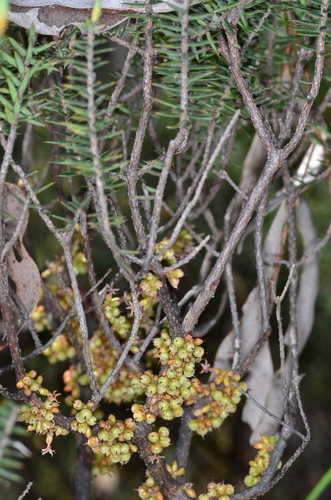
A heath like plant. It is an evergreen shrub. It is low growing. The leaves are simple, alternate and narrow. The flowers occur singly in the axils of leaves. They fruit is small fleshy and berry like. They are dark red to purple when ripe. There can be up to 9 hard white seeds.
How to Grow
Plants can be grown from seeds or cuttings.
Wikipedia
Source ↗Empetrum eamesii, common name purple crowberry, is a North American species of dwarf evergreen shrub.
Notes
There are about 6 Empetrum species.
Names & Synonyms
References (4)
- Cundall, P., (ed.), 2004, Gardening Australia: flora: the gardener's bible. ABC Books. p 535
- Facciola, S., 1998, Cornucopia 2: a Source Book of Edible Plants. Kampong Publications, p 94
- Fisk, J. R. & Hoover, E., 2015, Wild Fruits of Minnesota. A Field Guide. University of Minnesota p 36
- Plants for a Future database, The Field, Penpol, Lostwithiel, Cornwall, PL22 0NG, UK. http://www.scs.leeds.ac.uk/pfaf/