Malva verticillata
L.
Chinese Mallow, Cluster mallow

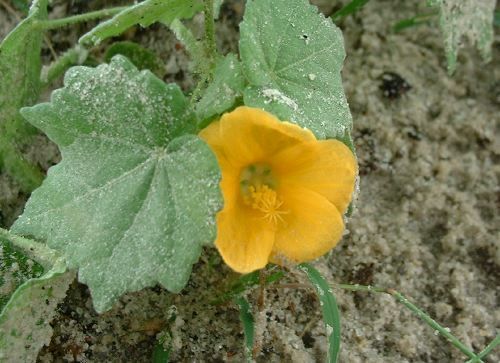
(c) Sonja Bouwman-Gringhuis, some rights reserved (CC BY-NC), uploaded by Sonja Bouwman-Gringhuis

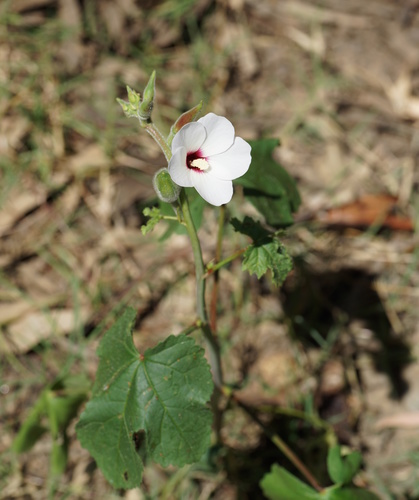
(c) Грехнева Вероника Витальевна, some rights reserved (CC BY-NC), uploaded by Грехнева Вероника Витальевна

(c) Aleš Zvára, some rights reserved (CC BY-NC), uploaded by Aleš Zvára
What to Eat
Edible parts: Leaves, Seed
Leaves - raw or cooked. The leaves of well-grown plants can be 15cm or more across. They have a mild and very pleasant flavour that makes an excellent addition to salads. We use them as a tasty alternative to the lettuce. Young seeds - raw or cooked. Used when green and immature. A pleasant nutty taste but the seed is too small and fiddly for most people to want to harvest.
Known Hazards
Where to Find It
E. Asia - China.
TEMPERATE ASIA: China
How to Identify
Malva verticillata is a ANNUAL/BIENNIAL growing to 1.7 m (5ft 7in). See above for USDA hardiness. It is hardy to UK zone 6 and is not frost tender. It is in flower from July to September, and the seeds ripen from August to October. The species is hermaphrodite (has both male and female organs) and is pollinated by Insects. The plant is self-fertile. Suitable for: light (sandy), medium (loamy) and heavy (clay) soils and prefers well-drained soil. Suitable pH: mildly acid, neutral and basic (mildly alkaline) soils. It can grow in semi-shade (light woodland) or no shade. It prefers moist soil.
How to Grow
A very easily grown plant, succeeding in ordinary garden soil, though it prefers a reasonably well-drained and moderately fertile soil in a sunny position. This species is cultivated as a salad crop in parts of Europe. There is at least one named variety:- 'Crispa' has more tender leaves than the species with curled leaf edges that make it look more attractive in salads. This species was one of the earliest domesticated crops in China, it has been in cultivation for well over 2,500 years. Plants seem to be immune to the predations of rabbits. Plants are prone to infestation by rust fungus. In garden design, as well as the above-ground architecture of a plant, root structure considerations help in choosing plants that work together for their optimal soil requirements including nutrients and water. The predictable growth behaviour makes it easier to maintain without having to apply containment methods.
Propagation: Seed - sow early spring in situ. Germination should take place within 2 weeks.
Medicinal Uses
Demulcent Digestive Diuretic Emollient Galactogogue Laxative. The seed contains mucilage, polysaccharides and flavonoids. It is demulcent, diuretic, emollient, galactogogue and laxative. The seeds are used in Tibetan medicine, where they are considered to have a sweet and astringent taste plus a heating potency. They are used in the treatment of renal disorders, the retention of fluids, frequent thirst and diarrhoea. The root is used to cause vomiting in the treatment of whooping cough. The leaves and stems are said to be digestive. They are given to women in the advanced stages of pregnancy.
Other Uses
Dye. Cream, yellow and green dyes can be obtained from the plant and the seed heads. An extract of the leaves, flowers and stems is used as an ingredient in commercial cosmetic preparations as a skin conditioner. An essential oil obtained from the seeds is used as an ingredient in commercial cosmetic preparations as an emollient and skin conditioner. The following were listed under Malva meluca and mohileviensis (both now considered to be synonyms of this species) The seed contains up to 10 - 20% of a greenish oil with an iodine number 116.9. It is used for making soap. The fibre obtained from the stem is a useful substitute for jute in cordage production. The fibre is strong, but somewhat coarse and brittle. It is inferior in quality to kenaf and hemp. The fibre has a breaking strength of 14 kilos without a knot and 9 - 10 kilos with a knot.
Names & Synonyms
Chinese Mallow, Cluster Mallow, Whorled Mallow, Fodder Mallow, Auk, Chinese mallow, Chyatalama, Ekituruguma, Iamuda, Jiangba, Jin kui, Mikanchi, Ninagu, cc, Tugur nago, Wild Kui, Ye Kui, aug, blue mallow, castillian mallow, cluster mallow fruit, common mallow, curled cheeseweed, curled mallow, curly mallow, curly-leaved mallow, curly-leaved mallow, dong kui, dong kui zi, dongkuiguo, dongkuízi, fructus malvae, kransmalva, malva, malva crespa, malva-crespa-verdadeira, malvae fructus, malvae semen, mauve crépue, mauve verticillée, quiri-malve, whorled mallow, ye kui