Entada phaseoloides
(L.) Merr.
Match box bean
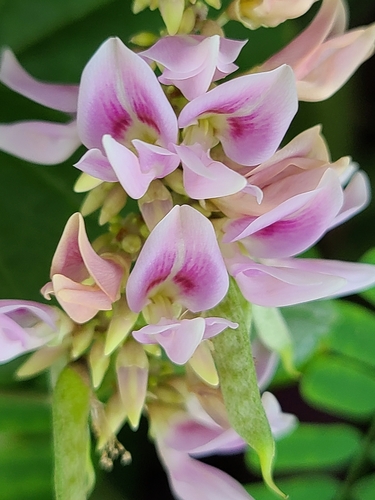
(c) 丁洪波, some rights reserved (CC BY-NC), uploaded by 丁洪波

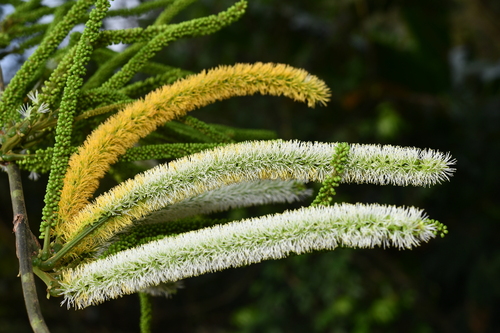
(c) catchwords, some rights reserved (CC BY)

(c) catchwords, some rights reserved (CC BY)
What to Eat
Edible parts: Seeds, Kernel, Leaves, Nuts, Fruit, Pods, Caution
All edible uses should be treated with care, as the plant is also reported to be poisonous. The seeds can be eaten after soaking and roasting — although toxic raw, they can be rendered edible by prolonged soaking and roasting, specifically by roasting, baking, grinding, and immersing in running water for 10–12 hours. The dark brown seeds are 4–6cm in diameter and contain two saponins. The roasted seeds have been used as a coffee substitute, and an edible oil is obtained from them. Leaves are eaten both raw and cooked as a vegetable. Sap from cut branches is used as a drink.
Known Hazards
Where to Find It
It is a tropical plant. It is sensitive to cold. It needs well drained soils. They are found throughout the Philippines occurring everywhere in tropical forests. In Yunnan in China it grows between 800-1300 m altitude. It grows in subtropical broadleaved evergreen forest. In XTBG Yunnan.
Africa, American Samoa, Andamans, Asia, Australia, Bangladesh, Central Africa, Central America, China, Congo, Cook Islands, East Africa, East Timor, Fiji, Himalayas, India, Indochina, Indonesia, Jamaica, Japan, Madagascar, Malaysia, Marianas, Marquesas, Micronesia, Mozambique, Myanmar, Nepal, Northeastern India, Pacific, Papua New Guinea, PNG, Philippines, Pohnpei, Samoa, SE Asia, Sierra Leone, Sikkim, Taiwan, Thailand, Timor-Leste, Tonga, Vanuatu, Vietnam, Wallis and Futuna, West Africa, West Indies, West Timor, Yap,
How to Identify
A tree climber which forms loops between branches. The stems are thick 12 cm across and irregularly round. They are twisted or have an irregular spiral. The small branches are slender. The leaves have long leaf stalks. The leaves are twice divided. The leaflets are 2.5 to 5 cm long and like leather. The flower stalk is 15 cm or more long. The flowers are 2 to 3 mm long and attached without a stalk. They are yellowish white. They are crowded on a long spike in the axils of leaves. The few pods hang down and the beans have flattened sides and are chocolate brown. They can be 1 m long. They are woody and jointed between the seeds.
Nutrition Score: 28/100
| Part | Moisture | kJ | kcal | Protein | Vit A | Vit C | Iron | Zinc |
|---|---|---|---|---|---|---|---|---|
| Seed | 9.1 | — | — | 23.5 | — | — | — | — |
How to Grow
Plants can be grown from seed. The hard seed coat needs to be cut prior to sowing.
Propagation: Seed has a hard seedcoat and benefits from scarification before sowing. Pour a small amount of nearly boiling water over the seeds, then soak in warm water for 12–24 hours. Seeds that have not swollen can be carefully nicked on the seedcoat, avoiding the embryo, and soaked for a further 12 hours before sowing. Layering is also possible.
Medicinal Uses
The juice of the stem is drunk to relieve rheumatic joint and muscle pains and to treat respiratory ailments. A decoction of the stem is taken for hernia, fish poisoning, and gonorrhoea. The saponin content of the stems makes them useful as a wash for treating a range of skin disorders. Root juice is given for ulcers, abdominal muscle spasms, and headaches. The fruits are regarded as a contraceptive. Mashed seed kernels are used as a poultice for children with colic.
Other Uses
A fatty oil from the seed is used as fuel and as illuminant oil in lamps. The large seeds are used as beads in necklaces; cut in half, the empty seed coats serve as leg rattles for dancers. Seeds are also used in games, as baby teethers, as matchboxes, and as snuff boxes. Bark fibres are made into ropes, sails, and nets. The whole plant is rich in saponins and is used for washing hair and as a detergent — stems are cut into 50–100cm lengths, pounded into thin flat strips, dried, then soaked in water and rubbed to produce a lather that cleanses the scalp effectively. The bark is a source of tannins.
Wikipedia
Source ↗Entada phaseoloides, commonly known in English as the matchbox bean or St. Thomas' bean, is a large twining vine or liana in the pea and bean family Fabaceae, native to a broad area of Asia-Pacific, from China to northern Australia and the southwestern Pacific. It is also known as gugo in the Philippines, where the bark sap is used as a traditional shampoo.
Notes
There are about 30 Entada species. They occur in the tropics. Also as Mimosaceae.
Names & Synonyms
Babari, Bambam, Chian, Chituatua, Cinerope, Cocopa, Elephant creeper, Elva climber, Garambi, Garbe, Garbee bean, Geredi, Ghavaulu, Gila-lewa, Gila, Gilatige, Gilla, Gogo, Hallekayi balli, Kaikavu, Kakkavalli, Kayu gandu, Khavauru, Mackay bean, Malamanchadi, Nicker bean, Peddamadupu, Pangra, Saba, Tifa, Vaheakarabo, Vewu, Wa Lai, Wataqiri
References (49)
- Ambasta, S.P. (Ed.), 2000, The Useful Plants of India. CSIR India. p 196
- Bodkin, F., 1991, Encyclopedia Botanica. Cornstalk publishing, p 381
- Borrell, O.W., 1989, An Annotated Checklist of the Flora of Kairiru Island, New Guinea. Marcellin College, Victoria Australia. p 95, 194
- Burkill, I.H., 1966, A Dictionary of the Economic Products of the Malay Peninsula. Ministry of Agriculture and Cooperatives, Kuala Lumpur, Malaysia. Vol 1 (A-H) p 940
- Cabalion, P. and Morat, P., 1983, Introduction le vegetation, la flore et aux noms vernaculaires de l'ile de Pentcoste (Vanuatu), In: Journal d'agriculture traditionnelle et de botanique appliquee JATBA Vol. 30, 3-4
- Cherikoff V. & Isaacs, J., The Bush Food Handbook. How to gather, grow, process and cook Australian Wild Foods. Ti Tree Press, Australia p 200
- Cooper, W. and Cooper, W., 2004, Fruits of the Australian Tropical Rainforest. Nokomis Editions, Victoria, Australia. p 311
- Cowie, I, 2006, A Survey of Flora and vegetation of the proposed Jaco-Tutuala-Lore National Park. Timor-Lests (East Timor) www.territorystories.nt/gov.au p 50
- Cribb, A.B. & J.W., 1976, Wild Food in Australia, Fontana. p 94
- Das, S. and Mohiuddin, M., 2012, Gender role in Home Garden Management in the Indigenous Community: A case study in Bandarban Hill District, Bangladesh. International Journal of Social Forestry. 5(1):22-37
- Deb, D., et al, 2013, Wild Edible Plants and Their Utilization in Traditional Recipes of Tripura, Northeast India. Advances in Biological Research 7(5):203-211
- Elliot, W.R., & Jones, D.L., 1984, Encyclopedia of Australian Plants suitable for cultivation. Vol 3. Lothian. p 406 (Drawing)
- Flora of Australia Volume 12, Mimosaceae (excl. Acacia) Caesalpiniaceae. Melbourne: CSIRO Australia (1998) p 5, 6, xiii
- Franklin, J., Keppel, G., & Whistler, W., 2008, The vegetation and flora of Lakeba, Nayau and Aiwa Islands, Central Lau Group, Fiji. Micronesica 40(1/2): 169–225, 2008
- Gautam, R. S., et al, 2020, Wild Edible Fruits of Nepal. Int. J. Appl. Sci. Biotechnol. Vol 8(3): 289-304
- Ghorbani, A., et al, 2012, A comparison of the wild food plant use knowledge of ethnic minorities in Naban River Watershed Nature Reserve, Yunnan, SW China. Journal of Ethnobiology and Ethnomedicine; 8:17
- Hani Medicine of Xishuangbanna, 1999, p 11
- Hedrick, U.P., 1919, (Ed.), Sturtevant's edible plants of the world. p 290 (As Entada scandens)
- Henty, E.E., 1980, Harmful Plants in Papua New Guinea. Botany Bulletin No 12. Division Botany, Lae, Papua New Guinea. p 86, 87
- Hiddins, L., 1999, Explore Wild Australia with the Bush Tucker Man. Penguin Books/ABC Books. p 150
- Hill, R. and Baird, A., 2003, Kuku-Yalanji Rainforest Aboriginal People and Carbohydrate Resource Management in the Wet Tropics of Queensland, Australia. Human Ecology, Vol. 31, No. 1. pp 27-52
- http://www.ntbg.org/plants/plant details.php
- Isaacs, J., 1987, Bush Food, Aboriginal Food and Herbal Medicine. Weldons. p 81
- ILDIS Legumes of the World http:www:ildis.org/Legume/Web
- Jackes, B.R., 2001, Plants of the Tropics. Rainforest to Heath. An Identification Guide. James Cook University. p 65
- Jardin, C., 1970, List of Foods Used In Africa, FAO Nutrition Information Document Series No 2.p 43 (As Entada scandens)
- Jin, Chen et al, 1999, Ethnobotanical studies on Wild Edible Fruits in Southern Yunnan: Folk Names: Nutritional Value and Uses. Economic Botany 53(1) pp 2-14
- Jones, D.L. & Gray, B., 1977, Australian Climbing Plants. Reed. p 101
- Jones D, L, 1986, Ornamental Rainforest Plants in Australia, Reed Books, p 287
- Lazarides, M. & Hince, B., 1993, Handbook of Economic Plants of Australia, CSIRO. p 90
- Low, T., 1992, Bush Tucker. Australia’s Wild Food Harvest. Angus & Robertson. p 96
- Martin, F.W. & Ruberte, R.M., 1979, Edible Leaves of the Tropics. Antillian College Press, Mayaguez, Puerto Rico. p 199
- Martin, F.W. & Ruberte, R.M., 1979, Edible Leaves of the Tropics. Antillian College Press, Mayaguez, Puerto Rico. p 199 (As Entada scandens)
- McMakin, P.D., 2000, Flowering Plants of Thailand. A Field Guide. White Lotus. p 53
- Menninger, E.A., 1977, Edible Nuts of the World. Horticultural Books. Florida p 93
- Monsalud, M.R., Tongacan, A.L., Lopez, F.R., & Lagrimas, M.Q., 1966, Edible Wild Plants in Philippine Forests. Philippine Journal of Science. p 487
- Parham, B. E. V., 1972, Plants of Samoa. New Zealand Department of Scientific and Industrial Research. Information Series. No. 85 p 133
- Peekel, P.G., 1984, (Translation E.E.Henty), Flora of the Bismarck Archipelago for Naturalists, Division of Botany, Lae, PNG. p 211, 212
- Pham-Hoang Ho, 1999, An Illustrated Flora of Vietnam. Nha Xuat Ban Tre. p 817
- Philipp. J. Sci., C 9:86. 1914
- Pradheep, K., et al, 2016, Wild edible plants used by Konyak tribe in Mon district of Nagaland: Survey and inventorisation. Indian Journal of Natural Products and Resources. Vol 7(1) pp 74-81
- Reis, S. V. and Lipp, F. L., 1982, New Plant Sources for Drugs and Foods from the New York Botanical Garden herbarium. Harvard. p 114
- Singh, H.B., Arora R.K.,1978, Wild edible Plants of India. Indian Council of Agricultural Research, New Delhi. p 81
- Smith, A.C., 1985, Flora Vitiensis Nova, Lawaii, Kuai, Hawaii, Volume 3 p 57
- Sukarya, D. G., (Ed.) 2013, 3,500 Plant Species of the Botanic Gardens of Indonesia. LIPI p 923
- Sundriyal, M., et al, 1998, Wild edibles and other useful plants from the Sikkim Himalaya, India. Oecologia Montana 7:43-54 (As Entada scandens)
- Verdcourt, B., 1979, Manual of New Guinea Legumes. Botany Bulletin No 11, Division of Botany, Lae, Papua New Guinea. p 134
- World Checklist of Useful Plant Species 2020. Royal Botanic Gardens, Kew
- Yuncker, T.G., 1959, Plants of Tonga, Bernice P. Bishop Museum, Hawaii, Bulletin 220. p 131