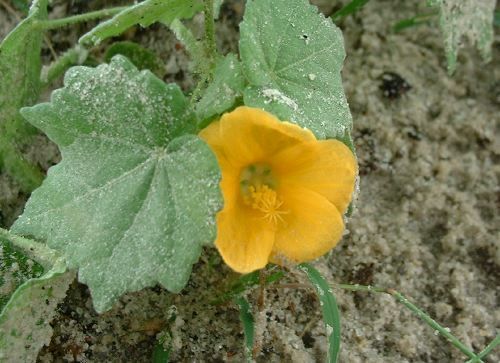
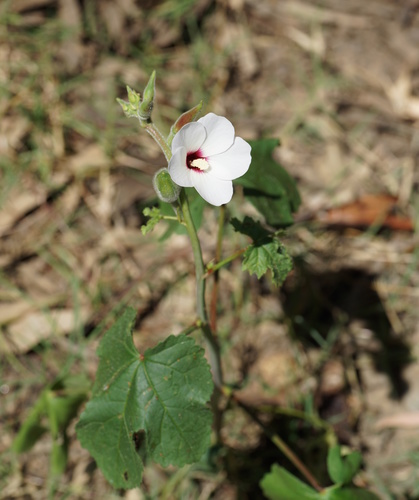
Malva neglecta
Wallr.
Dwarf Mallow, Common mallow

(c) Africa Gomez, some rights reserved (CC BY-NC), uploaded by Africa Gomez

(c) Anne Parker, some rights reserved (CC BY), uploaded by Anne Parker

(c) emilyk04, some rights reserved (CC BY-NC)
What to Eat
Edible parts: Leaves, Seed, Shoots
Egg Tea. Leaves and young shoots - raw or cooked. A mild pleasant flavour, they are said to be highly nutritious. They can be added in quantity to salads, and make an excellent lettuce substitute, they can also be cooked as greens. The leaves are mucilaginous, when cooked in soups etc they tend to thicken it in much the same way as okra (Abelmoschatus esculenta). Some people find this mucilaginous texture unpleasant, especially if the leaves are cooked. Immature seeds - raw or cooked. A pleasant nutty flavour, they are nice as a nibble but too small for most people to want to collect in quantity. A decoction of the roots is used as an egg-white substitute for making meringue. The roots are brought to the boil in water and then simmered until the water becomes quite thick. This liquid can then be whisked in much the same way as egg whites. A tea can be made from the dried leaves.
Known Hazards
Where to Find It
Most of Europe, including Britain, south and east to N. Africa and Asia.
TEMPERATE ASIA: Saudi Arabia, Afghanistan, Cyprus, Egypt (Sinai), Iran, Iraq, Israel, Jordan, Lebanon, Syria, Turkey, Armenia, Azerbaijan, Georgia, Kazakhstan, Kyrgyzstan, Tajikistan, Turkmenistan, Uzbekistan, Mongolia, China (w. & n.) TROPICAL ASIA: India (north), Pakistan EUROPE: Denmark, United Kingdom, Ireland, Norway, Sweden, Austria, Belgium, Switzerland, Czech Republic, Germany, Hungary, Netherlands, Poland, Slovakia, Belarus, Lithuania, Moldova, Ukraine (incl. Krym), Albania, Bulgaria, Bosnia and Herzegovina, Greece, Croatia, Italy (incl. Sardinia), North Macedonia, Montenegro, Romania, Serbia, Slovenia, Spain, France, Portugal AFRICA: Spain (Canarias), Algeria (north), Morocco
How to Identify
Malva neglecta is a ANNUAL growing to 0.6 m (2ft). See above for USDA hardiness. It is hardy to UK zone 5 and is not frost tender. It is in flower from June to September, and the seeds ripen from July to October. The species is hermaphrodite (has both male and female organs) and is pollinated by Bees, flies. The plant is self-fertile. Suitable for: light (sandy), medium (loamy) and heavy (clay) soils and prefers well-drained soil. Suitable pH: mildly acid, neutral and basic (mildly alkaline) soils. It can grow in semi-shade (light woodland) or no shade. It prefers dry or moist soil.
How to Grow
A very easily grown plant, succeeding in ordinary garden soil, though it prefers a reasonably well-drained and moderately fertile soil in a sunny position. It also succeeds in dry soils. At one time this plant was often cultivated for its edible leaves. Plants seem to be immune to the predations of rabbits. Prone to infestation by rust fungus.
Propagation: Seed - sow early spring or autumn in situ. Germination should take place within 2 weeks. The seed germinates in the autumn in the wild.
Medicinal Uses
Antiinflammatory Antiphlogistic Astringent Demulcent Diuretic Emollient Expectorant Laxative Poultice Purgative Salve Urinary. All parts of the plant are antiphlogistic, astringent, demulcent, diuretic, emollient, expectorant, laxative, salve. The leaves and flowers can be eaten as part of the diet, or a tea can be made from the leaves, flowers or roots. The leaves and flowers are the main part used, their demulcent properties making them valuable as a poultice for bruise, inflammations, insect bites etc, or taken internally in the treatment of respiratory system diseases or inflammation of the digestive or urinary systems. They have similar properties, but are considered to be inferior to the marsh mallow (Althaea officinalis), though they are stronger acting than the common mallow (M. sylvestris). They are seldom used internally. The plant is an excellent laxative for young children.
Other Uses
Dye Teeth. Cream, yellow and green dyes can be obtained from the plant and the seed heads. The root is used as a toothbrush.